The Responsibility Play: Why Anthropic’s “Hard Questions” Belongs to a Very Old Branding Tradition
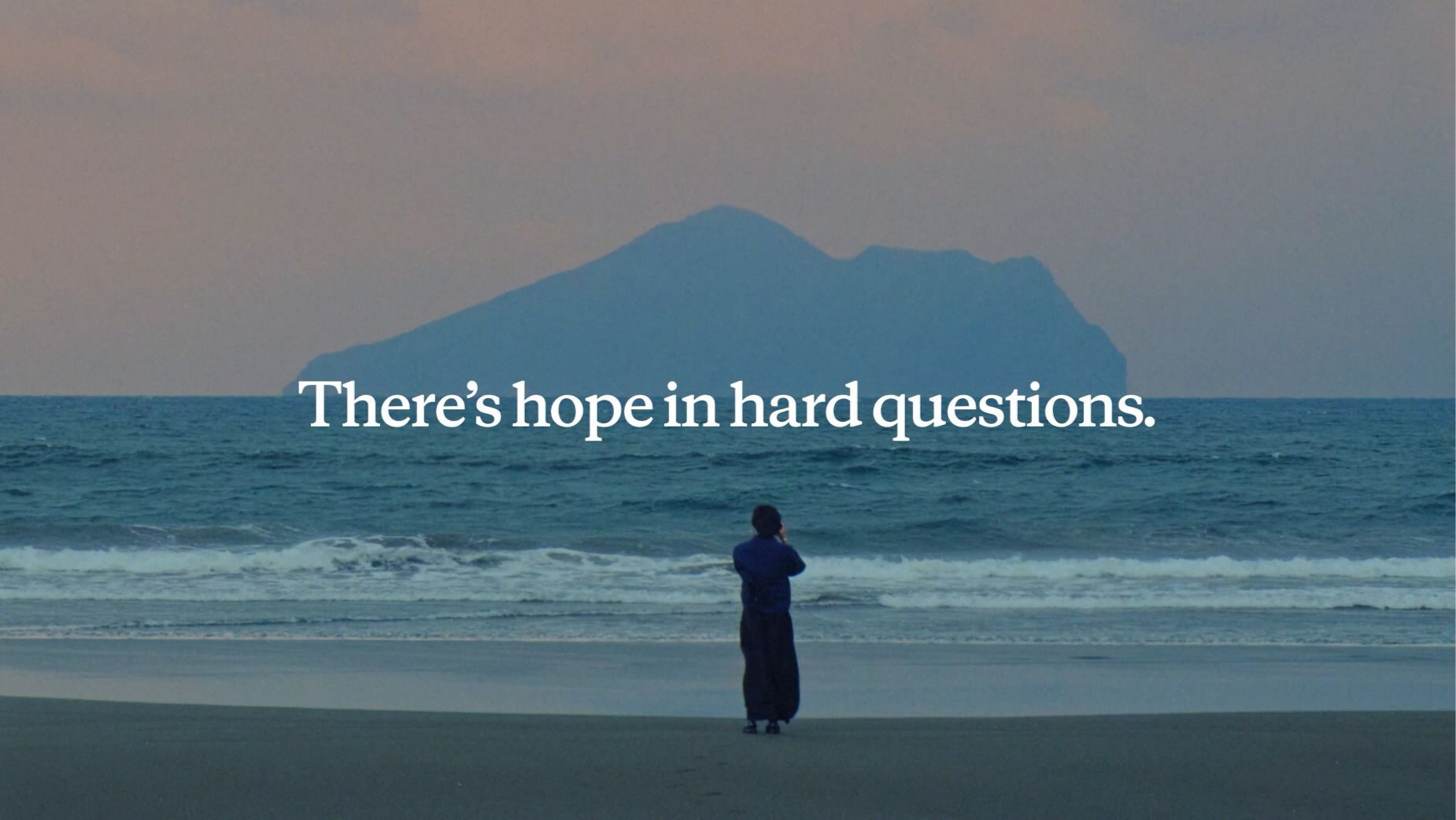
From Volvo’s safety to Apple’s privacy to Tata’s century of trust, brands have long turned a category’s unspoken fear into their core promise. Anthropic’s “Hard Questions” campaign is the AI industry’s version of the same play, and the same test applies: has the claim become structure, or is it still just a script.
Anthropic’s new film, “Hard Questions,” extends its “Keep Thinking” platform.
Instead of celebrating what AI can do, the film asks people to question what AI should be allowed to do. It is a curious move for a technology company. Most of them sell capability.
Anthropic is selling doubt, carefully packaged as candour.
The subtext is simple: if we are the ones asking the hardest questions, we are probably the safest company to trust.
This is not a new idea. It is one of the oldest plays in brand strategy, and it has a name worth understanding properly:
- Name the category’s unspoken cost
- Claim ownership of the antidote
Every category has a cost that nobody advertises
Consider the fears most categories carry, unspoken:
- Cars can kill you
- Beauty standards damage self-image
- Fast fashion pollutes
- Smartphones surveil
- AI could go wrong
Most brands in a category know this cost exists. They say nothing about it. Naming it invites scrutiny nobody wants.
The brand that names it first and positions itself as the answer gets an asymmetric advantage. It now owns the conversation about that cost. Every competitor who tries to make the same claim later looks reactive, because the space is already taken.
This is category ownership logic, the kind Al Ries and Jack Trout wrote about decades ago: own a word in the customer’s mind before someone else does.
The twist here is that the word being owned is not a benefit. It is a liability, reframed as a virtue.
The playbook, brand by brand
Volvo: Safety before Speed
While the rest of the automobile industry sold horsepower, luxury and design, Volvo built its entire identity on one unglamorous word: safety.
- It never claimed to build the fastest car
- It claimed to build the most responsible one
- Four decades later, “Volvo” and “safe” are functionally synonymous in most consumers’ minds


Anthropic is attempting the same manoeuvre in AI. While OpenAI and Google DeepMind compete on benchmarks and model size, Anthropic is trying to make “safety” the word people reach for.
Dove: responsibility towards beauty
Dove did not say its soap cleaned better. It said the beauty industry was harming women and positioned itself as the corrective.
- The product became secondary
- The brand became the ethical alternative


Anthropic’s shift from “our AI is smarter” to “how should AI behave responsibly” follows the identical structure.
Patagonia: responsibility towards the planet
Patagonia’s “Don’t Buy This Jacket” campaign looked, on the surface, like anti-selling. It was, in fact, a trust-building exercise.


A brand willing to appear to sacrifice sales for its values earns credibility that no performance claim can buy. Anthropic’s willingness to publicly discuss AI risk, rather than only its potential, is built on the same logic.
Apple’s privacy campaign
Apple did not lead with more features. It led with three words: “Privacy. That’s iPhone.”
Privacy became a brand asset as valuable as any spec sheet. Anthropic wants “responsible AI” to do the same job.
Johnson & Johnson, 1982
After the Tylenol poisonings, Johnson & Johnson:
- Recalled products nationwide
- Introduced tamper-evident packaging
- Absorbed real short-term cost to do both
The lesson was not crisis management. It was that responsibility, demonstrated at a moment of real stakes, that could become the brand itself.
The Body Shop
Ethical sourcing and opposition to animal testing, years before sustainability was a boardroom agenda item. Customers were not only buying cosmetics. They were buying a worldview.
Two examples worth adding, one of them Indian
De Beers: “A Diamond Is Forever”
A useful contrast, because it shows the pattern is not limited to ethics or safety.
De Beers manufactured permanence as a value when the product’s actual attributes, hardness and rarity, were commercially uninteresting to most buyers. Anthropic’s “safety” and De Beers’ “forever” do the same job: both give the buyer a reason to choose that has nothing to do with product performance.
Tata: trust before the language existed for it
This is the example that matters most for an Indian reader. It predates the entire modern vocabulary of purpose-led branding.
Tata built a century of the same positioning long before “responsible business” became a marketing category:
- Most visibly during its response to the 2008 Mumbai attacks
- Structurally, through Tata Trusts holding the majority stake in Tata Sons
It is arguably the most durable example in this entire list, precisely because it was never a campaign. It was the ownership structure.
The pattern, laid out plainly
| Category fear | Brand promise |
|---|---|
| Cars can kill | We build the safest cars |
| Beauty harms self-esteem | We celebrate real beauty |
| Fashion harms the planet | We produce responsibly |
| Smartphones invade privacy | We protect your data |
| AI may become dangerous | We build AI responsibly |
Notice what is absent from every row on the right: a product claim. None of these brands is arguing they build a better car, a better soap, a better jacket, a better phone. They are arguing that they are a better custodian. The brand ceases to be a manufacturer and becomes more of a trustee.
Where the pattern breaks: claim versus structure
Here is the part most retrospectives of these campaigns skip. It is the part that matters most for anyone advising a brand on this territory.
Some brands converted the claim into a structure:
- Volvo backed its claim with literal engineering: crumple zones, three-point seatbelts invented and then given away free to the industry
- Patagonia backed its claim with supply chain decisions and a repair programme that actively discourages new purchases
- Apple backed its claim with an on-device processing architecture
- Aravind Eye Care in Tamil Nadu is perhaps the purest version of this. It never advertised responsibility at all. It built free and subsidised cataract surgery directly into its operating model, cross-subsidised by paying patients. The brand promise was structural from day one, not communicated after the fact
This is the test that separates a durable responsibility position from a vulnerable one:
- Can the claim survive being converted into a product decision, a supply chain choice, or a governance structure?
- Or does it survive only as an advertising script?
Anthropic’s claim already has some structural backing: Constitutional AI as a stated training method, published model cards, and publicly disclosed red-teaming partnerships.
But “Hard Questions” itself is closer to Dove or Apple’s move than to Volvo’s. It is a values-signalling film, not a product disclosure. That does not make it dishonest. It makes it incomplete, at least so far.
Why is this window closing, not opening
The uncomfortable truth for Anthropic, and for anyone advising a client into this territory, is that responsibility positioning has a short shelf life once a category catches on.
The moment every AI company starts describing itself as safety-focused, and OpenAI, Google DeepMind and Anthropic are already converging on nearly identical language, responsibility stops being a differentiator. It becomes a hygiene factor: table stakes everyone must claim, differentiator to none.
The brands that survived this shift historically moved fast from claim to structure while the word was still theirs to own:
- Volvo did it through engineering
- Patagonia did it through the supply chain
- Tata did it through a century of ownership design that nobody could copy overnight
The brands that treated it purely as a campaign line eventually sounded identical to competitors who never took the risk of naming the category’s fear in the first place.
For Anthropic, the next eighteen months will answer the real question: is “safety” becoming Anthropic’s Volvo, engineered into the product and impossible to copy quickly? Or is it becoming everyone’s shared vocabulary, in which case the company that said it first gets no lasting credit for saying it loudest.

11 Comments