Nike vs Reebok: The Olympics That Redefined Ambush Marketing
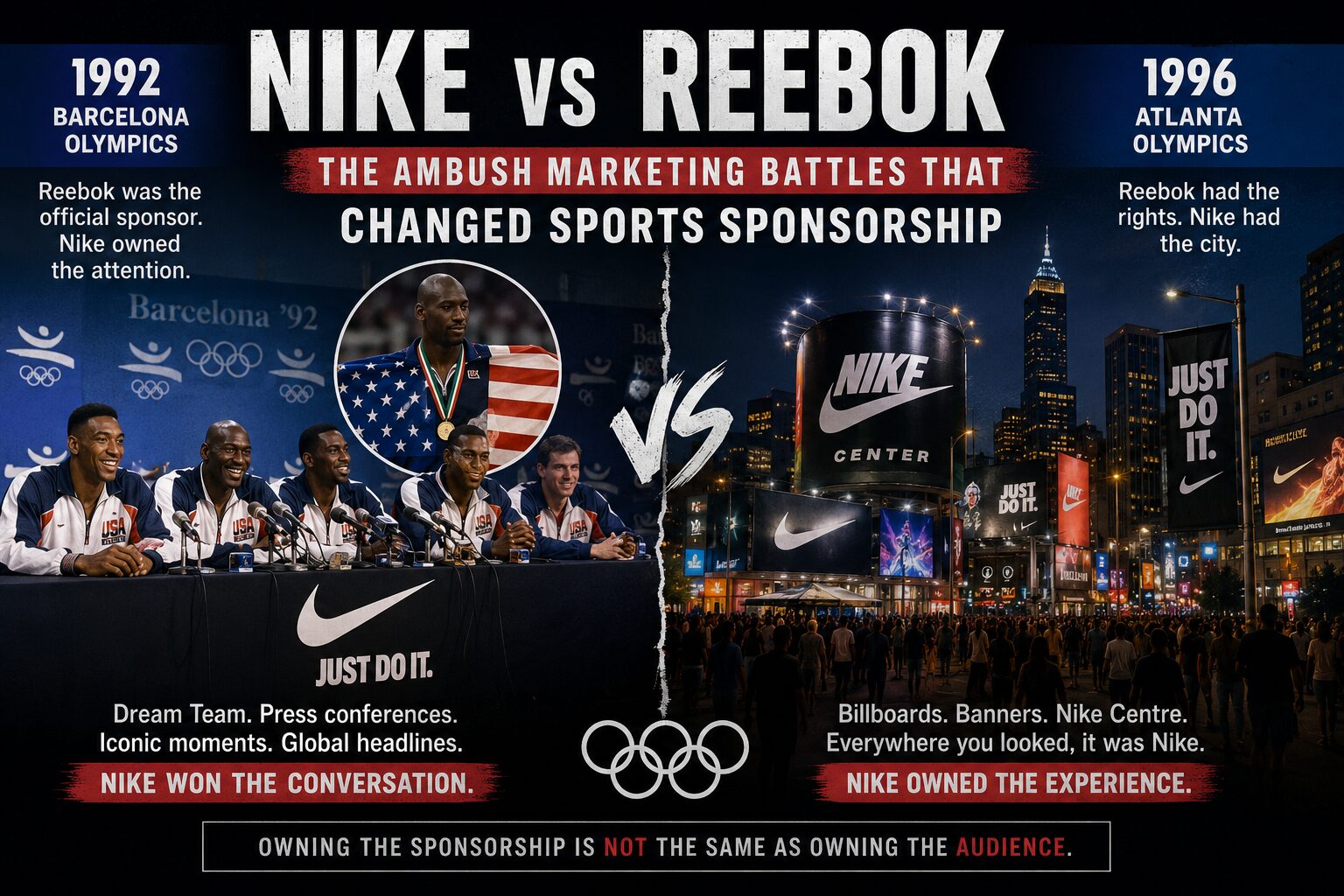
The Olympic rivalry between Nike and Reebok remains one of marketing’s greatest battles. While Reebok paid for official sponsorship rights, Nike won consumer attention through clever athlete endorsements, media events and city-wide branding. Here’s how the 1992 Barcelona and 1996 Atlanta Olympics redefined ambush marketing.


Few rivalries illustrate the power of ambush marketing better than the battle between Nike and Reebok during the 1992 and 1996 Olympic Games. Although Reebok had paid millions to become the official Olympic sponsor, Nike repeatedly demonstrated that consumer attention could be won without official sponsorship.
Barcelona Olympics, 1992: Owning the Headlines Without the Rights
At the 1992 Barcelona Olympics, Reebok was the official footwear sponsor of the Games. On paper, it enjoyed exclusive branding rights and the prestige that came with Olympic association.
Nike, however, shifted the battleground from official venues to media attention. It organised a high-profile press conference featuring members of the legendary U.S. Men’s Basketball “Dream Team,” many of whom were Nike athletes, including Michael Jordan. The event generated enormous media coverage, effectively associating Nike with the most celebrated team of the Olympics.
The rivalry reached its symbolic peak during the medal ceremony. Since Reebok’s logo appeared on the official U.S. team tracksuits, Michael Jordan famously draped the American flag over the Reebok logo while receiving his gold medal, ensuring Nike remained the brand most visible in photographs seen around the world.
Although Reebok possessed the sponsorship rights, Nike captured much of the public conversation. It proved that media exposure and athlete influence could outweigh contractual exclusivity.
Marketing lesson: Sponsorship provides rights. Ambush marketing competes for attention.


Atlanta Olympics, 1996: Turning an Entire City into a Nike Advertisement
Four years later, Reebok again became the official Olympic sponsor. Nike chose an even more aggressive strategy.
Instead of buying sponsorship rights, Nike invested heavily in transforming Atlanta itself into a giant Nike experience. The company blanketed the city with billboards, banners, retail displays and street advertising. It also established the massive Nike Centre, where athletes, fans and visitors could experience the brand through events, product showcases and entertainment.
For many visitors, Atlanta felt more like “Nike’s Olympics” than Reebok’s. Consumers encountered Nike at airports, hotels, streets, public spaces and retail locations long before they entered official Olympic venues.
Research conducted after the Games found that many consumers mistakenly believed Nike, rather than Reebok, was the official Olympic sponsor. Nike had effectively dominated mental availability while Reebok owned the legal rights.
Why These Campaigns Matter
The Barcelona and Atlanta Olympics became defining moments in marketing because they demonstrated that attention is often more valuable than official association.
Nike understood that consumers rarely distinguish between official sponsorship and perceived presence. By leveraging superstar athletes, public relations, experiential marketing and city-wide visibility, it successfully challenged the exclusivity that sponsorship was designed to provide.
For marketers, these campaigns established an enduring principle:
Owning the sponsorship is not the same as owning the audience.
Nike’s Olympic campaigns remain among the most cited examples of ambush marketing because they showed that creativity, strategic execution and media visibility can sometimes outperform even the most expensive sponsorship rights.