Loyalty Isn’t Broken. Your Strategy Is.
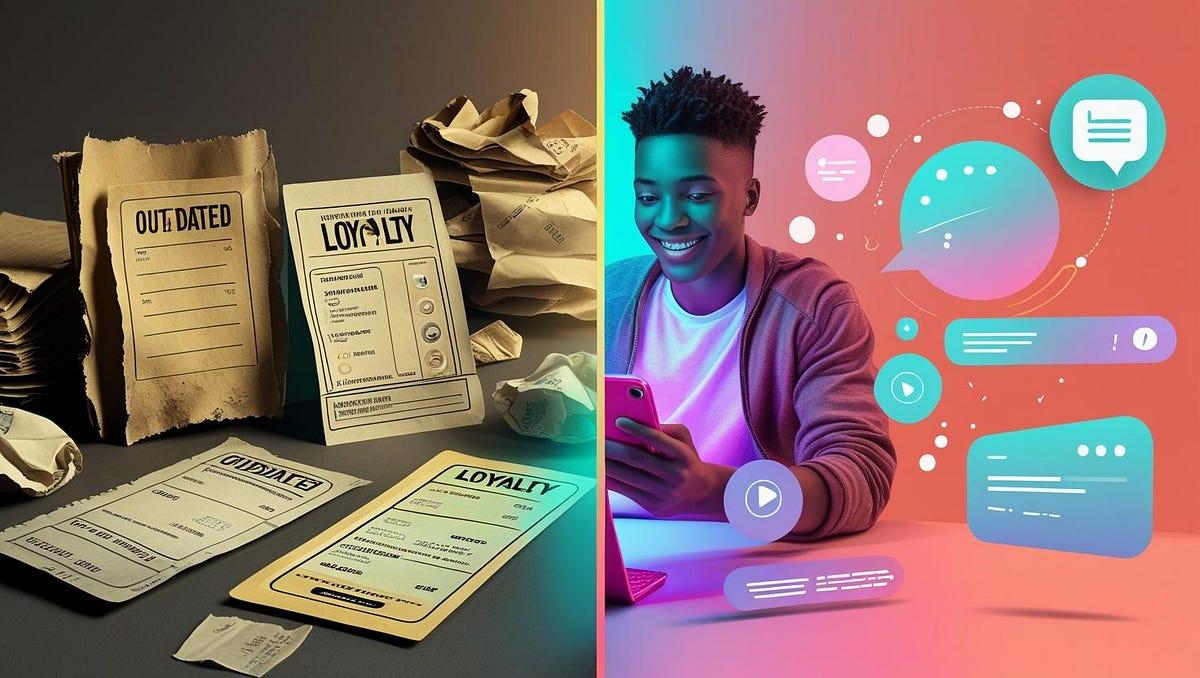
Most loyalty programmes are glorified discount engines. New research shows how brands can use rewards as a full-funnel, first-party data strategy


Most brands think they have a loyalty programme. What they actually have is a discount engine with a fancy name.
Points for purchases. One-off coupons. Maybe a birthday offer. That’s the playbook. And according to a 2025 survey of retail, CPG, and QSR executives by Fetch and Marketing Dive’s studioID, it’s what nearly everyone is still doing – even as the channels around them are crumbling.
The report surveyed 152 executives. 97% said their companies offer rewards or loyalty programmes. But the majority are using these programs in ways that cap their potential. Points for dollars spent (66%). One-off discounts (58%). Personalised product recommendations? Only 45% bother.
There’s a significant gap between what loyalty programmes could do and what most brands are using them for. That gap is now a competitive liability.
The Social-Search Trap

Ask any retail or CPG marketing team what drives their acquisition strategy. The answer, almost universally, is social media and search.
The survey confirms it:
• 63% cite social media marketing as their top acquisition channel
• 51% rank social media advertising second
• 39% point to search engine advertising
• Rewards and loyalty programs ranked fifth at just 26%
The retention picture is similar. Social media still leads at 54%. Loyalty programmes rank fourth at 37%.
That wouldn’t be a problem if social and search were delivering. But they are inefficient. Nearly half (47%) of the executives surveyed only somewhat agree that their organisation tracks the impact of ad dollars well. That’s a polite way of saying, ‘We’re spending, and we’re not sure what it’s doing.’
The Problems Piling Up
The survey lists the top challenges marketers face in 2025. They read like a slow-motion crisis:
- Rising advertising costs – 38% flag this as their top challenge
- Social media platform instability (potential bans, volatility) – 36%
- Meeting consumer expectations for personalisation – 35%
- Cookie deprecation – 29%
- Attribution issues – 24%
- Customer data acquisition and management – 21%
These aren’t isolated issues. They’re symptoms of the same root problem: dependence on platforms that don’t provide brands ownership of their audience data.
Cookie deprecation reduces signal. Platform volatility creates risk. Rising CPMs squeeze ROI. And without clean, first-party data, personalisation remains aspirational.
Rewards as a Full-Funnel Strategy, Not a Tactic

Here’s where the thinking needs to shift.
The Fetch report makes a sharp argument: loyalty programmes should not be treated as a retention-only tactic. If used correctly, they function as a full-funnel acquisition, engagement, and retention engine – one that generates its own first-party data in the process.
The logic is clean:
- Consumers share purchase data in exchange for rewards
- Brands use that data to identify and target high-value segments
- Personalised offers improve conversion and repeat purchase rates
- The cycle compounds: better data leads to better targeting, which drives more engagement, which produces more data
This approach is structurally different from a points programme bolted onto a purchase flow. It’s a data strategy dressed as a customer benefit.
What ‘Data-Driven Loyalty’ Actually Means
The report draws a critical distinction between deterministic and probabilistic audiences.
Most digital advertising targets probabilistic audiences-groups inferred from browsing behaviour, demographic proxies, or modelled look-alikes. It’s educated guessing at scale.
Rewards programmes anchored to purchase receipts build deterministic audiences – real people, real transactions, real preferences. A brand doesn’t need to guess that someone buys premium pet food. They know. And they can target accordingly.
Item-level receipt data goes even further. It reveals not just what someone bought but also the flavour, pack size, and basket it sat in. A brand targeting sustainability-conscious shoppers can identify them not through a survey, but through what they’ve actually purchased.
That’s a meaningfully different kind of signal than a third-party cookie or a social media interest category.
The India Parallel: Why This Matters Here


The Fetch report is a US market study. But the underlying dynamics are just as relevant in India, arguably more so.
Indian CPG and D2C brands have crowded into the same performance marketing channels: Meta, Google, and quick commerce platforms. Cost-per-acquisition keeps climbing. Attribution is murky. Platform dependency is high.
Meanwhile, India’s loyalty market is growing fast. It was valued at $3.02 billion in 2024 and is projected to reach $6.40 billion by 2029, growing at a 15.6% CAGR. The infrastructure is being built. The question is whether brands are using it strategically or just transactionally.
Most are still transactional. The dominant model remains cashback and points redemption – a value transfer, not a data strategy.
Who Is Doing It Right in India


A few examples are instructive.
- Tata Neu is the clearest example of loyalty as a data ecosystem. The NeuPass programme unifies purchase behaviour across groceries (BigBasket), electronics (Croma), fashion (Tata CLiQ), hospitality (Taj Hotels), healthcare (Tata 1mg), and aviation (Air India Express) into a single loyalty currency. One NeuCoin equals ₹1, usable across all properties. The result is cross-category purchase visibility that no single-brand programme can replicate. IHCL (the Taj Hotels group) reported that loyalty-driven revenue accounts for over 40% of total enterprise revenue – a direct outcome of the NeuPass integration that drives engagement among its 10 million members.
- Nykaa’s Pink Love loyalty programme is a more sector-specific example. It ties reward accrual to purchase frequency and category spend, thereby generating segmentation data. Nykaa doesn’t just offer beauty products; it knows who buys skincare vs colour cosmetics vs wellness, at what price points, and at what frequency. That purchase intelligence feeds back to personalised email campaigns, product recommendations, and targeted offers. The brand has reported a 43.5% uplift in email click rates through personalisation, a figure directly attributable to the quality of the underlying purchase data.
- Reliance One, operating across Reliance Fresh, Reliance Trends, and Reliance Digital, offers a similar breadth of play, though its sophistication in using that data for personalised targeting remains less noticeable externally. The points never expire, which encourages programme engagement, but the strategic value lies in the cross-format purchase data it aggregates across more than 1,200 stores.
- Flipkart Plus uses transaction data from its SuperCoins system to drive personalised reward offers, particularly during high-traffic sales events. By linking coin accrual to purchase patterns rather than just spend volume, it nudges behaviour rather than just rewarding it.
What separates the better-performing programmes from the rest is not the generosity of the rewards. It is the quality of the data architecture underneath and the willingness to act on it.
Where the Gap Remains

For most Indian mid-market FMCG and D2C brands, the gap is still wide:
- Loyalty programmes exist in isolation from CRM and marketing automation systems
- Data captured is demographic and transactional, not behavioural and predictive
- Personalisation is rule-based (‘you bought X, here is a discount on X’) rather than intelligence-based
- Redemption rates are tracked; incremental purchase lift is not
The brands that close this gap first will have a structural advantage in first-party data that is genuinely difficult for competitors to replicate.
What Marketers Should Actually Do
Rethinking loyalty as a data and targeting strategy – not a retention afterthought – requires deliberate choices:
- Tie programme participation to purchasing data, not just sign-ups. A loyalty member you know nothing about isn’t an asset.
- Build for acquisition, not just retention. Rewards can attract new customers when used as targeted acquisition offers, not just as a thank-you for existing ones.
- Segment by behaviour, not demographics. What someone buys is more predictive than how old they are or where they live.
- Measure beyond redemption rates. Track incremental purchase lift, basket size changes, and category trial. Redemption is a vanity metric on its own.
- Treat the value exchange as two-way. Consumers give you data; give them something genuinely useful in return. Not just discounts, relevance.
- Connect your loyalty platform to your CRM and content systems. Data that stays in one system helps no one.
The Takeaway
The survey data challenge the comfortable assumption that social and search are sufficient.
They’re not enough. They’re getting more expensive, less measurable, and more volatile. And the brands leaning hardest toward them are the most exposed.
Rewards programmes, when done properly, solve three things simultaneously: they give consumers value, they generate first-party data, and they create a measurable performance loop. That’s a rare combination in marketing.
In India, the market is growing at nearly 16% annually. The infrastructure is there. UPI has normalised transactional sharing. Smartphones are the primary commerce interface. The conditions for building serious loyalty-driven data programs have never been better.
The question isn’t whether brands should invest in loyalty. Most already are. The question is whether they’re using it like a strategy or treating it like a sticker on the side of the funnel.
There’s a big difference.
References
1. Fetch & Marketing Dive studioID. (2025). The Power of Rewards in Customer Acquisition and Retention. Survey Report. business.fetch.com
2. ResearchAndMarkets.com. (2025). India Loyalty Programs Market Intelligence Report 2025. Q1 & Q3 Updates. researchandmarkets.com
3. Business Wire. (September 2025). India Loyalty Programs Market Intelligence Report 2025: Flipkart Plus, Tata Neu, Payback India Lead Shift Toward Personalization. businesswire.com
4. IHCL (Indian Hotels Company Limited). (March 2025). IHCL Loyalty Program Hits 10 Million Users. Press Release. ihcltata.com
5. Tata Digital. (2025). Tata Neu — What We Do. tatadigital.in
6. Netcore Cloud. (2024). How Nykaa Achieved a 43.5% Uplift in Clicks with Personalization. netcorecloud.com
7. Kirnani Technologies Blog. (2025). How Nykaa Built a Beauty Empire in India. kirnanitechnologies.com
8. Capillary Technologies. (2024). 5 Conglomerate Loyalty Programs Redefining Customer Engagement. capillarytech.com
9. Emarsys / SAP Engagement Cloud. (2025). 8 Direct to Consumer (D2C) Trends to Watch in 2025. emarsys.com
10. Catalina Marketing. (2025). 2025 CPG Marketing Guide — Leveraging CPG Data & Insights. catalina.com
11. Future Market Insights. (2025). India Loyalty Program Market Size & Trends 2025–2035. futuremarketinsights.com
12. Intouch Insight. (2025). 7 First Party Data Strategies for In-Store Retail in 2025. blog.intouch.com


1 Comment