Beyond Probiotics: How Biotics Are Changing the Future of Pet Nutrition
The pet nutrition industry is moving beyond generic probiotics. Prebiotics, postbiotics and microbiome research are opening the door to more targeted, science-backed approaches to pet health, with India offering an emerging opportunity for innovation.
For thousands of years, humans have consumed fermented foods without understanding the science behind them. In India, this is particularly familiar. Curd, buttermilk, idli, dosa and other fermented foods have been part of everyday diets for generations. Long before anyone spoke about probiotics or the microbiome, fermentation was already part of our food culture.
Today, science is beginning to explain some of the reasons behind that connection. Research into the gut microbiome accelerated during the 1990s and opened the door to a new understanding of nutrition and health. What started with probiotics has now expanded into a much broader world of prebiotics and postbiotics.
And that evolution is now reaching the pet-care industry.
The opportunity is no longer simply about adding a generic probiotic to pet food or a supplement. Increasingly, researchers and formulators are looking at specific strains, targeted prebiotics, postbiotics and combinations designed to deliver particular health outcomes.
The result could be a fundamental shift in pet nutrition: from general gut health to more precise, science-led wellness.
From Generic Gut Health to Precision
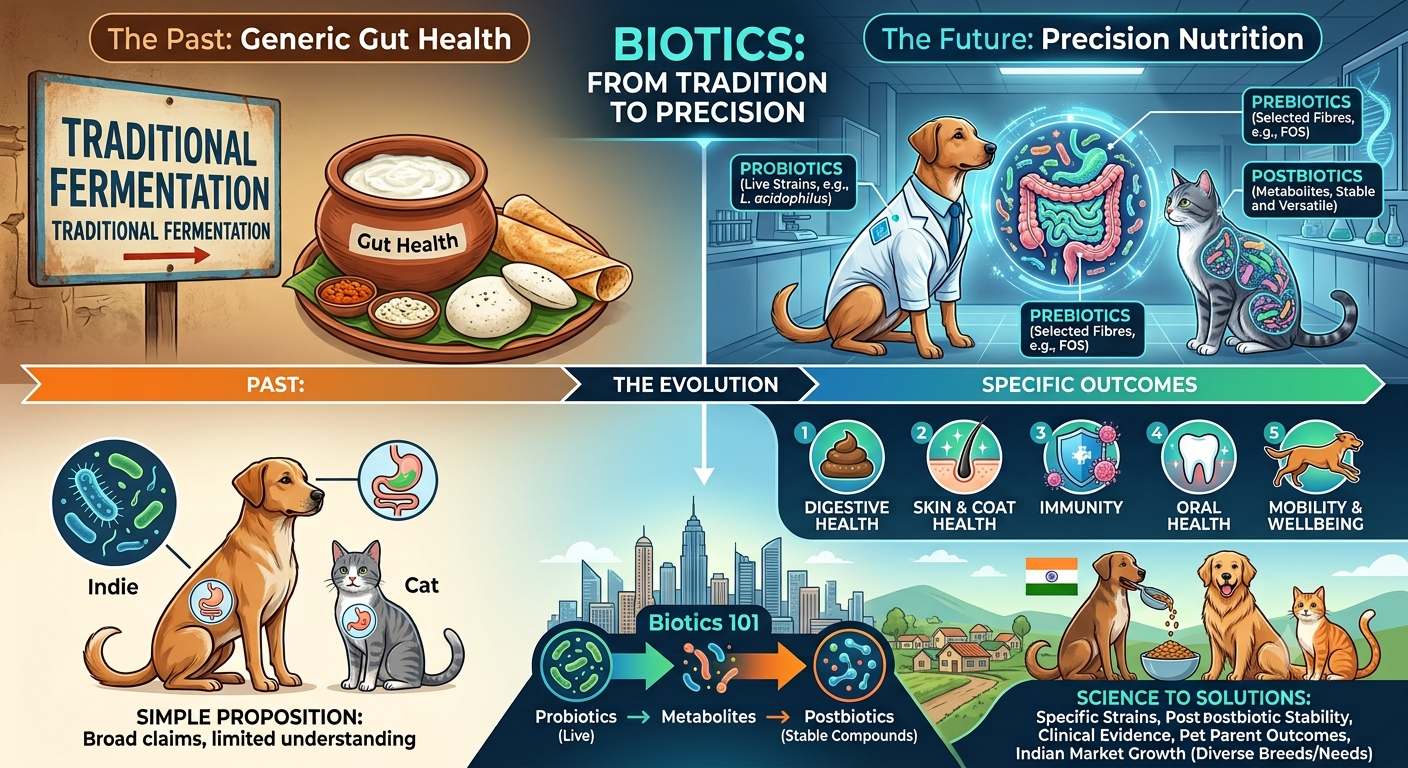
Gut health was once treated as a relatively simple proposition. A product containing probiotics could broadly claim to support digestion or intestinal health.
That is changing.
Pet parents are becoming more informed and are beginning to expect the same scientific sophistication from pet products that they see in human nutrition and wellness. They want to know what an ingredient does, why it is being used and whether there is evidence behind the claim.
This is encouraging greater precision in formulation.
Prebiotics, for instance, are increasingly being selected for their ability to influence specific microbial populations rather than simply being treated as generic sources of fibre. Probiotic research is moving towards individual strains and their specific benefits. There is also greater recognition that dogs and cats cannot simply be treated as smaller versions of humans.
Their microbiomes, nutritional requirements and physiological responses are different.
For India, this creates an interesting opportunity. The country’s pet population is increasingly diverse, ranging from pedigree dogs and cats living in urban apartments to Indie dogs adopted from shelters and pets living in smaller towns. Their age, diet, lifestyle, environment and health needs can vary considerably.
The future is therefore unlikely to be one-size-fits-all.
It is likely to be targeted.
Postbiotics Could Change the Equation
The most interesting development in the biotics space may be the growing attention being given to postbiotics.
Probiotics contain live microorganisms. Postbiotics, in contrast, use beneficial compounds and metabolites produced by microorganisms. That difference could offer an important advantage for manufacturers.
Live microorganisms can be affected by processing, storage and gastrointestinal conditions. Stability therefore becomes a major consideration when developing commercial pet products.
Postbiotics can potentially offer greater stability through manufacturing and shelf life, making them attractive for use in pet food, treats and supplements.
Their potential applications may also extend well beyond digestion.
Researchers are exploring their role in areas such as skin health, oral health, metabolic health and emotional wellbeing. This could eventually turn biotics from a niche digestive-health category into a much broader pet-wellness platform.
But there is an important caveat.
The excitement around postbiotics should not run ahead of the science. Research is still developing, and the industry needs robust evidence demonstrating specific benefits in dogs and cats.


The Indian Opportunity
India has an unusual advantage in this emerging category: fermentation is already culturally familiar.
But familiarity with fermented human foods does not automatically translate into an understanding of biotics for pets.
Dogs and cats have different digestive systems and microbiomes. Ingredients that are familiar in human nutrition still need to be evaluated specifically for companion animals.
That creates an opportunity for Indian pet-care companies to build their proposition around scientific credibility rather than simply copying human wellness trends.
A brand that can explain why a particular strain, prebiotic or postbiotic has been selected for a dog or cat can potentially build greater trust than one that simply covers its packaging with scientific terminology.
There is another opportunity too.
The pet supplement market has historically been heavily dog-focused, leaving cat parents with fewer targeted options. Species-specific biotics could therefore become an important area of innovation.
From an Indie dog in a Tier-II city to a pedigree cat in Mumbai or Bengaluru, the Indian pet population is increasingly demanding products that recognise individual needs.
That could make localisation, species specificity and science-backed formulation important competitive advantages for Indian brands.
What Will Formulators Demand?
As the category matures, ingredient suppliers and manufacturers will face tougher questions.
They will increasingly want:
- Specific ingredients linked to measurable outcomes
- Strong clinical evidence
- Stability through processing and shelf life
- Flexibility across food, treats and supplements
- Dog- and cat-specific solutions
- Benefits that consumers can understand
- Evidence to support differentiated claims
This is ultimately positive for the industry.
The pet-care market does not need more products using “probiotic” simply because the word is fashionable. It needs products that solve genuine problems and can demonstrate why they work.
The Next Chapter of Pet Nutrition
The future of biotics will probably not be about choosing between probiotics, prebiotics and postbiotics.
It will be about understanding how they work individually and together.
Advances in microbiome research could eventually allow manufacturers to develop increasingly targeted nutritional solutions based on species, age, lifestyle and individual needs.
That points towards a broader transformation: from general nutrition to precision nutrition.
For India, the opportunity is significant. Pet parents are becoming more informed, more willing to invest in preventive health and more demanding about transparency.
But the winners will not necessarily be the brands using the most sophisticated scientific language.
They will be the brands that can take sophisticated science and turn it into simple, credible and measurable benefits.
Probiotics may have opened the door. Prebiotics and postbiotics could take pet wellness much further.
The real opportunity is not to sell another “gut health” product. It is to understand the biology behind better pet health and turn that understanding into products that genuinely improve the lives of pets and the people who love them.
Pet Parents Want Outcomes, Not Ingredients

This is perhaps the biggest change in the category.
Pet parents may not understand the technical difference between a probiotic, prebiotic and postbiotic. But they understand outcomes.
They notice better stool quality. They see a healthier coat. They may observe less scratching, better digestion or changes in their pet’s overall wellbeing.
For brands, that distinction is crucial.
The ingredient is not necessarily the consumer proposition. The benefit is.
This creates opportunities to develop products around specific needs such as:
- Digestive health
- Skin and coat health
- Immunity
- Oral health
- Mobility
- Stress and emotional wellbeing
The Indian market is particularly interesting because pet parents are increasingly moving beyond basic food and healthcare towards preventive wellness, supplements and functional treats.
At the same time, they are being exposed to global pet-care trends through social media, e-commerce, veterinarians and international brands.
They are asking more questions.
And that means brands will have to provide better answers.
Science cannot remain hidden behind technical terminology. It has to be translated into simple, credible and meaningful benefits.