The Buyer is not the Customer: When the Person Who Pays Isn’t the Person Who Uses It
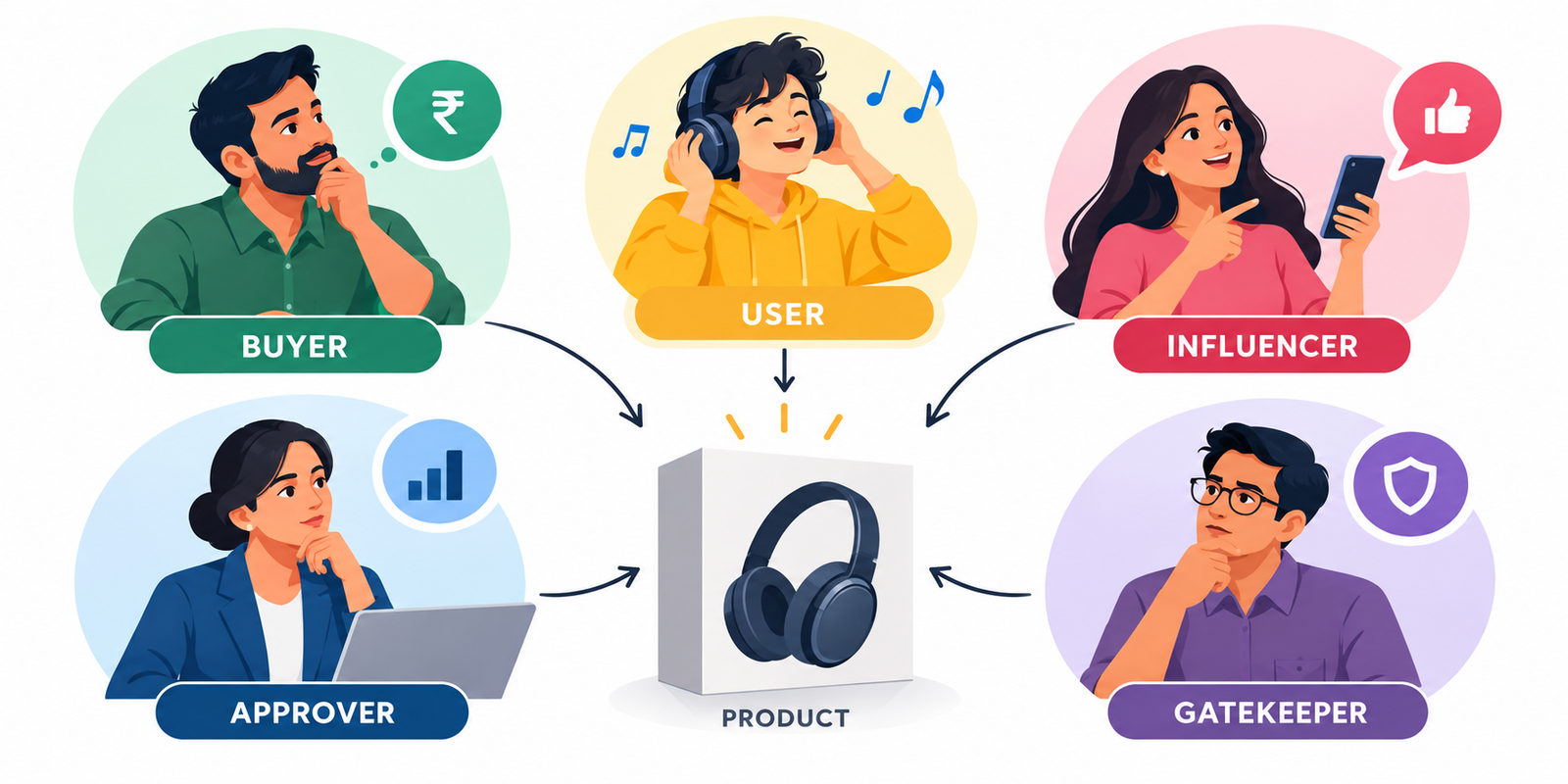
The buyer isn’t always the user. Discover how brands can market effectively when buyers, users and influencers have different needs, motivations and expectations.
Marketing becomes much more complicated when the person who buys a product isn’t the person who actually uses it. A parent may buy a smartphone for a teenager. A company may purchase software that thousands of employees will use. A doctor may recommend a medicine that a patient ultimately purchases. A pet parent pays for a supplement that a dog or cat consumes. A husband may buy a premium product as a gift for his wife. In each of these situations, the traditional definition of “the customer” begins to break down because the person controlling the money, the person experiencing the product, and the person influencing the decision may all be different.

This distinction matters because each participant in the purchase process evaluates value differently. The buyer may think about price, risk, and return. The user may care about convenience, performance, or enjoyment. An influencer may be looking for credibility, evidence or reassurance. The person approving the purchase may be worried about risk or reputation. Treating all of them as one homogeneous consumer can therefore produce a proposition that appeals to nobody strongly enough. The more useful question for marketers is not simply, “Who is our customer?” but “Who plays what role in the decision?”
The Customer May Actually Be a Network
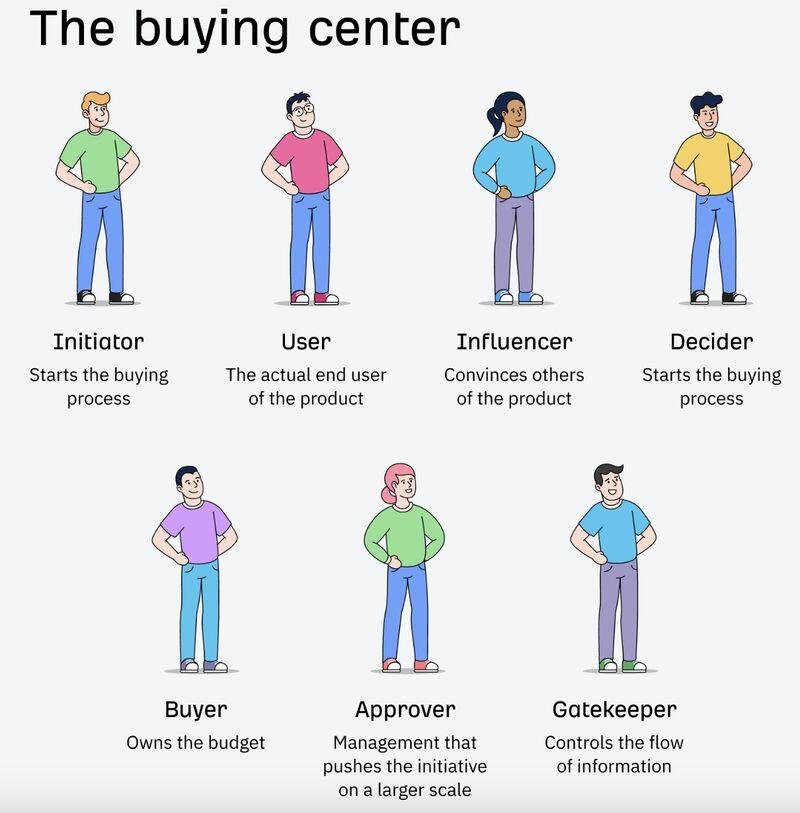
Traditional marketing has been built around identifying a target consumer, understanding their needs, and creating a proposition that persuades them to buy. That model works reasonably well when the buyer and user are the same person. But many categories operate differently. The purchase decision becomes a small ecosystem involving several stakeholders, each with a different motivation.
Consider education. The child is the user; the parent is generally the payer; and teachers, relatives, friends, and online communities can influence the decision. Consider enterprise software. An employee may use the software every day, the IT department may evaluate it, procurement may negotiate the contract, the CFO may control the budget, and a senior executive may approve the purchase. In healthcare, the patient purchases and consumes the product, while a doctor or pharmacist may influence the decision. In pet care, the animal is the ultimate user, the pet parent is the buyer, and the veterinarian may become an important source of trust.
The implication is significant. There may not be one customer journey. There may be several journeys converging around one transaction.
For marketers, that means understanding the decision architecture before designing the communication.
Start With the Problem, Not the Buyer
One of the most useful ways to approach a buyer-user situation is to identify the problem each stakeholder experiences. The buyer’s problem may differ from the user’s, even though both ultimately relate to the same product.
Take a company purchasing ergonomic office furniture. Procurement may see the purchase as an expenditure that needs to be justified. HR may see it as an employee-wellbeing initiative. Finance may want durability and a reasonable total cost of ownership. Employees, however, experience the chair every working day and care most about comfort and usability.
A manufacturer that markets only “premium ergonomic design” is therefore leaving much of the opportunity unexplored. The same product can be presented through several legitimate value propositions:
- For the employee: greater comfort during long working hours.
- For HR: a better workplace experience.
- For finance: durability and lower replacement costs.
- For procurement: predictable pricing and reliable supply.
- For management: an investment that supports employee productivity and wellbeing.
The product has not changed. What changes is the meaning of value.
This is one of the most important principles in multi-stakeholder marketing: one product can require several propositions without requiring several brands.
Don’t Sell Features. Sell the Outcome Each Person Cares About
The problem becomes particularly visible when marketers communicate features instead of outcomes. A product catalogue tells people what something contains. Effective marketing explains why those features matter to the person making or influencing the decision.
Imagine a school-management platform offering attendance automation, digital communication, analytics and fee-management tools. The software company could spend an entire campaign talking about its technology. But the different stakeholders are not buying “technology.”
The teacher wants less administrative work. The parent wants better communication. The school administrator wants visibility. The management wants operational efficiency. The owner may ultimately want a more scalable institution.
The better proposition is therefore not a list of features but a collection of outcomes: less administrative effort, better communication, greater visibility and more efficient operations.
Indian consumer categories demonstrate the same principle. A washing machine may have multiple wash programmes, sensors, and energy-saving technology, but the buyer may care more about reducing household effort and controlling electricity consumption. A car may offer multiple technical features, but different family members may evaluate it through safety, mileage, design, comfort or status.
The marketer’s job is to translate the product into the stakeholder’s language.
India Is a Particularly Interesting Market for This


Indian purchase decisions are often influenced by family structures, multiple generations and collective decision-making. The person who initiates the purchase may not be the person who pays, and the person who pays may not be the person who uses the product.
Consider children’s products. A child may strongly prefer a particular snack, toy or clothing brand, but the parent ultimately decides whether it enters the shopping basket. The child is attracted by taste, design, colour, characters or peer influence, while the parent may consider nutrition, price, safety and trust. A brand that speaks only to the child may generate demand without conversion. A brand that speaks only to the parent may eliminate the excitement that creates preference.
The same tension exists in education, automobiles, electronics, financial services and healthcare. In each category, successful marketing often requires the brand to create desire for the user and confidence for the buyer.
That is a very different communication challenge from simply creating desire.
The User Can Become the Most Powerful Salesperson
When the buyer and user are different, the user experience becomes an important part of the sales process. This is particularly true when the product is purchased repeatedly or when the user can influence future purchases.
Think about a child repeatedly asking for a particular breakfast cereal. The child does not control the household budget, but the child’s preference can influence the shopping decision. A teenager may have little direct control over the family technology budget but can strongly influence which smartphone or laptop the family considers. An employee may not sign the enterprise software contract but can influence whether the company renews it.
Pet care provides an even more interesting example. The dog cannot buy the product, but the owner’s observation of the dog’s response can determine whether the product is purchased again. The buyer therefore evaluates the product partly through the user’s behaviour.
This makes product experience a marketing asset.
A company may acquire the buyer through advertising, but it retains the buyer through the user’s experience.
Trust Often Sits With the Influencer

Some categories also lack enough buyer or user expertise for confident decision-making. This creates an important role for the influencer.
Healthcare is perhaps the clearest example. The patient may ultimately pay for and use a product, but a doctor’s or pharmacist’s recommendation can carry considerable weight. In pet care, the pet parent makes the purchase, but a veterinarian can provide the reassurance necessary to overcome uncertainty about ingredients, dosage, safety or suitability.
This means brands sometimes need two communication systems rather than one. Consumer communication may focus on convenience, benefits and ease of use, while professional communication may need to focus on evidence, formulation, quality, safety and credibility.
The mistake is assuming that the same message should be repeated to everybody.
The message should remain strategically consistent, but the reason to believe can change by stakeholder.
B2B Marketing Is Really Stakeholder Marketing
The distinction becomes even more important in B2B markets because the purchase process can involve an entire chain of decision-makers. Calling all of them “the customer” hides the very information the marketer needs.
A software company selling to a large organisation might encounter the following sequence:
- The CEO asks whether the solution matters strategically.
- The CFO asks whether the investment is financially justified.
- The CIO asks whether it is secure and compatible.
- The functional head asks whether it solves a business problem.
- Employees ask whether it makes their work easier.
- Procurement asks whether the commercial terms are competitive.
- IT asks whether implementation will be manageable.
The same product must survive every one of these questions.
That is why a B2B sales presentation focused entirely on product features can fail, even with an excellent product. It answers the question, “What does the product do?” when the buying organisation is asking several different questions at once.
A stronger approach is to build a stakeholder map that identifies the economic buyer, end user, technical evaluator, influencer, gatekeeper, and final approver.
Each needs a reason to say yes.
Build a Buyer-User Matrix
A simple buyer-user matrix can make this complexity easier to manage:
| Stakeholder | What They Want | What They Fear | What They Need to Believe |
|---|---|---|---|
| Buyer | Value for money | Wasted expenditure | The investment is justified |
| User | Performance and convenience | Poor experience | The product will make life better |
| Influencer | Credibility | Giving poor advice | The product is trustworthy |
| Approver | Strategic value | Making the wrong decision | The decision supports larger goals |
| Gatekeeper | Smooth execution | Operational problems | The supplier can deliver reliably |
The exercise often exposes a fundamental problem with marketing strategy. The brand may be solving one person’s problem while talking to another.
A product may be loved by users but rejected by buyers because it is too expensive. Another may attract buyers but fail after implementation because users dislike it. Yet another may satisfy both but fail because the person influencing the decision does not trust the brand.
Understanding these tensions lets marketers design communication around the entire decision, not a single persona.
The Emotional Job of the Buyer Matters Too



Marketers sometimes overlook another dimension. Buyers do not always purchase for themselves. They may purchase to express responsibility, care, generosity, status or affection.
A parent buying an expensive product for a child is not simply evaluating specifications. A person buying a gift is not evaluating the product in the same way they would evaluate something for personal use. A company providing employee benefits is not merely spending money. It is communicating something about how it wants employees to experience the organisation.
This is particularly visible in categories such as children’s products, gifting, pet care, healthcare and education.
The buyer may be asking a deeper question:
“What does this purchase say about me and the person I am buying it for?”
That emotional dimension can be as important as the functional proposition.
Measure What Happens After the Sale
When the buyer and user are different, conversion is only the beginning. A successful transaction does not necessarily mean a successful product.
Marketers should therefore examine what happens after purchase:
- Was the product actually adopted?
- Is the user satisfied?
- Does usage continue?
- Does the buyer believe the purchase was worthwhile?
- Does the influencer remain confident in the recommendation?
- Is repeat purchase occurring?
- Is the product being recommended to others?
- Does the buyer renew or repurchase?
This is particularly important in subscriptions, enterprise technology, healthcare services and recurring consumer categories. The person who signs the purchase order may create the initial revenue, but the person who uses the product determines whether that revenue becomes sustainable.
The Real Target Is the Decision Ecosystem
The biggest lesson is that marketers should stop thinking about “the customer” as an individual whenever the purchase involves multiple stakeholders. In many categories, the customer is better understood as a decision ecosystem in which different people perform different roles.
One person may discover the brand. Another may recommend it. Someone else may evaluate it. Another person may pay for it. Someone else may use it. And that user’s experience may determine whether the buyer purchases again.
The strategic questions therefore become much more useful:
- Who uses the product?
- Who pays for it?
- Who influences the purchase?
- Who can veto the decision?
- Who experiences the benefit?
- Who bears the risk?
- What does each stakeholder consider valuable?
- Where do their interests overlap?
- What evidence does each person need?
- What happens after purchase?
Once you answer these questions, marketing becomes much more precise.
Because sometimes the person you need to persuade is not the person you need to delight.
And understanding that difference can change everything from positioning and communication to product design, sales strategy and customer retention.