Brand Debt: The Hidden Cost of Promises a Business Cannot Keep
Advertising can create expectations faster than businesses can deliver. When product quality, distribution and customer experience fail to match brand promises, businesses accumulate brand debt. Discover why broken promises damage trust, weaken loyalty and create long-term costs that discounts and advertising cannot repair.
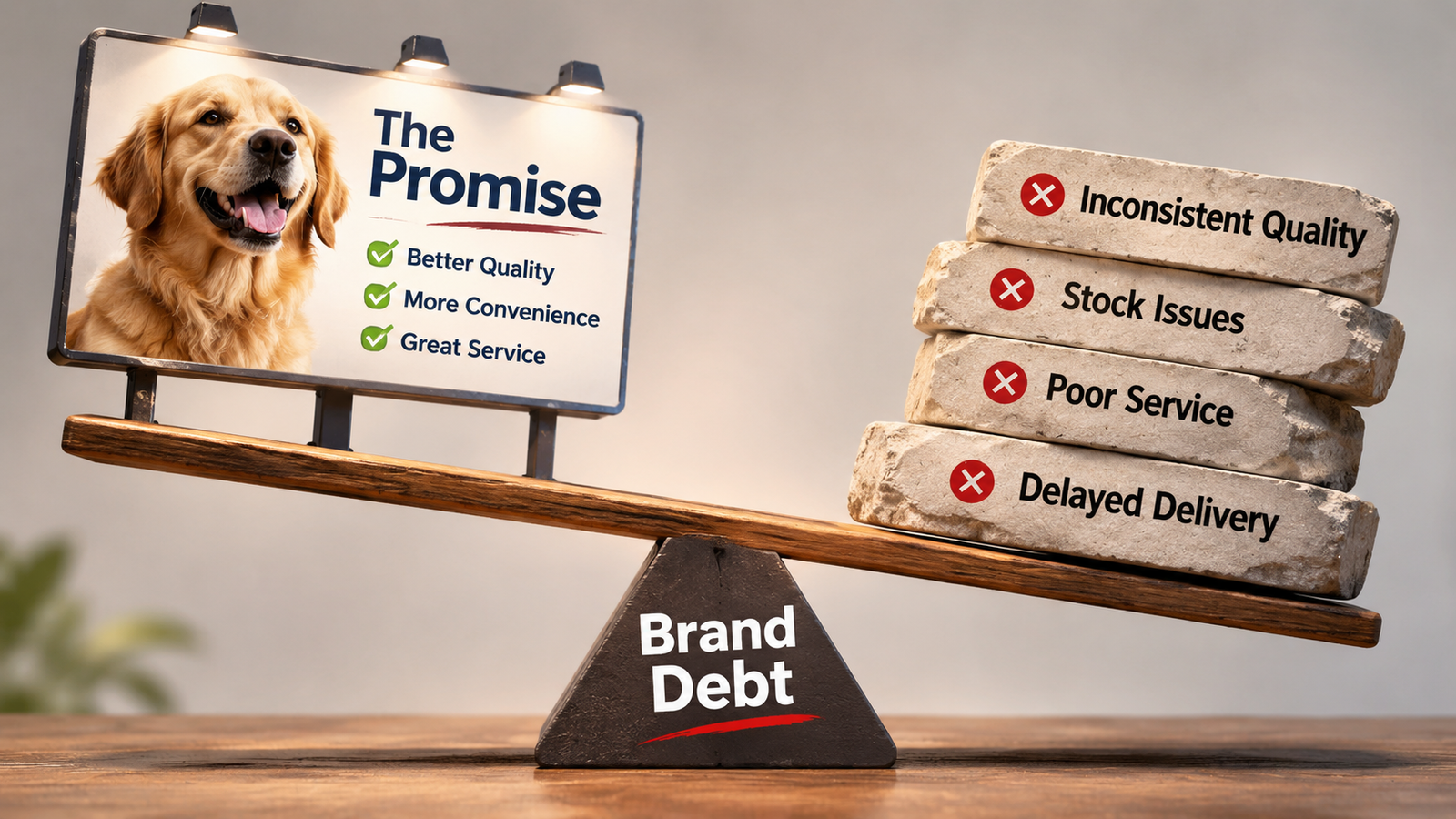
Advertising can build a brand faster than a business can build the capabilities to back it up. But every unfulfilled promise creates a gap between what customers expect and what they actually experience. Over time, that gap becomes brand debt, a liability that no amount of advertising, discounting or promotional spending can easily erase.
The Problem with Promising More Than You Can Deliver
Every brand makes promises. Some are explicit, communicated through advertising and marketing campaigns. Others are implicit, created through packaging, pricing, customer service, distribution, digital experiences, and employee behaviour.
A brand that promises convenience must deliver convenience. A brand that positions itself as premium must justify its premium pricing through product quality, service and experience. A brand that claims to care about customers must demonstrate that commitment when something goes wrong.
The problem begins when marketing moves faster than the business.
An advertising campaign can create awareness overnight. A celebrity endorsement can make a relatively unknown product desirable. A compelling social media campaign can generate thousands of orders. However, manufacturing capacity, distribution networks, customer support, product consistency and after-sales service take considerably longer to develop.
When these capabilities fail to keep pace with marketing promises, the business begins accumulating what can be called Brand Debt.
Unlike financial debt, brand debt may not appear on the balance sheet. It does not necessarily show up in monthly management reports or profitability statements. Yet it quietly affects repeat purchases, customer recommendations, price realisation and long-term brand equity.
Understanding Brand Debt
A useful way to understand this concept is through a simple framework:
The Brand Debt Equation
Promise Created − Experience Delivered
The greater the gap between customer expectations and actual experience, the greater the potential brand debt.
Consider a company that advertises its product as the best in its category. Customers respond, try the product and discover that the quality is inconsistent. The initial advertising may have generated sales, but the experience has weakened the promise’s credibility.
The next time the company advertises, customers may be less willing to believe it. It might have to spend more on discounts, influencer endorsements and promotional campaigns to generate the same response.
This is how brand debt compounds.
It can emerge from several sources:
- Product debt: Advertising promises superior performance, but the product does not consistently deliver.
- Distribution debt: The brand creates demand, but customers cannot find the product where and when they want it.
- Service debt: The brand promises convenience, but customer support, delivery or complaint resolution is poor.
- Experience debt: The brand projects a premium identity, but the actual customer experience feels ordinary.
- Trust debt: The brand communicates values such as sustainability, transparency or customer care but fails to demonstrate them through its actions.
These gaps may initially appear operational. Their consequences, however, are commercial and reputational.
When Marketing Outruns Business Capability
India offers several useful examples of how customer expectations and operational delivery can become difficult to reconcile.
1. The quick-commerce promise: Convenience has to be delivered
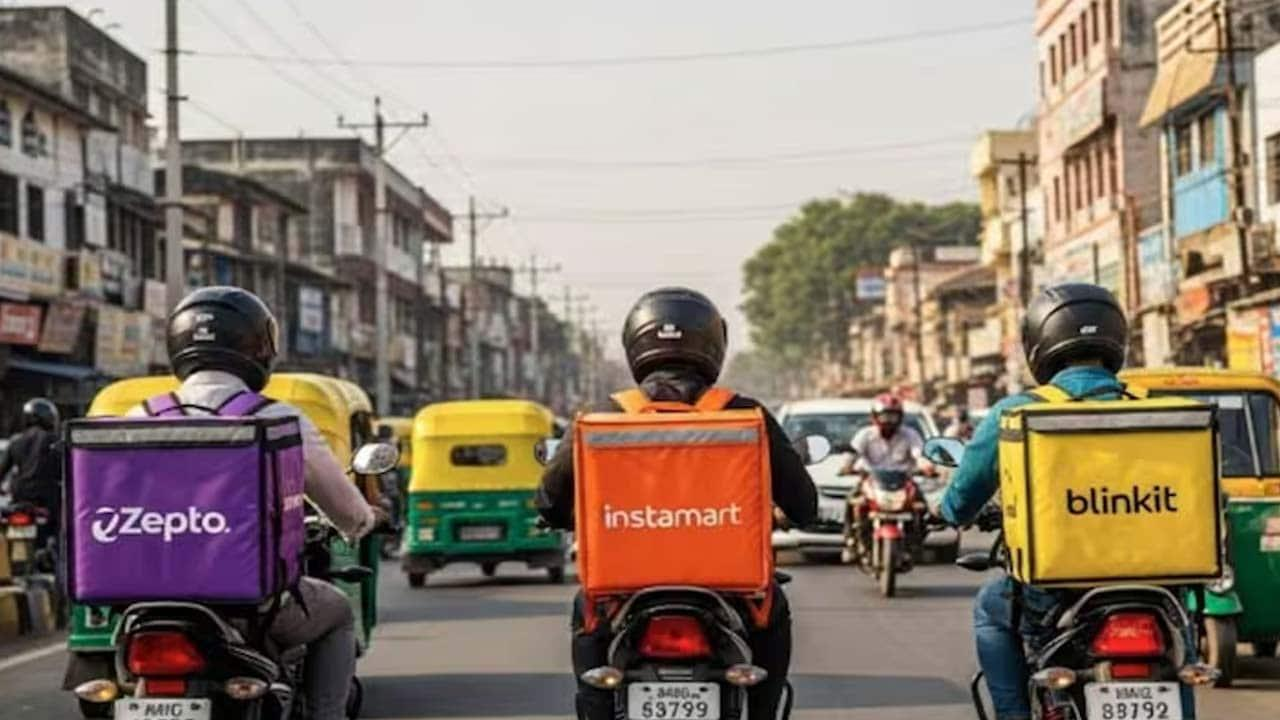
Quick-commerce platforms such as Blinkit and Zepto have transformed expectations around shopping convenience. Their proposition is built around speed, availability and ease.
However, the promise of convenience goes beyond delivery time.
Customers also expect accurate orders, product availability, reasonable pricing, reliable refunds and consistent service. A delivery that arrives in ten minutes but contains the wrong product is not necessarily a successful experience.
The larger lesson is that brands cannot define customer experience around the one attribute they advertise most prominently. The entire delivery chain must support the promise.
2. Ola Electric: The challenge of sustaining a technology-led promise

Ola Electric entered the market with an ambitious proposition around electric mobility, technology and a transformed ownership experience.
Its growth and visibility helped build considerable consumer expectations. However, customer concerns about service, repairs, and after-sales support have shown the importance of building an ownership ecosystem alongside the product.
An electric vehicle brand is not simply selling a scooter. It is selling confidence in the vehicle, charging infrastructure, software, maintenance, spare parts and service availability.
When the ownership experience falls short of the expectations the brand creates, the damage extends beyond an individual transaction. It can influence perceptions of the entire proposition.
The lesson is straightforward: innovation attracts customers, but dependable execution retains them.
3. The premiumisation trap: Packaging cannot substitute for experience

Indian consumers are increasingly willing to pay a premium for products that promise better ingredients, superior quality, exclusivity or a differentiated experience.
Several D2C brands have built their identities around premium packaging, carefully curated social media content and aspirational positioning.
But premium positioning raises expectations.
A consumer paying ₹1,500 for a skincare product is not merely buying the formulation. They are also buying confidence in its efficacy, ingredient transparency, safety and consistency.
If the product performs no better than a considerably cheaper alternative, the brand has a problem. Attractive packaging may encourage the first purchase, but it cannot guarantee the second.
This is particularly relevant in India’s crowded D2C market, where customer acquisition through influencers and digital advertising can sometimes outpace investment in product development and customer experience.
Premium is not what a brand charges. It is what the customer consistently experiences.
How Brand Debt Accumulates and Damages Customer Trust
Brand debt rarely develops overnight. It usually results from several small compromises that become embedded in the business.
Consider the following progression:
- The promise: Advertising creates expectations around quality, convenience, service or performance.
- The gap: Operations, distribution, product quality or service fail to meet those expectations.
- The disappointment: Customers experience inconsistency and begin questioning the brand’s credibility.
- The compensation: The business introduces discounts, offers, replacements and additional advertising to recover demand.
- The accumulation: Customer acquisition becomes more expensive, loyalty weakens, and the brand loses pricing power.
The danger is that the business may continue reporting healthy sales in the early stages.
Promotional campaigns can temporarily conceal dissatisfaction. New customer acquisition can compensate for declining repeat purchases. However, these are not solutions. They postpone the consequences.
Eventually, the business discovers it is spending more and more money to generate the same level of customer confidence.
Why Discounts Cannot Repay Brand Debt
When sales decline, discounting is often the first response.
A brand offering a 20% discount may attract customers who were previously hesitant. But if the underlying problem is poor product quality, delayed delivery or unreliable service, the discount does little to address it.
In fact, repeated discounting can create another problem.
Customers begin associating the brand with promotional pricing rather than its original value proposition. They postpone purchases until the next sale and become less willing to pay the full price.
This creates a damaging cycle:
- Poor experience reduces customer confidence.
- Lower confidence reduces willingness to pay.
- Discounts become necessary to stimulate demand.
- Lower realisation affects profitability.
- Reduced profitability limits investment in product and service improvements.
The brand now faces two problems: the original delivery gap and the commercial consequences of trying to compensate for it.
The only sustainable way to reduce brand debt is to improve the experience that customers actually receive.
How Businesses Can Measure Brand Debt
Brand debt is hard to measure directly, but you can spot its symptoms through operational and marketing metrics.
Businesses should move beyond awareness, reach, engagement, and campaign conversion to examine whether they’re fulfilling their promises.
Some useful indicators include:
| Area | What to measure |
|---|---|
| Product | Returns, defects and repeat complaints |
| Distribution | Stock availability and order fulfilment |
| Service | Complaint resolution time and repeat grievances |
| Customer loyalty | Repeat purchase and churn rates |
| Pricing | Full-price sales versus discounted sales |
| Trust | Customer recommendations and negative reviews |
| Communication | Gap between advertised claims and actual delivery |
An important question for management is:
Are customers coming back because they genuinely value the brand, or because the business keeps giving them reasons to buy again through discounts?
This distinction can reveal a great deal about a brand’s health.
Five Ways to Prevent Brand Debt
Businesses do not need to stop making ambitious promises. They need to ensure that their capabilities grow alongside those promises.
Here are five practical steps:
1. Audit every major brand promise
List the promises made through advertising, packaging, websites, sales teams and customer communication. Examine whether each promise is supported by evidence and operational capability.
2. Align marketing with operational readiness
Before launching a major campaign, evaluate manufacturing capacity, inventory, distribution, customer support and service infrastructure. Marketing should not create demand that the business cannot fulfil.
3. Make consistency a strategic priority
A brand is not defined by its best customer experience. It is defined by the experience customers can reliably expect. Consistency across locations, channels and interactions matters more than occasional excellence.
4. Treat customer complaints as strategic intelligence
Don’t view complaints merely as customer service issues. They often reveal weaknesses in product design, distribution, communication or organisational processes.
5. Reward delivery, not just demand generation
Marketing teams are frequently measured by reach, leads, conversions and sales. These metrics matter, but they should be complemented by repeat purchases, customer satisfaction, returns and complaint resolution.
Brand building must become a shared organisational responsibility, not the exclusive domain of the marketing department.
The Brands That Last Are Those That Keep Their Promises
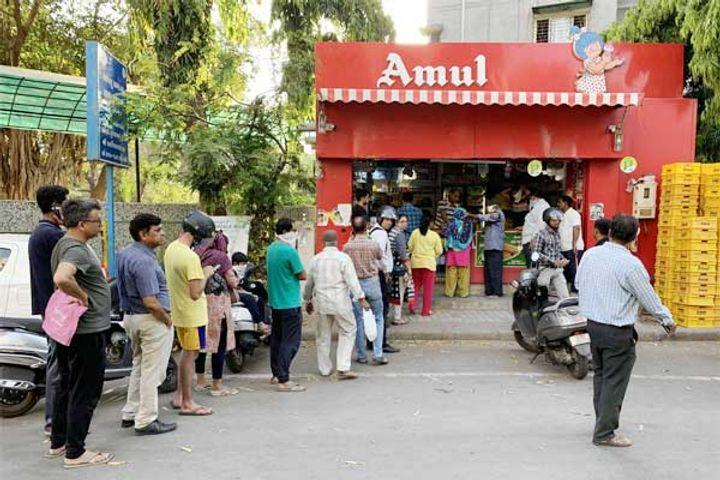
Consider Amul. Its brand strength has been built over decades through familiarity, availability, product consistency and a recognisable identity. Its advertising creates an emotional connection, but the business is also supported by a large dairy procurement, processing and distribution ecosystem.
Similarly, Asian Paints has built its proposition beyond paint products through colour expertise, painting services and home improvement solutions. Its ability to connect the product promise with a broader customer experience illustrates the importance of supporting brand communication with business capabilities.
These brands demonstrate an important principle: long-term brand equity is not created by communication alone. It emerges when communication and delivery reinforce each other.
Conclusion: A Brand Is Only as Strong as Its Ability to Deliver
In a competitive marketplace, making promises is easy. Advertising platforms, influencers, celebrity endorsements and digital campaigns allow businesses to create enormous expectations in very little time.
But expectations create obligations.
Every promise a business makes becomes a commitment that its product, people, processes and systems must eventually honour.
Brand debt is therefore not simply a marketing problem. It is a business management problem. It reflects the distance between what an organisation wants customers to believe and what its capabilities allow customers to experience.
Businesses must recognise that brand building is not about continuously raising expectations. It is about developing the ability to meet them, consistently and profitably.
The most valuable brand promise is not the most impressive one a company can make. It is the one it can keep.
Sources for the Ola Electric example: Reuters reporting on consumer complaints and service issues, October 2024, and the Indian Express report on the consumer watchdog’s investigation, November 2024. Reuters


