Will Rising Costs Threaten Pet Ownership in India? Lessons from the US and What They Mean for India’s Growing Pet Economy
Inflation is putting pressure on pet owners across the world. But India’s growing community of pet parents may respond very differently. Here’s why the future of the pet industry may depend more on emotional bonds than on rising costs.


The pet industry has enjoyed years of remarkable growth across the world. As more people welcome pets into their homes, spending on nutrition, healthcare, grooming and accessories has steadily increased.
However, inflation is beginning to challenge this growth story.
A recent US study suggests that rising costs are forcing many Americans to rethink pet ownership itself. Higher prices for pet food, veterinary care and essential supplies are creating financial stress, leading some owners to reduce spending, incur debt or even consider giving up their pets.
Will India follow the same path?
Perhaps, but not entirely.
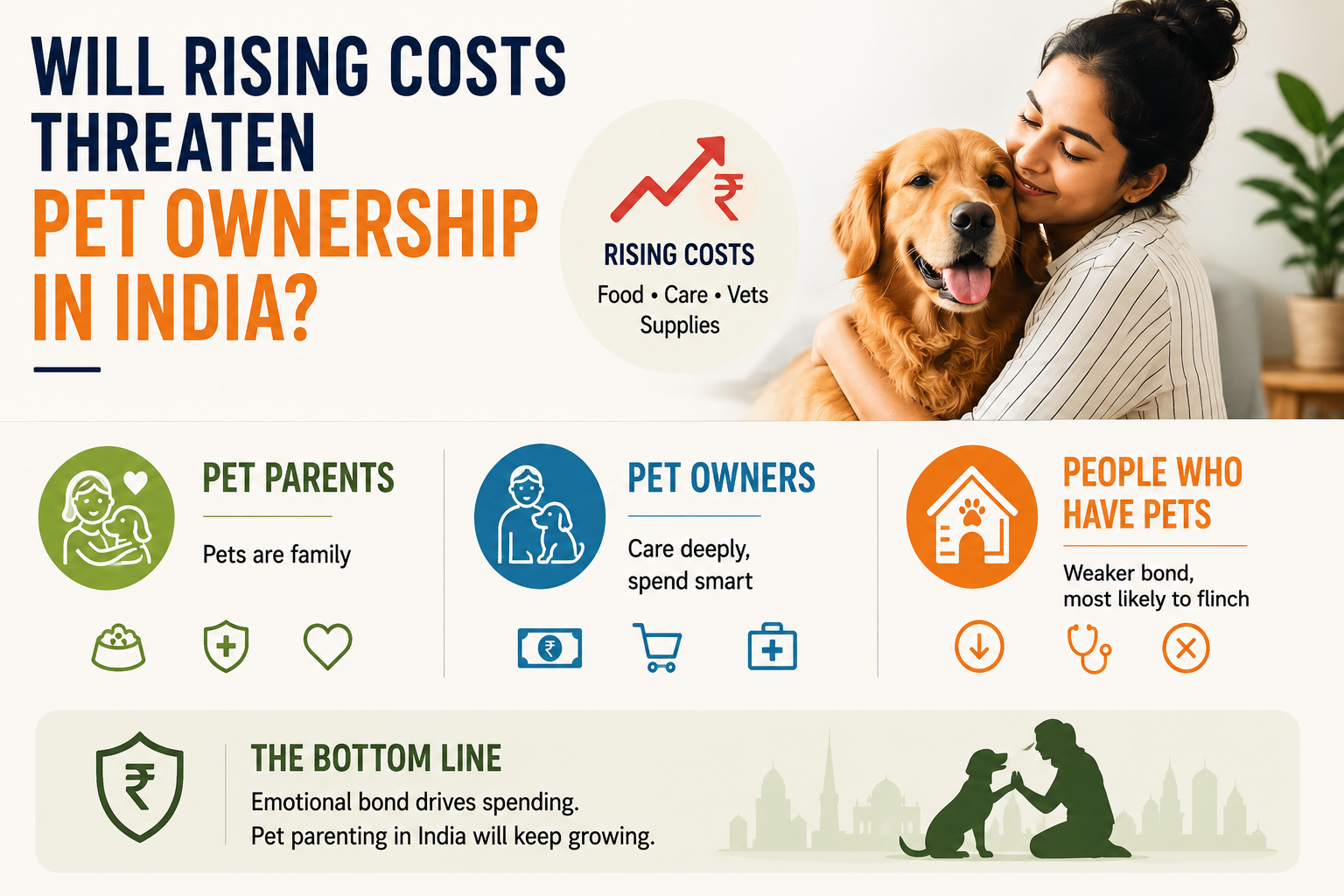
My hypothesis is that India will not witness a significant decline in pet parenting. Instead, rising costs will widen the gap between pet parents, pet owners and people who merely have pets.
The US Experience: Inflation Is Changing Pet Ownership
The American market offers an early glimpse of how inflation affects pet ownership.
According to surveys highlighted by PetfoodIndustry:
- 85% of pet owners say inflation has made caring for pets more difficult.
- 23% have considered giving up a pet because of financial pressure.
- 37% have gone into debt to pay for pet expenses.
- Many owners are cutting their own personal spending before reducing expenditure on their pets.
- Pet food, veterinary care and essential supplies have experienced the sharpest cost increases.
While these figures reflect the US market, they raise an important question for India.
India Is Different
India’s pet market is still expanding rapidly.
Urbanisation, nuclear families, delayed parenthood and changing lifestyles continue to bring new pet parents into the category.
Unlike mature Western markets, India still has enormous headroom for growth.
However, not everyone who owns a pet relates to that animal in the same way.
That difference will determine how rising costs affect the industry.
There Are Three Distinct Types of Consumers
Rather than viewing all pet owners as one homogeneous group, it is useful to distinguish between three segments.
1. Pet Parents
These consumers see pets as members of the family.
They willingly invest in:
- Premium nutrition
- Preventive healthcare
- Supplements
- Grooming
- Diagnostics
- Behavioural training
- Enrichment products
For them, spending is driven by emotional commitment rather than simple affordability.
2. Pet Owners
These consumers genuinely care for their animals but operate within household budgets.
When costs rise, they are likely to:
- Switch to more affordable food brands
- Delay grooming appointments
- Reduce discretionary purchases
- Postpone preventive veterinary visits
- Purchase fewer toys and treats
Their pets remain part of the family, but spending becomes more value-conscious.
3. People Who Have Pets
This is perhaps the most vulnerable segment.
These households may have acquired pets because:
- Children wanted one
- The family needed security
- Friends or relatives gifted a pet
- Pets appeared fashionable
- The long-term commitment was not fully understood
When expenses rise, this group is most likely to reconsider pet ownership itself.
Emotional Bond Determines Spending


Income alone does not determine spending.
The strength of the emotional bond often matters far more.
A family earning a moderate income may willingly spend thousands of rupees every month on a beloved pet.
Another household with significantly higher income may hesitate to spend even half that amount.
The difference lies in perception.
One sees a family member.
The other sees a household animal.
Pet Parents Will Continue Spending
For emotionally invested pet parents, pets occupy a position similar to children.
They may:
- Reduce their own discretionary spending
- Delay vacations
- Buy fewer luxury products for themselves
But they are unlikely to compromise significantly on their pet’s health or nutrition.
This mirrors trends seen in the United States, where many owners sacrifice personal expenditure before reducing spending on their pets.
Pet Owners Will Become More Selective
Rather than exiting the category, many Indian pet owners are likely to optimise spending.
Possible behavioural changes include:
- Comparing brands more carefully
- Looking for better value
- Buying larger economy packs
- Taking advantage of subscriptions
- Purchasing during promotional periods
For brands, value communication will become increasingly important.
Casual Ownership Faces the Greatest Risk
The greatest pressure is likely to fall on households with weaker emotional attachment.
Possible consequences include:
- Delayed veterinary visits
- Lower-quality nutrition
- Reduced preventive care
- Avoidance of expensive treatments
- Reluctance to adopt another pet
This does not necessarily imply mass abandonment, but it may slow future pet adoption among less committed consumers.
India’s Advantage: Multiple Price Points
Unlike many Western markets, India offers products and services across a wide range of price levels.
Consumers can choose between:
- Economy and premium foods
- Local veterinarians and speciality hospitals
- Independent groomers and luxury salons
- Homemade diets and commercial nutrition
This flexibility allows consumers to trade down rather than leave the category entirely.
Nevertheless, veterinary care, diagnostics, imported medicines and specialised treatments continue to become more expensive.
What This Means for the Pet Industry
Rising costs should not be viewed solely as a threat.
They also represent an opportunity for brands that create genuine value.
Premium brands must demonstrate
- Scientific credibility
- Ingredient transparency
- Proven health benefits
- Trust and consistency
Value brands must deliver
- Affordable pricing
- Reliable quality
- Convenient pack sizes
- Everyday accessibility
Consumers will increasingly ask:
“Why should I pay more?”
Brands that cannot answer this question convincingly may struggle.
The Real Question
The more relevant question is not:
Will rising costs reduce pet ownership?
Instead, it is:
Which consumers will continue investing despite rising costs?
The answer depends less on household income and far more on emotional attachment.
As India continues moving from pet ownership to pet parenting, the emotionally invested segment is likely to remain remarkably resilient.
Final Thoughts
The American experience provides India with an important early warning. Inflation can place enormous pressure on pet-owning households, particularly through rising veterinary costs, pet food prices and essential supplies.
India, however, is at a different stage of market evolution.
The growing population of pet parents is unlikely to reduce spending significantly because their decisions are driven by love and responsibility rather than convenience.
The greater challenge lies among households where the emotional bond is weaker. These consumers are more likely to delay care, reduce discretionary spending or rethink future pet ownership altogether.
Ultimately, rising costs may not dramatically reduce India’s pet population.
They will, however, reshape who spends, how they spend, and which brands earn their trust.
References
- Wall, Tim. (2024). 5 Ways Rising Costs Threaten Pet Ownership in US. PetfoodIndustry.
https://www.petfoodindustry.com/pet-food-market/market-trends-and-reports/news/15683784/5-ways-rising-costs-threaten-pet-ownership-in-us (PetfoodIndustry) - Phillips-Donaldson, Debbie. (2024). The Ongoing Pain of High Prices for Pet Food Purchasers. PetfoodIndustry.
https://www.petfoodindustry.com/blogs-columns/adventures-in-pet-food/blog/15707818/the-ongoing-pain-of-high-prices-for-pet-food-purchasers (PetfoodIndustry) - Wall, Tim. (2024). US Dog, Cat Owners Scrimp on Themselves Before Pet Food. PetfoodIndustry.
https://www.petfoodindustry.com/pet-food-market/market-trends-and-reports/article/15676721/us-dog-cat-owners-scrimp-on-themselves-before-pet-food (PetfoodIndustry) - Sprinkle, David. (2025). Rising Pet Food, Veterinary Costs Top Challenges to Pet Ownership. PetfoodIndustry.
https://www.petfoodindustry.com/blogs-columns/market-report/article/15739633/rising-pet-food-veterinary-costs-top-challenges-to-pet-ownership (PetfoodIndustry)