Costco: The Retail Giant That Won by Breaking Retail’s Rules
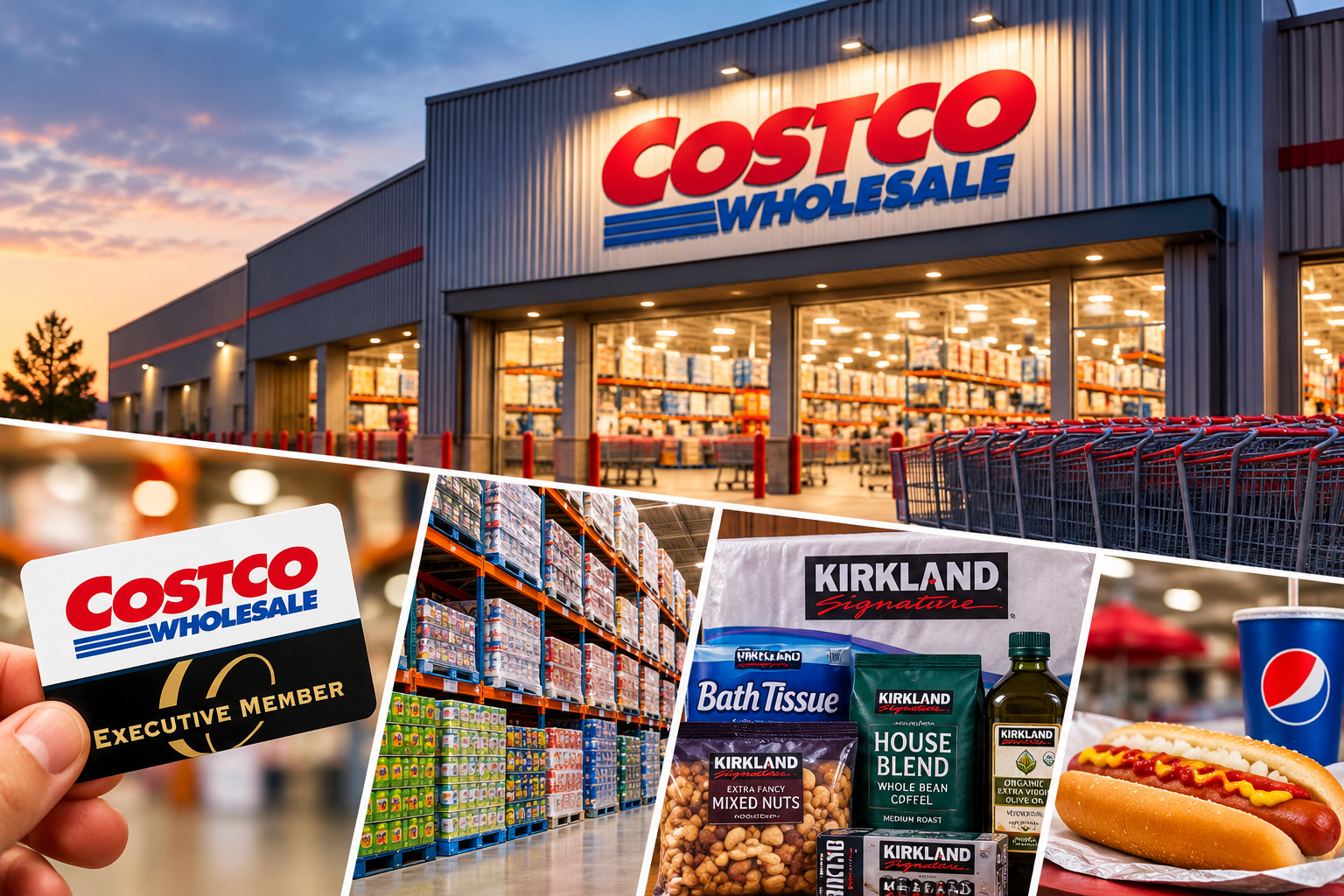
Costco turned conventional retail on its head with a business model built on paid membership, bulk buying, low margins and private-label power. Discover how these interconnected choices create a formidable competitive advantage.
Most retailers believe growth comes from offering more choices, creating attractive stores, running bigger advertising campaigns, and persuading customers to buy.
Costco took a different route. It built a retail empire by doing less, charging customers for the privilege of shopping, and making its own products compete with established consumer brands.
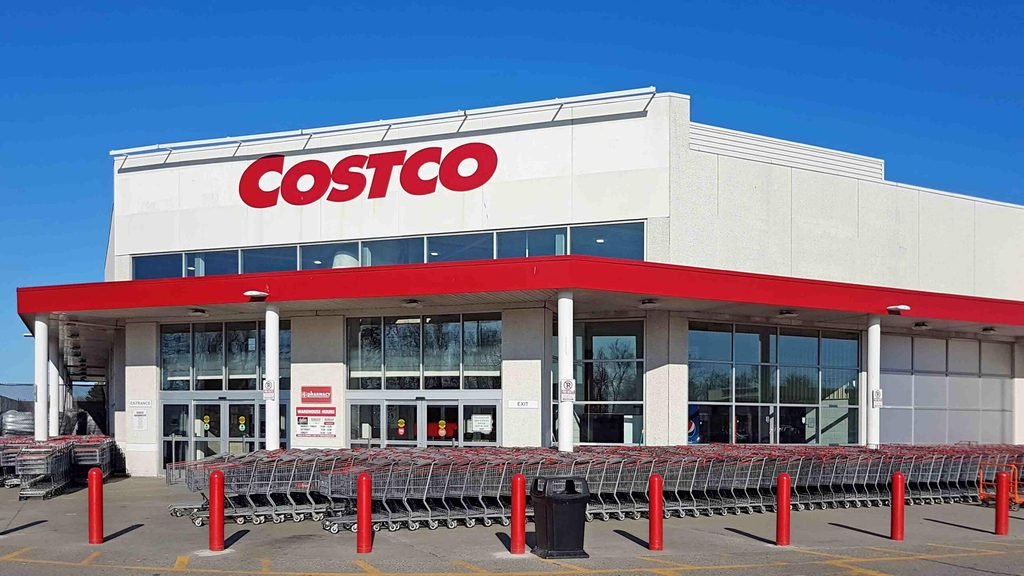
The result is one of the most distinctive business models in modern retail. Costco shows that competitive advantage doesn’t always come from doing more than the competition. Sometimes, it comes from having the courage to do less, but doing it exceptionally well.
1. Membership: Making Customers Pay to Shop
The traditional retail model is simple. Attract customers, bring them into the store, and convince them to spend.
Costco added an unusual first step: customers pay an annual membership fee before they can shop.
This seemingly restrictive approach creates several advantages.
- Recurring revenue: Membership fees provide a predictable income stream, independent of individual shopping transactions.
- Customer commitment: Members have an incentive to shop at Costco regularly to extract value from their annual fees.
- A built-in loyalty mechanism: The more customers save through bulk purchases and competitive pricing, the stronger the case for renewing their memberships.
- A reinforcing business cycle: Membership income helps Costco maintain its low-price proposition, which makes membership more attractive.
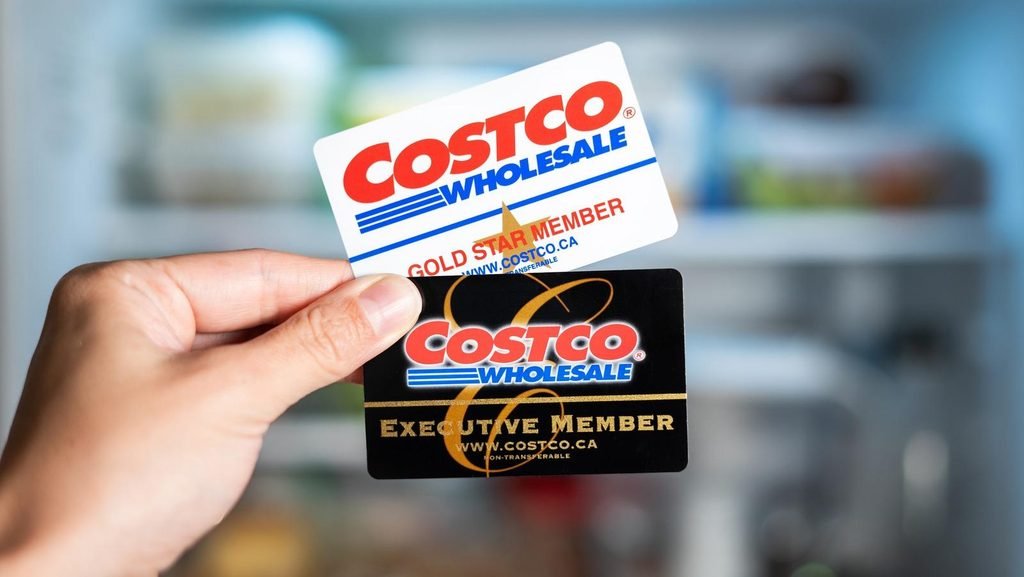
For members, the fee is an investment in future savings. For Costco, it is a powerful way to build customer loyalty and generate recurring income.
The strategic insight is worth noting: Costco does not simply sell products. It sells access to a shopping experience that promises value.
2. The Paradox of Less Choice
Walk into a conventional supermarket, and you might find an entire aisle dedicated to ketchup. Costco is more likely to offer a limited selection, often in larger packs.
The same philosophy applies across categories. Rather than stocking every possible variation, Costco concentrates on a relatively narrow assortment of products.
This is not a limitation born purely out of necessity. It is a deliberate operating choice.
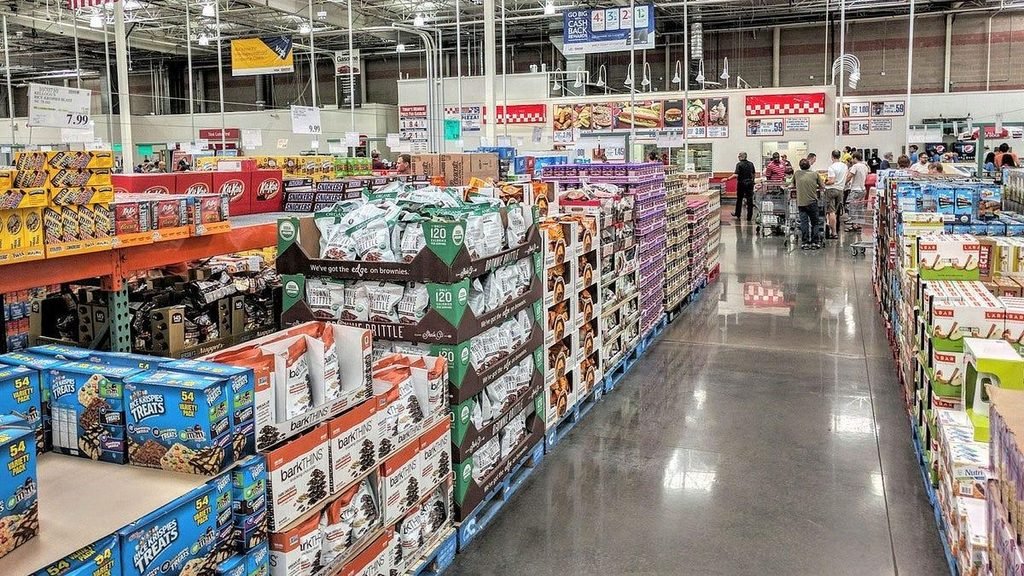
Fewer products can make the retail business more efficient.
- Greater purchasing power: Concentrating demand on fewer stock-keeping units (SKUs) allows Costco to negotiate competitive prices with suppliers.
- Faster inventory movement: A focused assortment can improve inventory turnover and reduce the complexity of managing slow-moving products.
- Simpler operations: Fewer variations make purchasing, warehousing, replenishment and merchandising easier to manage.
- Reduced decision fatigue: Customers face fewer alternatives and can decide more quickly.
Of course, limited choice is not right for every category or consumer. Costco’s model works because its customers are willing to trade variety for value, convenience and larger quantities.
The lesson for retailers is that assortment size should be a strategic decision, not a measure of ambition. More products do not automatically mean more sales or greater customer satisfaction.
3. Kirkland Signature: The Private Label That Became a Powerhouse
Costco’s competitive strength extends beyond the products it buys from other manufacturers. Its private label, Kirkland Signature, has become an important part of its identity.
From coffee and cashews to batteries, clothing and household essentials, Kirkland spans a broad range of everyday consumer categories.
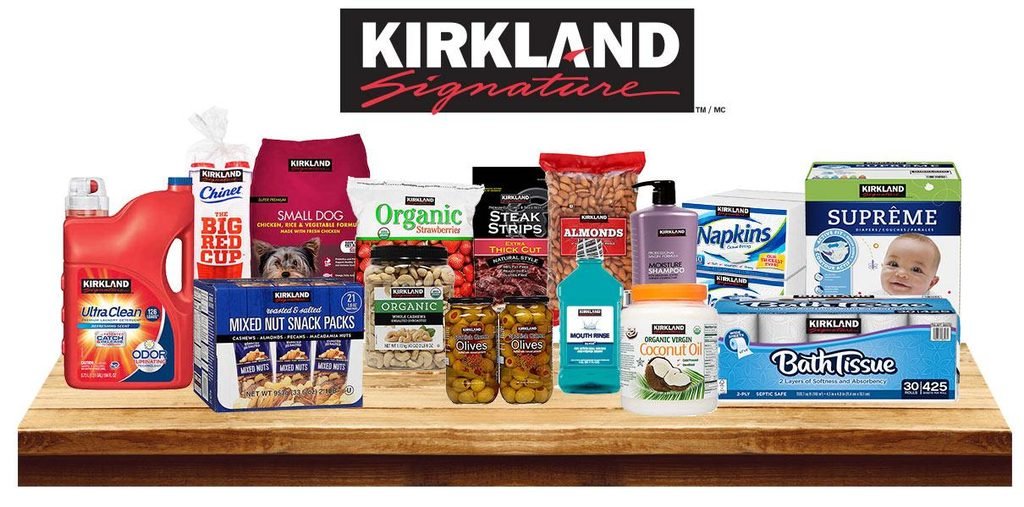
Private labels are hardly new. Supermarkets have sold store brands for decades. What makes Costco’s approach particularly interesting is Kirkland’s role in its overall business strategy.
- Value without excessive brand premiums: Kirkland gives customers an alternative to established national brands, often at attractive prices.
- Differentiation: Competitors may sell similar products, but they cannot offer the same Kirkland range.
- Greater control over the proposition: Costco can develop products around its expectations for quality, pricing and customer value.
- Stronger customer trust: When customers repeatedly find products that meet their expectations, the store brand itself becomes a reason to return.
Kirkland’s scale also challenges conventional assumptions about brand building. Consumer brands typically invest heavily in advertising, distribution and market visibility. Kirkland benefits from Costco’s existing membership base, warehouse presence and customer relationships.
Its marketing advantage is built into the retail system itself.
This does not mean Kirkland has no costs for product development, packaging, or brand management. Instead, Costco can leverage an established customer ecosystem rather than relying on a conventional, stand-alone brand-building model.
The broader lesson is that a retailer’s private label can evolve from a low-cost alternative into a major source of differentiation and competitive advantage.
4. The Costco Experience: Retail as Entertainment
Costco is not designed to resemble a luxury department store. Its warehouses are functional, its product displays can look industrial, and navigating the store can feel like an expedition.
Yet the experience has its own appeal.
Consider some of its most recognisable features:
- Product sampling: Free samples encourage customers to try unfamiliar products and can turn routine shopping into an engaging experience.
- The famous $1.50 hot dog and soda combination: This enduring price point reinforces Costco’s value credentials and has become part of its brand identity.
- Unexpected discoveries: Seasonal merchandise, unusual bargains and premium products create a treasure-hunt effect.
- A surprising mix of price points: Customers can encounter inexpensive household essentials alongside jewellery and other high-value purchases.
These elements serve different purposes, but together they create a recognisable retail experience.
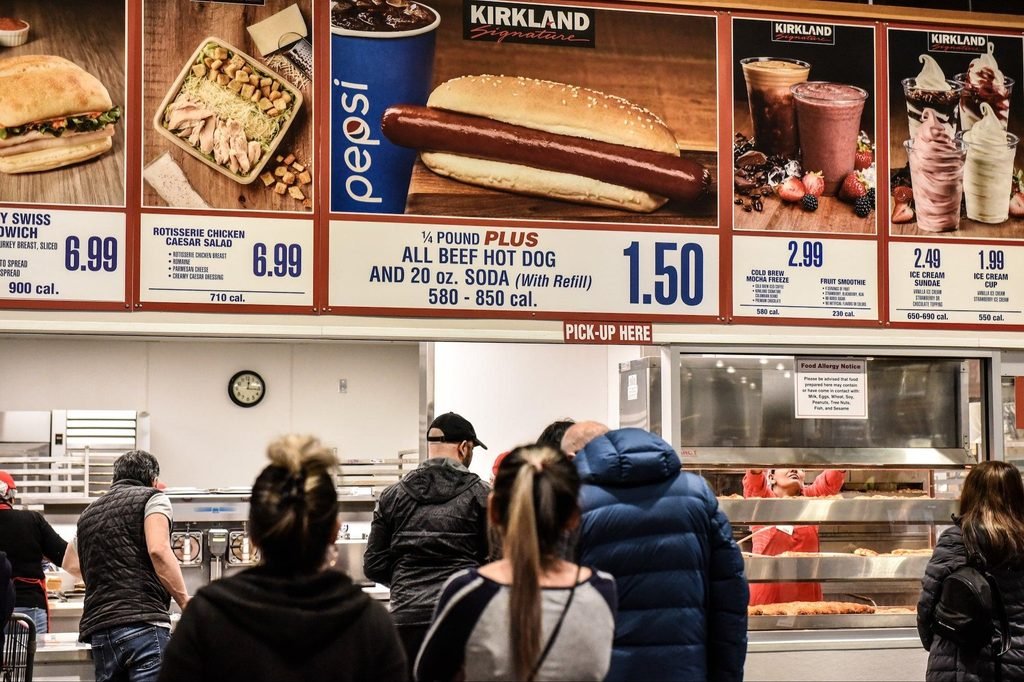
Costco does not need every part of the store to feel premium. It needs customers to believe that the overall proposition delivers exceptional value.
The experience also encourages exploration. Members may arrive for groceries and leave with household products, clothing or something they never intended to buy.
Costco makes shopping functional, economical and entertaining at the same time.
5. The Real Business Model: A System, Not a Collection of Tricks
It is tempting to view Costco’s success as the result of a few clever decisions: charge membership fees, sell in bulk, offer a cheap hot dog and launch a private label.
But the real advantage lies in how these choices reinforce one another.
- Membership creates a committed customer base.
- A focused assortment concentrates purchasing volumes.
- High purchasing volumes support competitive prices.
- Kirkland differentiates the store and strengthens its value proposition.
- Competitive prices encourage repeat visits and membership renewals.
- High customer engagement supports the broader retail ecosystem.
Each decision makes the others more effective.
This is what makes Costco’s model difficult to replicate. A competitor cannot simply introduce bulk packs or launch a private label and expect equivalent results. It must build the operating capabilities, supplier relationships, customer trust and economics that make those choices work together.
Costco’s model also depends on discipline. Sustaining its pricing reputation would be difficult if it began chasing short-term margins at the expense of customer value.
The company succeeds by not ignoring retail fundamentals. It is succeeding by organising them differently.
6. What Other Businesses Can Learn From Costco
Costco offers lessons that extend well beyond retail.
1. Build a business model around a clear promise.
Costco’s promise is value. Its assortment, pricing, membership structure, and operating model support that promise. Businesses should ensure their decisions reinforce their positioning rather than dilute it.
2. Make customers part of the economic model.
Membership programmes can generate recurring revenue, but they work only when customers consistently receive enough value to justify the fee. Loyalty must be earned through the economics of the proposition.
3. Treat constraints as strategic choices.
A narrower product range, fewer service options or a more focused customer segment can improve efficiency and differentiation. The key is to understand which choices matter to customers and which merely add complexity.
4. Use your existing strengths to build new advantages.
Costco’s private label benefits from the trust, traffic and distribution infrastructure the retailer has already established. Businesses should leverage existing capabilities rather than build every new initiative from scratch.
5. Be consistent enough to become distinctive.
A single unusual decision can look like an experiment. A series of interconnected decisions can become a recognisable business philosophy.
Conclusion: The Power of Playing Your Own Game
Costco reminds us that successful businesses do not always win by following accepted industry conventions.
It charges customers to shop. It limits the assortment in a world obsessed with endless choice. Costco has developed a powerful private label without relying on the conventional advertising playbook. And it has turned a simple food-court offering into a recognisable symbol of value.
None of these choices, taken individually, explains its success. Together, they create a business model with a clear identity and a strong internal logic.
The takeaway for business leaders is straightforward: Do not copy the visible quirks of a successful company. Understand the system that makes those quirks work.
Differentiation is not about being unconventional for its own sake. It is about making deliberate choices, aligning the organisation around them, and sustaining them long enough for customers to recognise and reward the difference.
Costco didn’t win by playing retail better on everyone else’s terms. It built a different game, then made the pieces work together.
That is a far more valuable lesson than simply selling bigger packs of ketchup.