How “Visa” was Ambushed: American Express Outsmarted the Olympic Sponsor
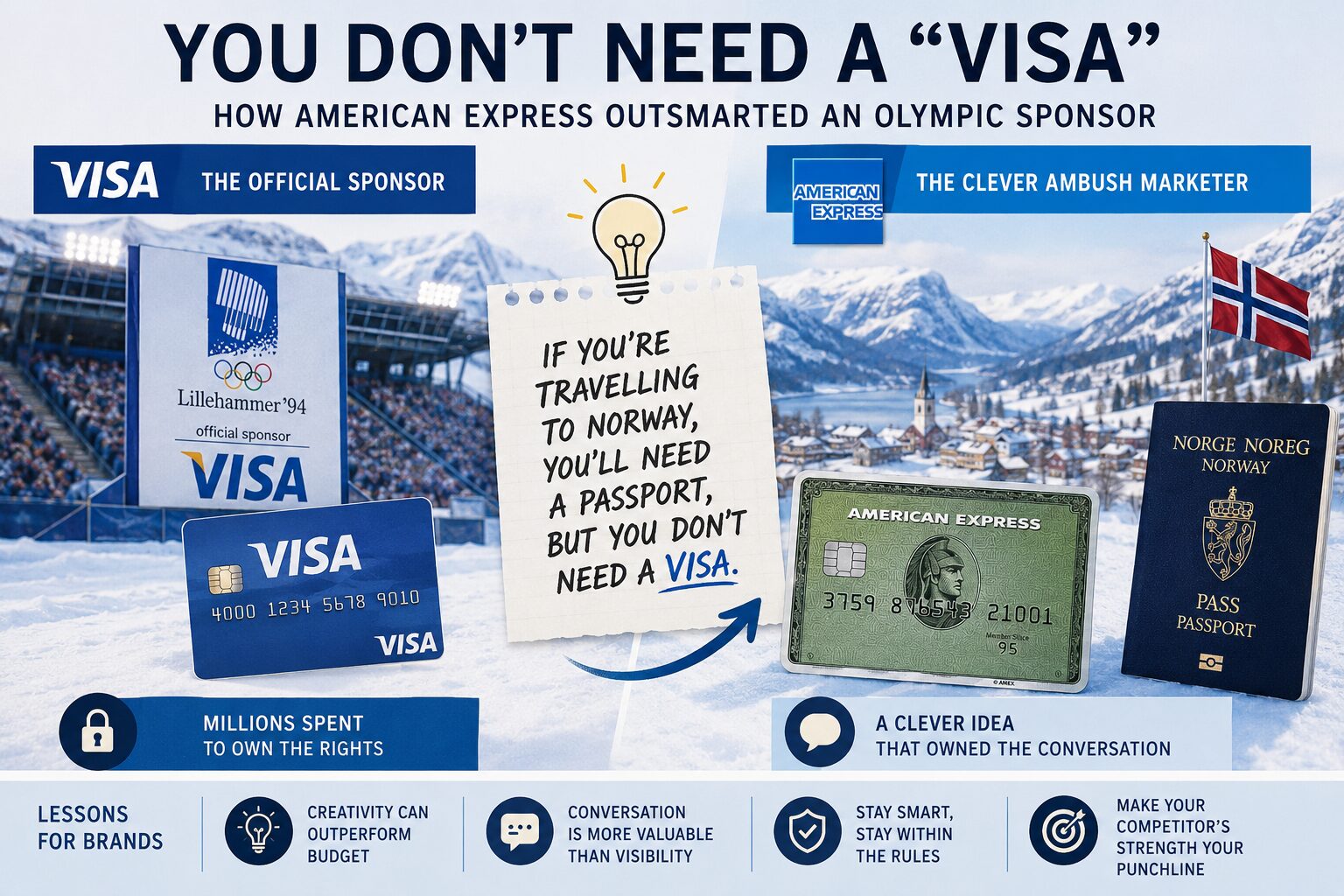
American Express cleverly challenged Visa’s Olympic sponsorship during the 1994 Winter Olympics with one of the most iconic ambush marketing campaigns
Ambush marketing is often associated with bold publicity stunts or brands trying to steal attention around major sporting events. Yet one of the smartest examples required no dramatic spectacle, no giant billboards outside stadiums, and no controversial tactics.
All it took was a single word.
During the 1994 Winter Olympics in Lillehammer, Norway, American Express executed one of the most celebrated ambush marketing campaigns in history by turning its rival’s own brand name into the centre of a joke.
The Challenge


Visa had paid millions of dollars to become the official payment card of the Winter Olympics. The sponsorship gave Visa category exclusivity and the right to associate itself with one of the world’s biggest sporting events.
American Express faced several constraints:
- It was not an Olympic sponsor.
- It could not use Olympic logos or symbols.
- It could not imply any official relationship with the Games.
- It still needed to remain relevant to travellers heading to Norway.
Rather than competing for sponsorship rights, American Express competed for consumer attention.
The Brilliant Idea
American Express launched advertisements carrying a deceptively simple line:
“If you’re travelling to Norway, you’ll need a passport, but you don’t need a Visa.”
Another version stated:
“You don’t need a Visa to visit Norway.”
The genius lay in the double meaning.
The advertisements referred to an immigration visa, not the Visa payment card. Every statement was factually correct, yet consumers immediately understood the playful dig at Visa.
Without mentioning the Olympics directly, American Express made Visa’s expensive sponsorship part of its own advertising.
Why the Campaign Worked
Visual Concept
Official Sponsorship
        │
        ▼
    Visibility

Creative Wordplay
        │
        ▼
 Curiosity
        │
        ▼
 Conversation
        │
        ▼
 Brand Recall
The campaign succeeded because it rewarded consumers for understanding the joke rather than explaining it.
Its strengths included:
- Clever wordplay instead of direct confrontation.
- Complete compliance with sponsorship rules.
- High memorability despite a much smaller investment.
- Extensive media coverage because of its originality.
- A message that travellers instantly understood.
Sponsorship vs Attention
| Visa Bought | American Express Earned |
|---|---|
| Official rights | Public conversation |
| Category exclusivity | Media attention |
| Olympic association | Consumer curiosity |
| Event visibility | Advertising memorability |
Visa owned the official rights.
American Express owned the conversation.
Staying Within the Rules
Visual Checklist
- No Olympic logos used
- No false sponsorship claims
- No trademark infringement
- Only clever use of language
The campaign never crossed the legal line. It relied entirely on consumer interpretation and brilliant copywriting.
Lessons for Brands
Visual Summary
- Big Budget ≠ Winning Campaign
- Big Idea = Winning Campaign
Key takeaways:
- Creativity can outperform spending.
- Wordplay can become a competitive weapon.
- Consumers remember clever advertising.
- Sponsorship needs strong creative support.
- Attention is often more valuable than official rights.
Why It Still Matters
More than three decades later, the American Express versus Visa campaign remains one of advertising’s finest examples of ambush marketing.
Visa bought exclusivity.
American Express bought curiosity.
Marketing history remembers both, but this campaign is still studied because it proved that sometimes the smartest idea is worth far more than the biggest sponsorship cheque.