Iconic Ads/ Campaigns: Coca Cola – Santa Claus
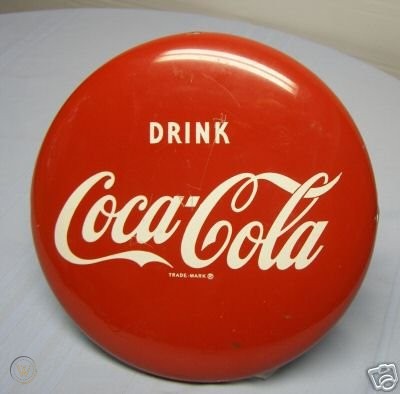
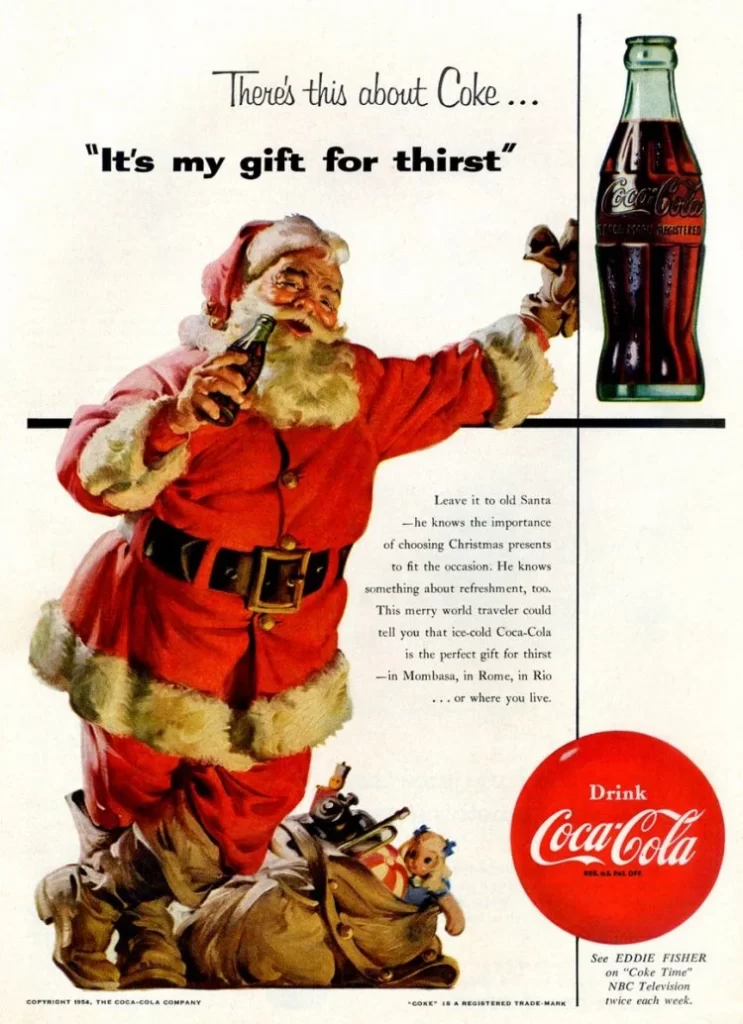
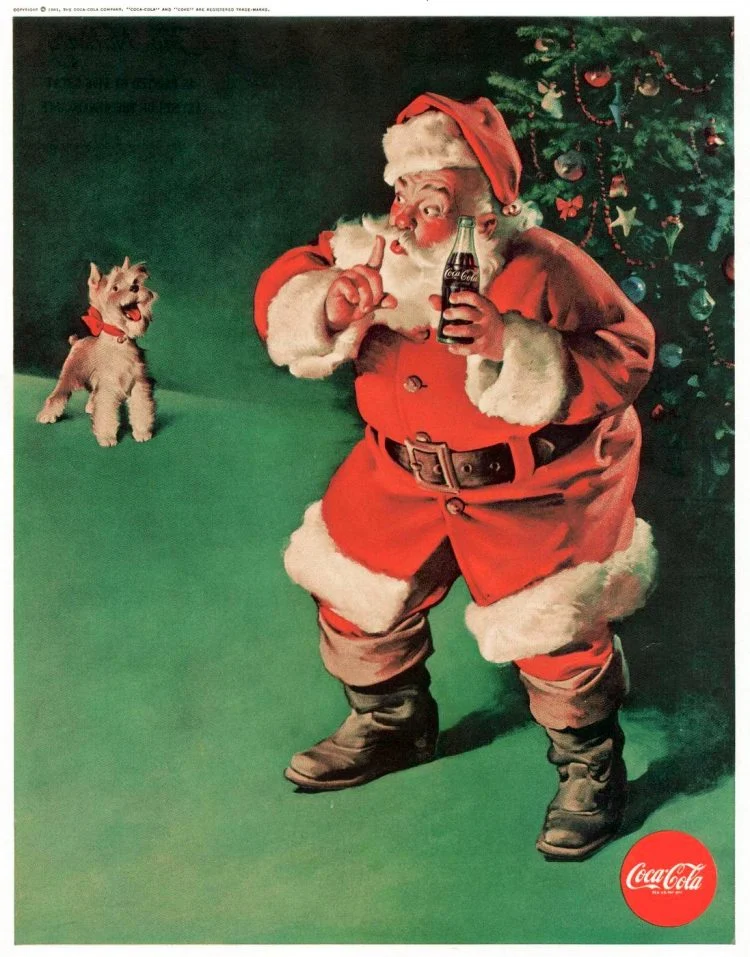
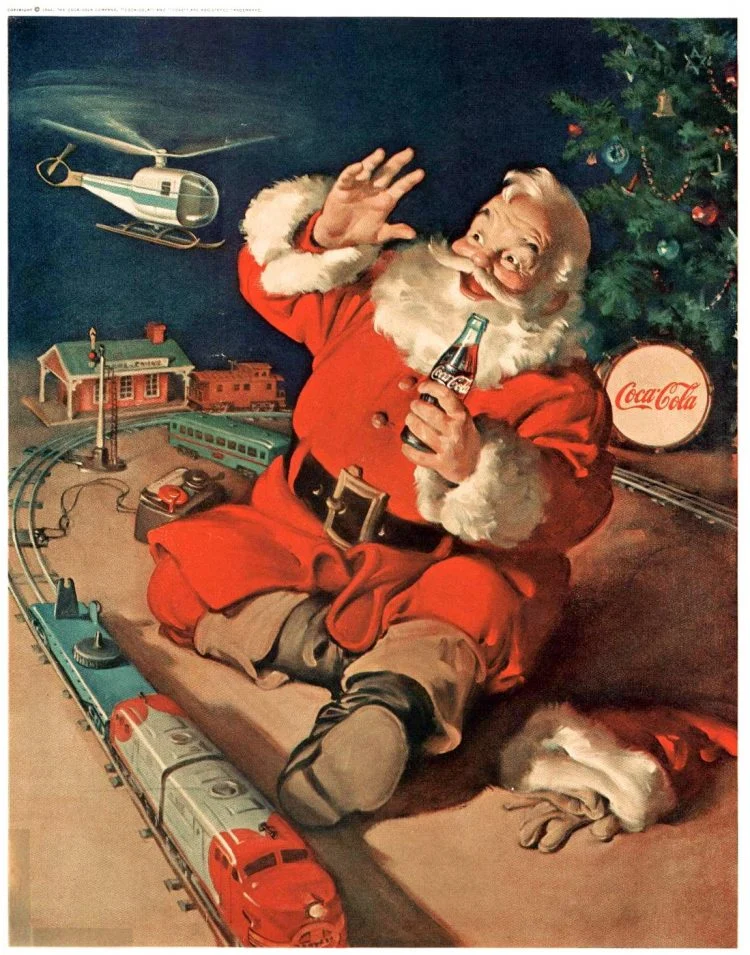
Coca-Cola’s Christmas advertising and Haddon Sundblom’s illustrations helped popularise the familiar image of Santa Claus, creating one of the most enduring associations between a brand and a festive tradition.
Coca-Cola Santa Claus advertising played an important role in popularising the modern image of Santa Claus. Beginning in 1931, illustrator Haddon Sundblom created memorable Christmas illustrations that helped build a lasting association between Coca-Cola, Santa Claus and the festive season.
There were many other images of Santa Claus around the world before 1931, including a tall gaunt man, an elf, and even a terrifying Claus.
By the 1910s and 1920s, Santa Claus had mostly evolved into the merry, bearded, jolly figure we know today, though artists kept changing the colour of his robes or the size of his midsection. Coca-Cola relied on images of Santa that had been around for a century. Clement Clarke Moore, an American poet, penned a poem about “A Visit from St. Nicholas” for his daughters in 1822, picturing the holiday gift-giver as a “little old driver, so energetic and fast” who could fit into chimneys. By the 1860s, Thomas Nast, a prominent cartoonist, had transformed Santa Claus into a fully human-sized figure and given him a house at the North Pole.
In the 1920s, The Coca-Cola Company began advertising for Christmas with shopping-related ads in magazines such as The Saturday Evening Post. The original Santa commercials featured a stern-looking Santa, à la Thomas Nast.
Fred Mizen painted a department-store Santa in a crowd drinking a bottle of Coca-Cola in 1930. The advertisement featured the world’s largest soda fountain, located in the department store Famous Barr Co. in St. Louis, Mo. Mizen’s artwork appeared in print advertisements throughout the 1930 Christmas season and was published in The Saturday Evening Post in December.
Coca-Cola advertisements first appeared in major periodicals in 1931. D’Arcy Advertising Agency executive Archie Lee desired a healthy Santa who was both realistic and symbolic in the ad. As a result, Coca-Cola commissioned Haddon Sundblom, a Michigan-born illustrator, to create advertising graphics featuring Santa Claus — Santa himself, not a man costumed as Santa.
Sundblom found inspiration in Clement Clark Moore’s poem “A Visit from St. Nicholas”. And even though Santa was generally claimed to wear a red coat since red was the colour of Coca-Cola, Santa wore one before Sundblom painted him.
Sundblom’s Santa first appeared in a Coke advertisement in The Saturday Evening Post in 1931, and he continued to appear in that magazine, as well as Ladies Home Journal, National Geographic, The New Yorker, and other publications.
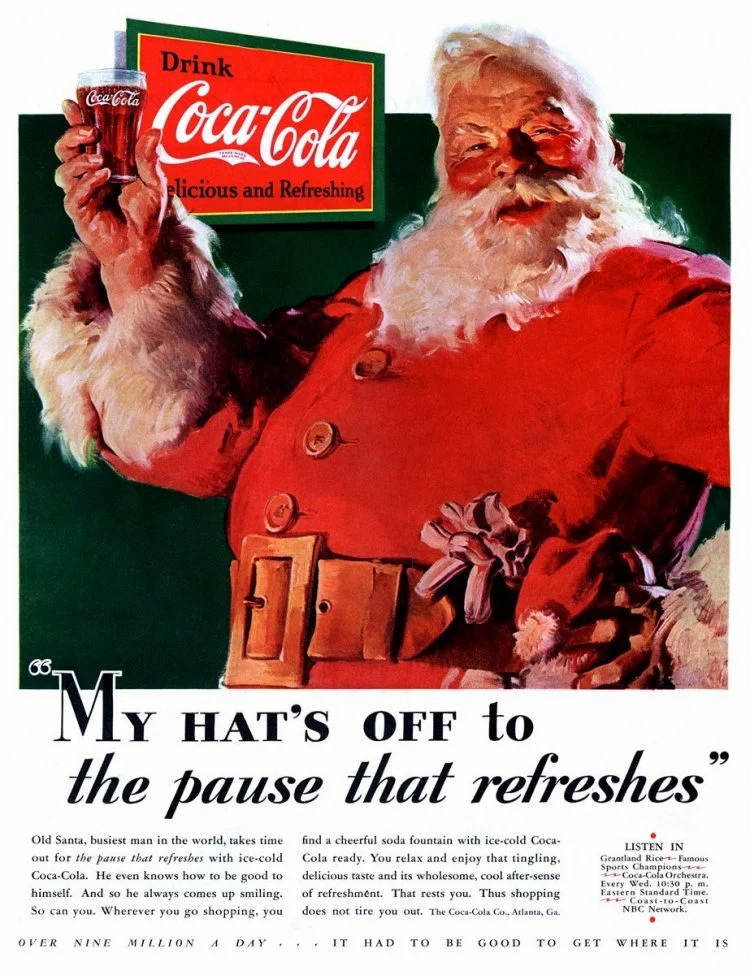


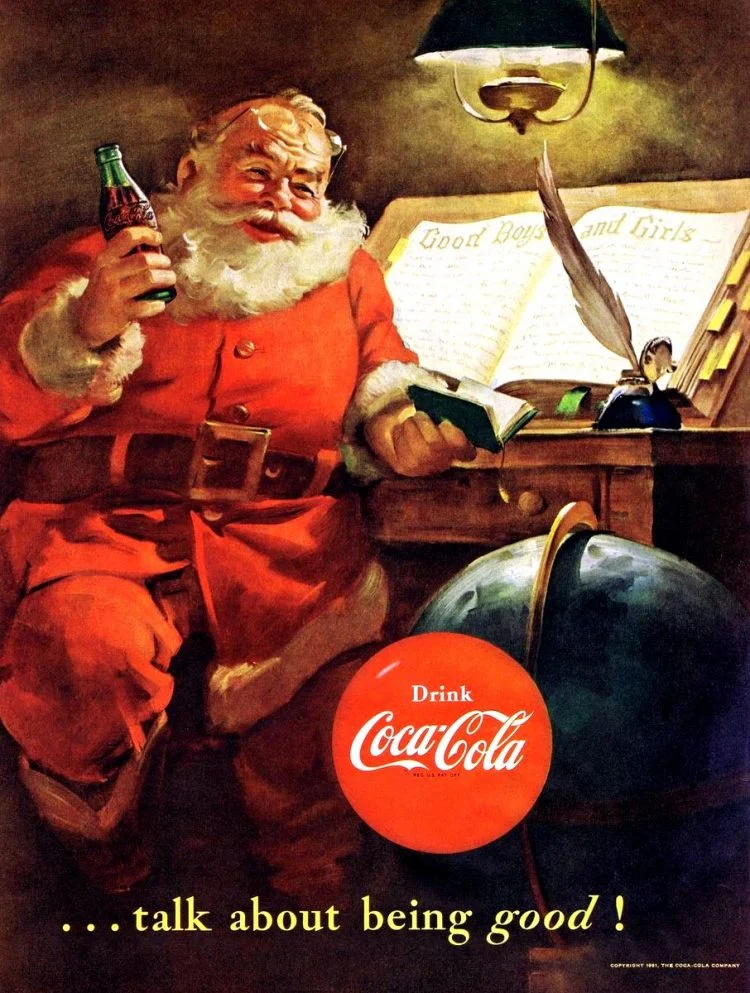

From 1931 to 1964, Coca-Cola advertisements depicted Santa bringing toys (and playing with them! ), resting to read a letter and have a Coke, meeting with youngsters who stayed up late to greet him, and plundering the refrigerators of several homes. Coca-Cola modified Sundblom’s original oil paintings for advertising in publications and store displays, as well as billboards, posters, calendars, and plush dolls.
Sundblom started by painting Santa with a real model, his buddy Lou Prentiss, a retired salesperson. After Prentiss died, Sundblom used himself as a model, painting in front of a mirror. Finally, to develop the picture of St. Nick, he began to rely on photographs.
People were so enamoured with the Coca-Cola Santa photos that when anything changed, they wrote messages to The Coca-Cola Company. Santa’s huge belt was reversed one year (perhaps because Sundblom was painting via a mirror). Another year, Santa Claus appeared without a wedding band, prompting admirers to write in to inquire about Mrs Claus’s whereabouts.


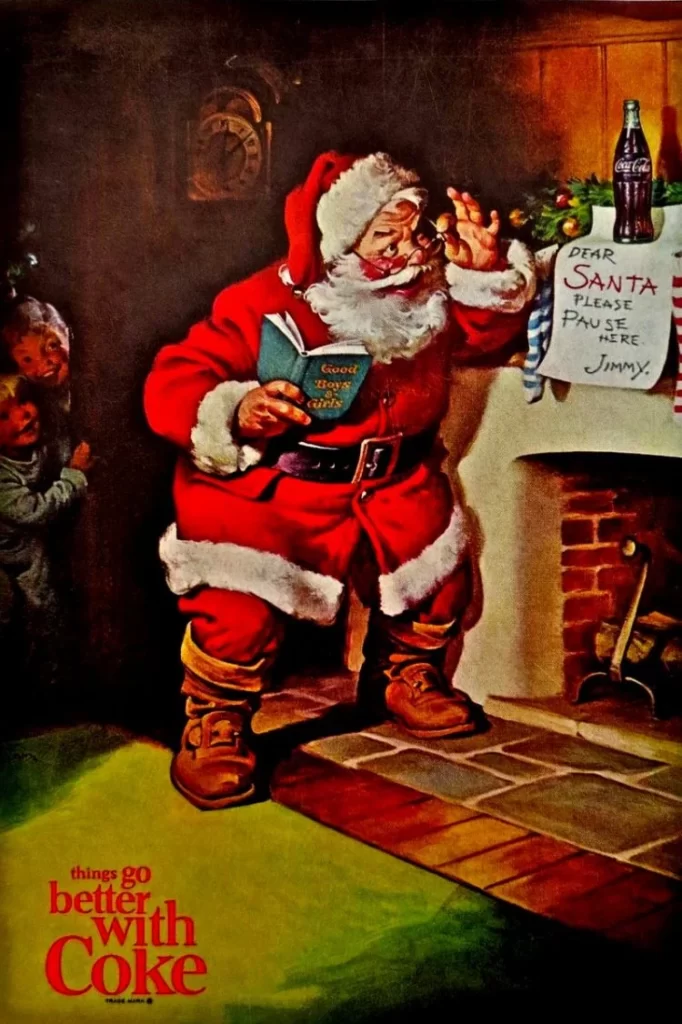
Sundblom based the youngsters who appear with Santa in his paintings on two of his neighbours, two tiny daughters. As a result, in his paintings, he turned one to a boy.
The dog in Sundblom’s 1964 Santa Claus picture was a grey poodle that belonged to a local florist. Sundblom, on the other hand, wanted the dog to stand out in the Christmas atmosphere, so he gave it black fur.
Sundblom’s final rendition of Santa Claus was developed in 1964, although Coca-Cola advertising for decades after that utilised images of Santa based on Sundblom’s initial works. These paintings are among the most valuable in the company’s archives department’s art collection, and they’ve been on display all around the world.
Reference – https://clickamericana.com/holidays-seasons/christmas/vintage-coca-cola-christmas-ads-starring-santa