Caption with Intention: When Words Learned to Feel
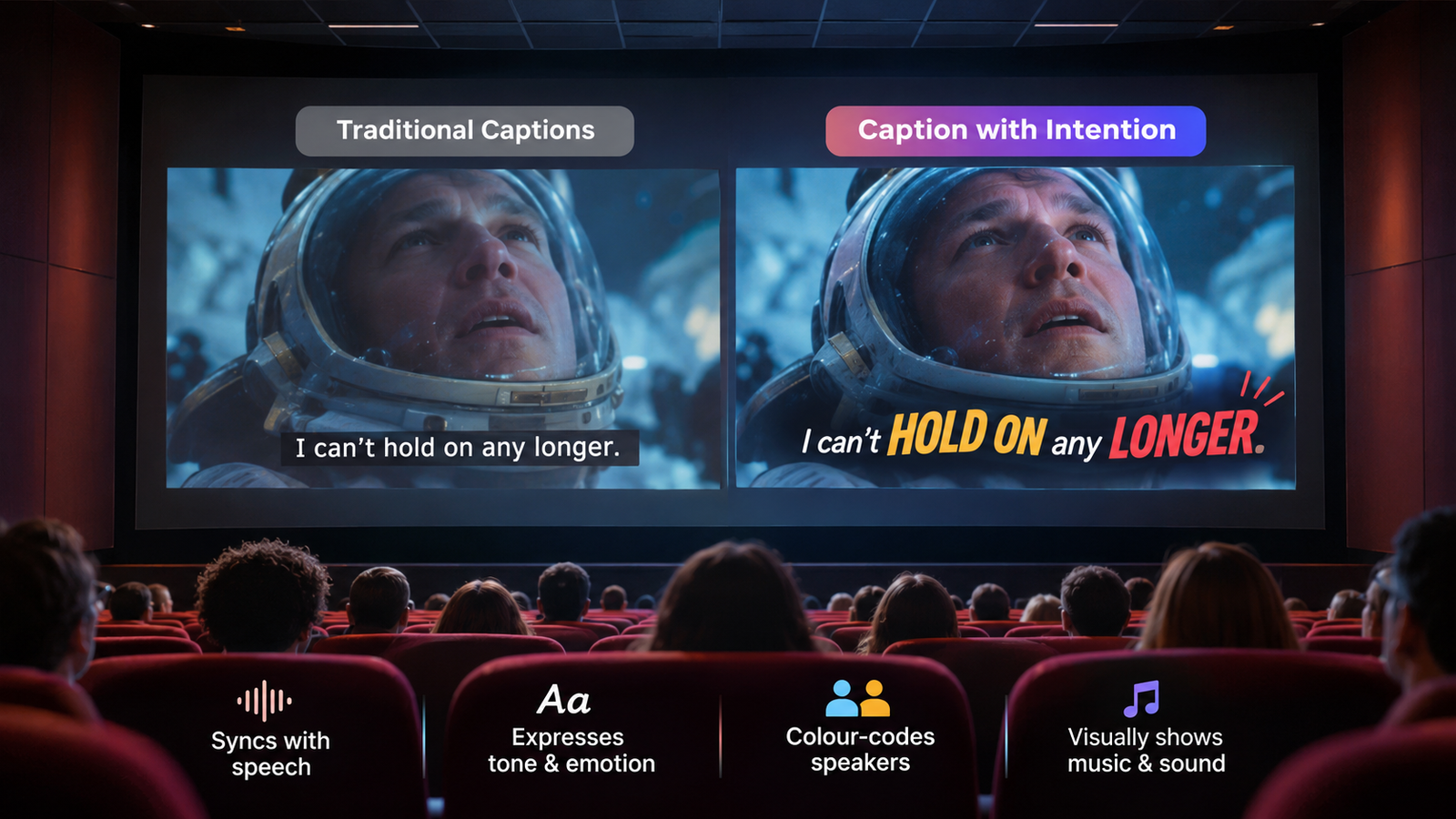
Excerpt:
What if captions could do more than tell us what a character says? What if they could communicate emotion, tone, volume and personality? FCB Chicago’s Caption with Intention reimagines closed captions as an expressive storytelling tool, making cinema more inclusive for Deaf and Hard of Hearing audiences. A Cannes Lions-winning idea that could change how the world experiences films.
How FCB Chicago transformed closed captions from functional subtitles into an emotional storytelling experience, challenging Hollywood to rethink accessibility.
Imagine watching a film where two characters are arguing. One whispers, struggling to contain his anger. The other explodes, shouting every word. Their voices carry frustration, their pauses create tension, and their expressions reveal emotions that words alone cannot communicate.
Now imagine experiencing that scene entirely through white subtitles at the bottom of the screen.
You understand what they are saying. But do you experience how they are saying it?
For millions of Deaf and Hard of Hearing viewers, this has been an overlooked limitation of cinema for decades.
Movies have evolved from black-and-white pictures to spectacular visual experiences. Sound has become immersive, special effects increasingly sophisticated, and streaming has transformed entertainment. Yet closed captions have remained largely unchanged for over 50 years.
They communicated words, but often lost the emotions behind them.
That was the problem FCB Chicago decided to solve.
The insight hiding in plain sight
The idea behind Caption with Intention emerged from a simple observation: traditional captions could tell audiences what was being said, but rarely how it was being said.
Consider the sentence, “I’m fine.”
Spoken softly, it might express sadness. Shouted angrily, it could communicate frustration. Delivered sarcastically, it might mean precisely the opposite.
The words remain identical. Their meaning changes with tone, volume and delivery.
For viewers relying on conventional captions, much of that emotional information can disappear.
FCB Chicago saw an opportunity to transform captions from a transcription tool into a storytelling language.
The ambition was not merely to make subtitles more attractive. It was to preserve the filmmaker’s emotional intent for audiences who could not hear the performance.
When typography became an actor
The resulting innovation was called Caption with Intention, a dynamic captioning system that uses typography, colour, movement and animation to communicate emotion.
Instead of displaying dialogue in static lines, captions respond to the way characters speak.
A shout appears larger and bolder. A whisper becomes smaller. Words appear in synchronisation with speech, communicating rhythm and pacing. Different colours identify different characters, making rapid conversations easier to follow.
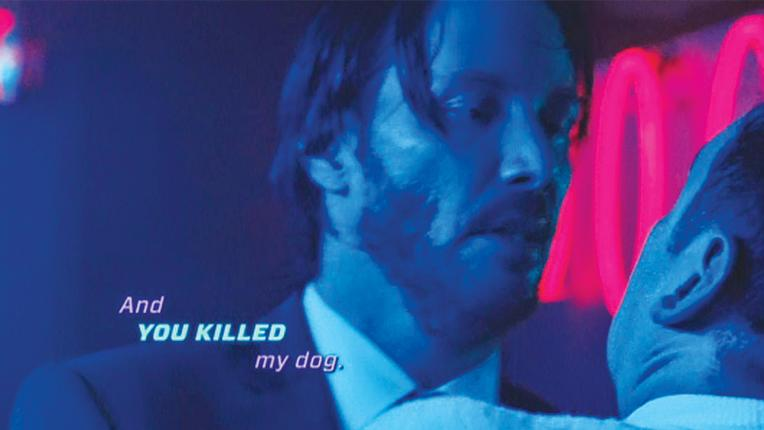
Music and non-verbal sounds receive visual treatments that communicate their significance within a scene.
In one particularly thoughtful feature, upcoming words appear in white before changing to a character-specific colour as they are spoken. This helps viewers follow both the dialogue and its timing.
Suddenly, captions do more than explain the scene. They are participating in it.
Typography becomes a performer, communicating emotional information that previously depended almost entirely on sound.
The people who made it happen
FCB Chicago led this collaborative effort, with Chief Creative Officers Andrés Ordóñez and Pedro Pérez and Executive Creative Director Bruno Mazzotti among the senior creative leaders.
The creative team included Gustavo Dallegrave, Zach Frazer, Frederik Clarysse, Silas Nogueira, So A Ryu, Nihal Atawane and Vitor Favero, whose contributions helped shape the system’s visual language.
But this was not an advertising agency working in isolation.
Rakish Entertainment, associated with filmmaker Marc Forster, became an important creative and production partner. Forster, whose filmmaking credits include Finding Neverland and World War Z, helped connect the initiative with the Academy of Motion Picture Arts and Sciences.
The Chicago Hearing Society brought essential expertise and community perspectives, helping ensure the system addressed real accessibility challenges rather than assumptions.
The Academy became a crucial industry partner, helping move the idea beyond an experimental design exercise.
Together, they created something that advertising campaigns rarely achieve: a solution with the potential to influence an entire industry.
Designing with the audience
Perhaps the most important decision was involving the Deaf and Hard of Hearing community throughout development.
Over approximately ten months, the team tested and refined the system through an iterative process involving community members, Deaf professionals, and CODA participants (Children of Deaf Adults).
Karla Giese of the Chicago Hearing Society contributed to the community engagement and accessibility perspective.
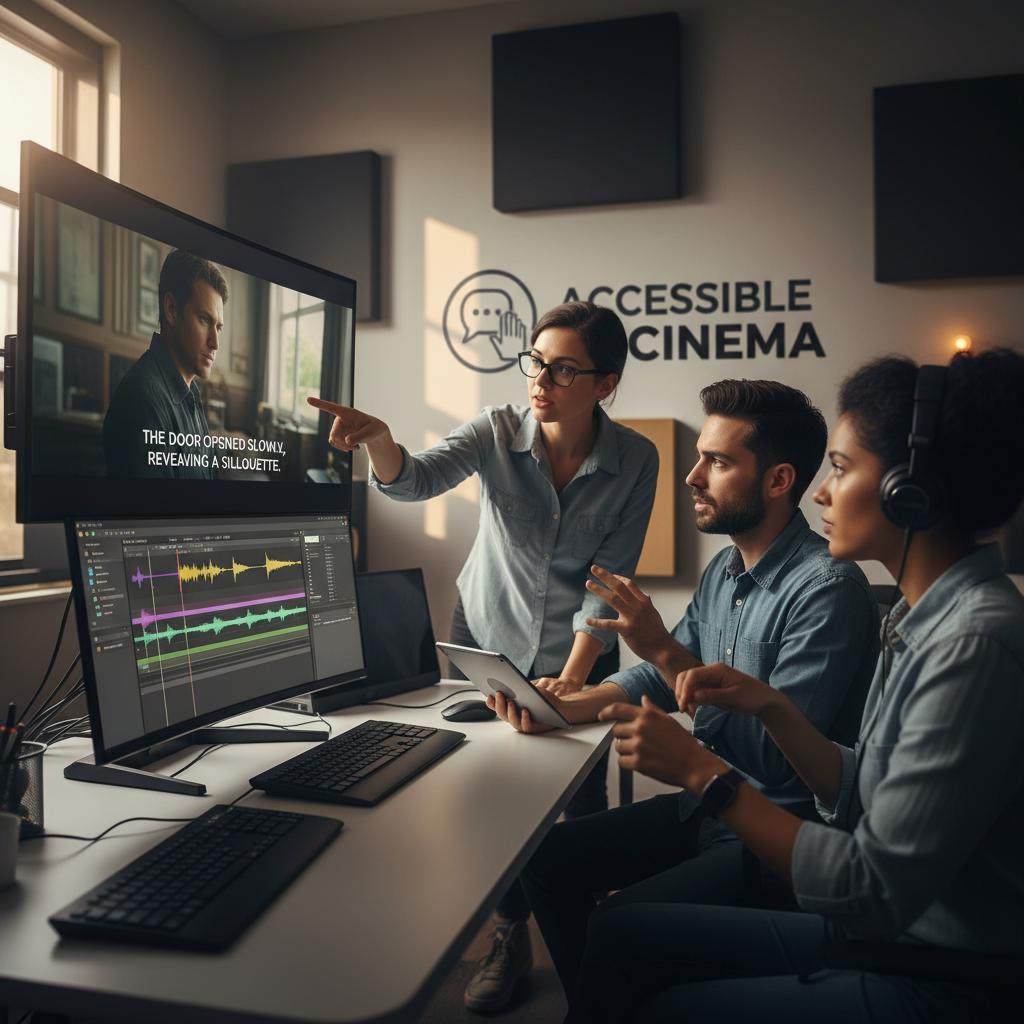
The objective was to understand how viewers experienced captions, where information was being lost, and how visual treatments could improve comprehension without overwhelming the screen.
This was an important distinction.
The team was not designing something for a community and then asking for approval. It was developing the solution with people who understood the problem through lived experience.
That approach made the innovation more meaningful.
Hollywood sees the difference.
To demonstrate the system, FCB Chicago and its partners created a showcase film featuring familiar scenes from movies including Toy Story, Forrest Gump and Avatar.
These films were deliberately recognisable. Audiences already knew their emotional moments.
By adding expressive captions to these scenes, the demonstration revealed how much information traditional subtitles could leave out.
A character’s anger became visually apparent. A whispered conversation acquired a different rhythm. Rapid dialogue became easier to attribute to individual speakers.
The showcase made a technical innovation instantly understandable.
More importantly, it reframed accessibility as an opportunity to improve storytelling, not merely satisfy a requirement.
From Cannes Lions to Hollywood
At the 2025 Cannes Lions International Festival of Creativity, Caption with Intention achieved remarkable recognition.
It won three Grand Prix awards in Design, Digital Craft, and Brand Experience & Activation, along with a prestigious Titanium Lion.
The recognition reflected something larger than exceptional advertising craft. The project challenged a long-established convention and demonstrated how creativity could solve a meaningful human problem.
The Academy subsequently incorporated the system into its 2026 Oscars submission framework, creating opportunities for wider industry adoption.
The system was also made openly available to encourage filmmakers, studios and streaming platforms to explore its use.
Within 60 days of launch, the campaign reported more than 20 million impressions and 5.6 million engagements.
But the greatest achievement was not the awards or publicity. It was the chance to change how millions experience entertainment.
The lesson for marketers
Caption with Intention reminds us that innovation often begins by questioning something everyone else accepts.
For decades, captions were considered a solved problem. They displayed dialogue, identified sounds and fulfilled an accessibility function.
FCB Chicago asked whether fulfilling the function was enough.
The project also demonstrates that empathy can produce more meaningful innovation than technology alone. The breakthrough was not animation or typography. Those were merely tools. The breakthrough was recognising that access to words is not necessarily access to emotion.
Most importantly, the campaign moved beyond communication to create a practical solution.
Great advertising does not always need to persuade people to buy something. Sometimes, it can persuade an industry to change.
For decades, captions helped audiences understand what characters were saying.
Caption with Intention gave those words something they had been missing: a voice.


