The Ambush Was in His Eyes: What Puma’s Contact Lens Stunt Still Teaches Brands About Ambush Marketing
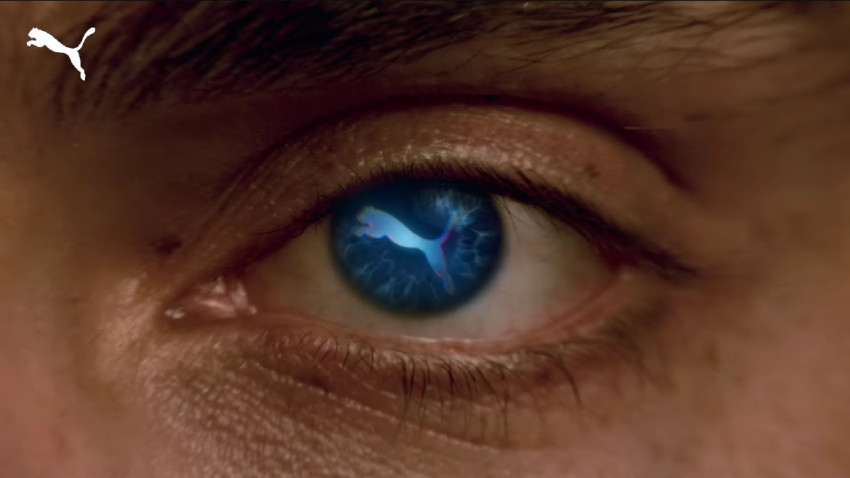
Puma’s iconic 1996 Olympic contact lens stunt with Linford Christie became one of the greatest examples of ambush marketing and exposed the limits of official sponsorship.
A $40 Million Sponsorship Was Outshone by Two Tiny Logos


Atlanta, 1996.
Reebok had reportedly invested around $40 million to become the exclusive footwear and apparel sponsor of the Olympic Games. It owned the official rights, the branding, and the visibility that came with one of the world’s biggest sporting events.
Then British sprinter Linford Christie, a long-time Puma athlete, walked into a pre-race press conference wearing dark sunglasses.
When photographers asked him to remove them, they discovered something extraordinary. Instead of seeing his pupils, the cameras found two miniature Puma logos printed on his contact lenses.
Every newspaper photograph, every television news clip and every sports bulletin suddenly carried Puma branding, even though Puma had not paid the Olympic organisers a single dollar for official sponsorship.
Reebok owned the sponsorship. Puma owned the moment.
Official Rights vs Public Attention
Official sponsorship and public attention are not always the same thing.
Reebok had paid for exclusivity, official branding and event visibility. Yet the image that travelled around the world belonged to Puma. A single visual proved more memorable than millions spent on sponsorship rights.
Ambush Marketing at Its Purest
Ambush marketing is the practice of leveraging the attention generated by a major event without paying for official sponsorship rights.
Many famous examples involve advertising around venues. At the same Atlanta Olympics, Nike purchased billboard space surrounding Olympic venues and created highly visible branded experiences despite Reebok being the official sponsor. That was a media-buying strategy.
Puma chose a completely different route. Instead of buying media, it transformed an athlete into the advertising medium. The cameras were already there, the audience was already waiting, and Puma simply ensured its brand appeared in every image.
Why This Case Is Still Studied
The brilliance of the stunt was not the logo itself. It was where the logo appeared.
Olympic sponsorship agreements carefully controlled several forms of branding, including:
- Stadium signage
- Athlete uniforms
- Official advertising
- Broadcast sponsorship
They never imagined that branding could appear inside an athlete’s eyes.
Christie was not making a commercial or openly endorsing Puma during the press conference. He simply appeared before the world’s media wearing contact lenses. That ambiguity became the strategy and exposed a gap that sponsorship contracts had never anticipated.
Three Strategic Decisions Made It Brilliant
The success of the stunt rested on three simple decisions.
Puma used an asset the organisers did not control. The company sponsored Christie personally, not the Olympic Games. His body remained his own, and the contact lenses were treated as a personal accessory rather than official event signage.
The visual needed no explanation. There was no headline, slogan or advertising copy. One photograph communicated everything. A single image became global advertising.
Guaranteed media coverage became free brand exposure. Christie was required to attend the press conference, which meant television cameras and photographers would already be present. Puma did not purchase airtime. It simply inserted its brand into a broadcast that was destined to reach millions.
The Marketing Framework Behind the Stunt
Strip away the spectacle and the strategy becomes surprisingly simple.
The framework is easy to understand:
- Find a moment of guaranteed public attention that someone else has paid to create.
- Attach an asset you own to that moment.
- Make it impossible for the audience and the cameras to ignore.
This simple logic has inspired countless examples of ambush marketing ever since.
Why It Would Be Difficult Today
The Olympic movement learned from 1996.
Rules governing athlete endorsements, particularly Rule 40 of the Olympic Charter, have become significantly stricter. Similar restrictions have also been adopted by organisations such as FIFA and other global sporting bodies.
Today, regulations extend to areas such as:
- Athlete endorsements
- Social media activity
- Commercial appearances
- Venue perimeters
- Image rights
A direct recreation of the Puma contact lens stunt today would almost certainly lead to contractual disputes or regulatory action. The loophole that made the stunt possible has largely been closed.
The Real Lesson
Many marketers remember the contact lenses.
The more enduring lesson is what they revealed about sponsorship.
Official sponsorship buys rights, signage, logos and broadcast inventory. It does not automatically buy public attention.
Attention cannot simply be purchased. It has to be earned, borrowed or, occasionally, ambushed.
The Takeaway for Brand Leaders
Every sponsorship investment should begin with a simple question.
What exactly are we paying for?
Are you buying:
- Exclusive rights?
- Event visibility?
- Brand association?
- Genuine consumer attention?
Linford Christie’s contact lenses demonstrated that these are not the same thing.
Reebok bought an official presence.
Puma captured public memory.
Nearly three decades later, marketers still remember which brand won the conversation.
SEO
- Focus Keyphrase: ambush marketing, Puma contact lenses
- SEO Title: Ambush Marketing: The Puma Contact Lens Stunt That Outsmarted Reebok
- Slug: ambush-marketing-puma-contact-lenses-1996-olympics
- Meta Description: Discover how Puma’s iconic 1996 Olympic contact lens stunt with Linford Christie became one of the greatest examples of ambush marketing and exposed the limits of official sponsorship.
- Tags: ambush marketing, sponsorship strategy, Puma, Olympic marketing, Linford Christie, Reebok, sports marketing, brand strategy


1 Comment