Unforgotten Local Brands: Koshy’s: The Café That Time Forgot
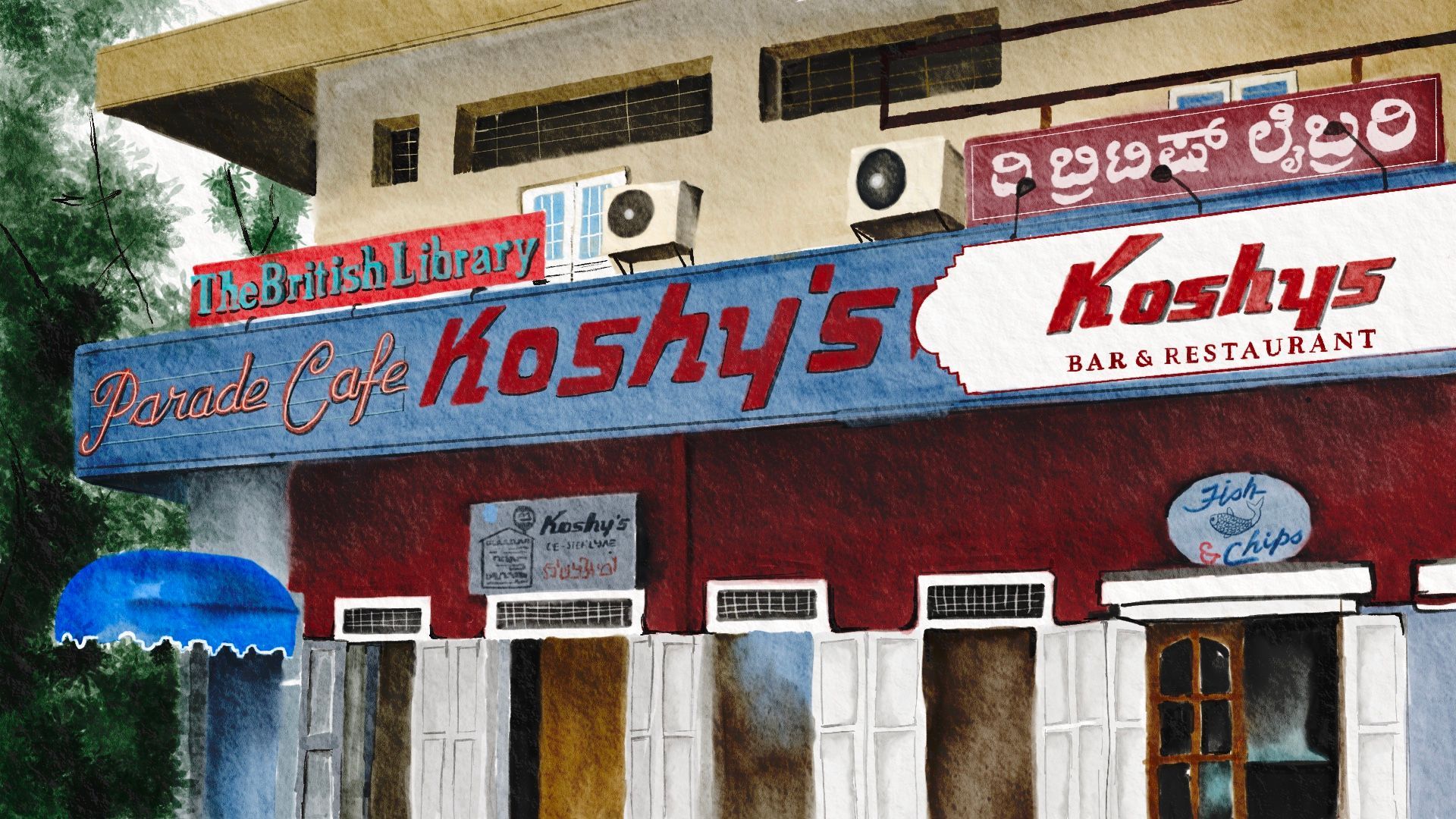
Bengaluru’s legendary café since 1940. From colonial bakery to South India’s first air-conditioned restaurant. A living piece of history.
Walk into Koshy’s on St Mark’s Road, and you step into a different era. Not by accident, but by design, or perhaps by defiance.
The Beginning: A Banker Becomes a Baker
P.O. Koshy wasn’t trained as a baker or restaurateur. He was a senior executive at a private bank, the kind of man who understood business from the corporate side. In 1940, he made an unconventional choice. He left the bank to start something of his own: a food business.
That decision led to the establishment of one of the earliest hygienically run bakeries in Bengaluru. This was no small thing. In 1940, hygiene standards weren’t what they are today. Most bakeries were small, inconsistent, and unreliable. Koshy’s was different. The quality mattered. The cleanliness mattered. The reputation for reliability grew.
Because of that quality, something remarkable happened. Koshy’s has the privilege of supplying bread to army bases and the defence department across the city. A bakery that started as a solo venture became essential infrastructure for the military. That kind of trust doesn’t come from marketing. It comes from consistency meeting excellence.
Soon after, P.O. Koshy expanded bread and pastry production for residents. Then, in 1952, the restaurant section opened next to the bakery. The place evolved from a production facility into a gathering space. Parade Café became the go-to spot for journalists, writers, and businessmen. Not the elite types who needed luxury. The working creatives who needed a place to think, to meet, to talk.
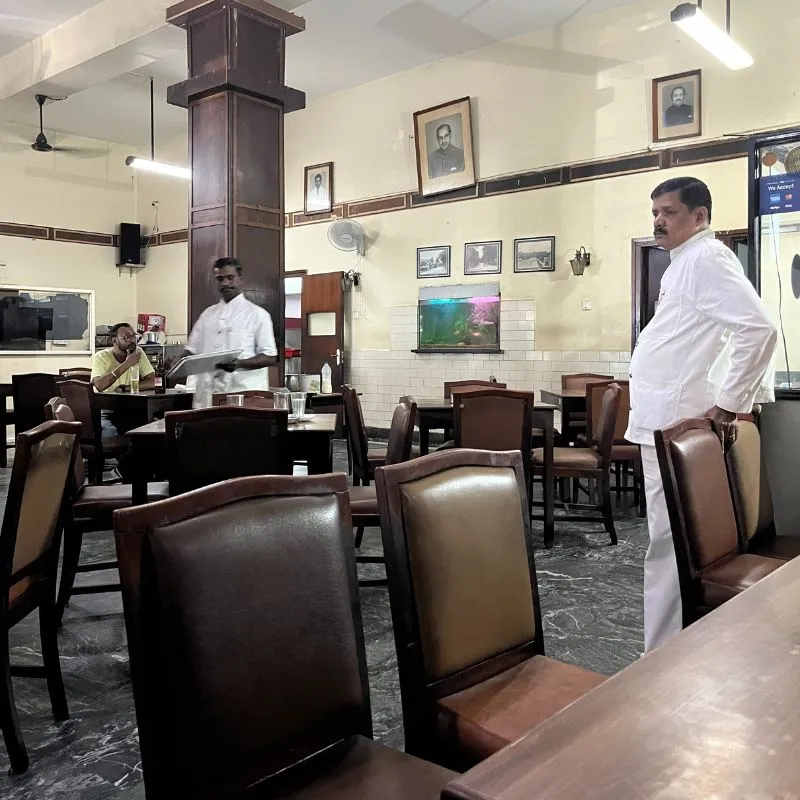
What made Parade Café special wasn’t the grandeur. It was the ordinariness of it. A place where people could come and have coffee and chat in peace. No pretence. No pressure to perform or dress up. Just a café where you belonged.
The Leap: Creating Spaces for Everyone
By the 1960s, Koshy’s was known but faced a challenge common to many restaurants of the era. The main space was filled with men: journalists, writers, and businessmen. Women didn’t come. Families didn’t come. The market was self-limiting.
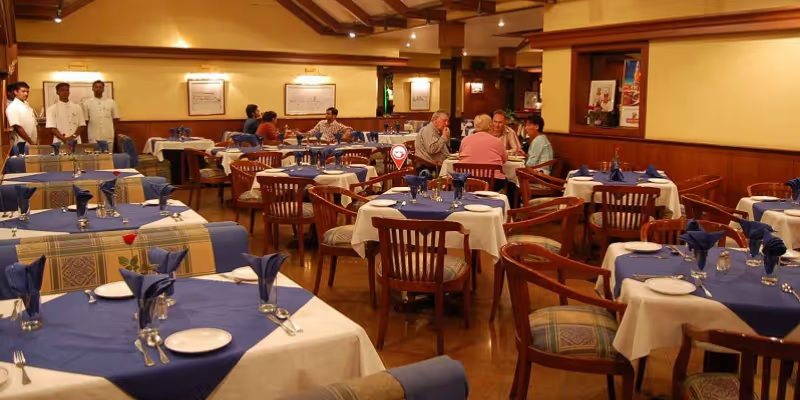
The solution was characteristically thoughtful. Instead of trying to change the main restaurant, Koshy’s created something new: an air-conditioned section called the ‘Jewel Box.’ A no-smoking area. A space where families could come and eat. Where women felt welcome. Where the experience was different from the crowded, smoky main café.
This wasn’t innovation for the sake of innovation. It was a strategic expansion. Foreigners loved the ambience along with the classic dishes. Families brought their children. Women who wouldn’t have stepped into the main café now had a space of their own. By creating multiple spaces with different characters, Koshy’s became for everyone without losing its identity for anyone.
The Philosophy: Quality and Belonging
P.O. Koshy passed the business to the next generation with a philosophy intact. The goal wasn’t to become the biggest or the fanciest. It was to offer a good experience. Quality food. Quality ambience. And most importantly, a sense of belonging.
This philosophy shaped everything. P.O. Koshy didn’t want the place to be gaudy. He wanted it to stay the same. Not unchanged in terms of being frozen, but unchanged in terms of character. That way, customers would feel a sense of belonging when they came to eat.
When Prem Koshy, a third-generation member, speaks about his grandfather’s vision, he recalls a specific moment that crystallises the philosophy. Workers had gone on strike with the union. The business faced a crisis. But P.O. Koshy’s concern wasn’t about lost revenue or management problems. It was about the customers. He worried that the customers would go hungry. That they wouldn’t have their usual place to sit, eat, and talk.
That moment changed Prem’s life. He was in a mechanical engineering class when he got called to the restaurant. Instead of finishing his degree in a safe career, he chose to join Koshy’s. That decision, made in crisis, turned into a lifetime of stewardship. Until now, Prem and his brother have sustained Koshy’s homely feeling. They’ve kept the customers happy by feeding them on time. That’s not a business slogan. That’s an actual daily commitment.
The Clientele: Growing Old Together
If you stand outside Koshy’s during peak hours, you notice something immediately: more grey and white heads than black. Most of the regulars are elderly. They’ve been coming for decades. They’ve grown old with the restaurant.
This isn’t a tragedy to Prem. It’s proof that the model works. These customers didn’t come once and leave. They came back. Again and again. They brought friends. They told stories about sitting here. They used Koshy’s as the anchor point of their lives. Come to Koshy’s, sit with friends, talk about the family and the world, then leave.
The Location: When Surroundings Change
Koshy’s sits in one of Bengaluru’s most beautiful areas: St. Mark’s Church, St. Mark’s Road and Church Street. In the 1940s and 50s, this was a quieter, more elegant neighbourhood. Colonial architecture. Wide streets. A sense of history.
But Bengaluru changed. Prem speaks about it with sadness. The area’s beauty has disappeared. It’s become congested and noisy. The beautiful little streets have lost their charm. More restaurants and bars have opened, but that’s not the same as beauty.
In a location that had completely changed, the restaurant remained constant. That’s become its power. You enter Koshy’s, and you enter a bubble. Outside is modern, congested Bengaluru. Inside is 1960. This wasn’t always deliberate. Koshy didn’t plan to become an escape from modernity. It just happened that by refusing to change, it became exactly that.
The Decision Not to Expand
Every business school teaches the same lesson: growth is success. Expand. Open new locations. Franchise. Build a brand across multiple cities. For Koshy’s, this path was never taken.
The business has been weak in recent years. Overheads have gone sky-high. There are constraints everywhere. Given these realities, Koshy’s decided not to expand. The calculation was simple: multiple outlets would likely lead to losses. Better to focus on one place, one experience, one standard.
But there’s something deeper in this decision. Opening another location would require compromising a fundamental principle. It would mean spreading the same philosophy across a new space, new staff, and new risks. It would mean diluting the personal touch. Koshy’s works because of its specificity: this location, these staff members, and this history. Expansion would destroy that.
Running small businesses today is difficult – the pressure from the government, the collapsing systems, and the overhead costs.
A Living Test
Koshy’s has become something rare in modern business: a living test of whether consistency, care, and quality can outlast disruption. Not through clever strategies or marketing campaigns. But through the simple commitment of people who decided that some things were worth protecting.
In a generation obsessed with growth, Koshy’s has proven that staying small can be stronger. In an age of franchise expansion, Koshy’s has shown that one location, done right, can matter more than a hundred done wrong. In a time of constant change, Koshy’s has demonstrated that the most rebellious act is refusal: refusal to become trendy, to compromise standards, to chase what everyone else is chasing.
The café sits today much as it did in 1962. The customers have grey hair. The building hasn’t changed. The menu still has a thousand dishes. The staff remembers everyone. And somewhere in that constancy is a message for anyone paying attention: some things don’t need disruption. Some things need to be protected. Some people are worth emulating not because they succeeded in the conventional sense, but because they succeeded in doing exactly what they meant to do. And they’re still doing it.