How Brands Can Rebuild Trust When the World Doubts Them
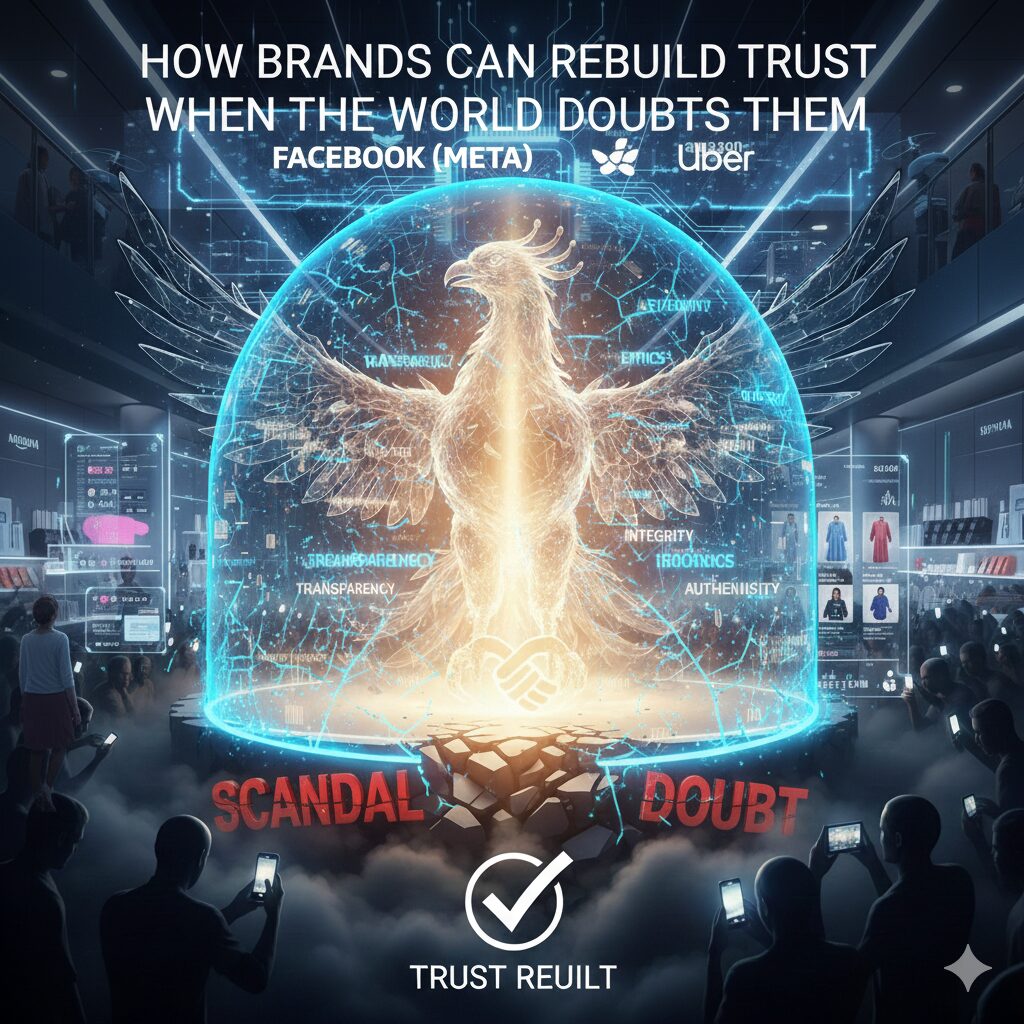
How brands with damaged reputations can rebuild trust through honesty, dialogue, and long-term cultural change, with Indian and global examples.
Some brands enter the market with a halo.
Others walk in carrying a suitcase full of history, criticism and public suspicion.
They may have faced a crisis (such as Volkswagen’s emissions scandal).
They may operate in a sector people love to attack (aviation, meat production, cigarettes).
Or they may be the easy target of the season (big tech, big pharma, big food).
In India, too, we’ve seen this play out – from ITC responding to criticism for promoting health foods despite its tobacco legacy, to Jio facing allegations of monopolistic ambitions, to Indigo being questioned about staff behaviour and customer service. Globally, Meta, Shell, McDonald’s, Nestlé, Wells Fargo and many more have been in similar positions.
Once the public narrative turns against a brand, turning it back can feel like pushing a mountain uphill.
But hostility doesn’t come from nowhere.
It feeds on mistrust, past actions, unanswered questions and a belief that “this brand doesn’t care.”
The instinctive response from companies, however, is often counterproductive.
How Brands Typically React – And Why It Doesn’t Work
When facing negativity, most companies fall into predictable patterns:
1. They retreat
They hide behind product brands, reduce visibility, or avoid the media altogether.
Example: Many Indian conglomerates historically kept their corporate names invisible to avoid scrutiny.
2. They go on the offensive
They flood the market with ads, issue strong rebuttals, or highlight legality rather than morality.
Example: Oil companies globally often launch “green” campaigns to counter environmental criticism.
3. They become opaque
They delay disclosures, avoid specifics, or bury facts under jargon.
This worsens suspicion.
4. They create their own standards
Industries sometimes declare voluntary codes to shift narrative control.
Good in theory, often seen as self-serving.
These responses are understandable.
No CEO wants their company to be labelled as harmful, incompetent or exploitative.
But here’s the truth:
Reputation cannot be repaired with defensiveness.
It can only be rebuilt with conversation, clarity and uncomfortable honesty.
Why People Don’t Believe “We’re Good Now”
When a brand is seen as “the villain,” audiences assign motives:
“You’re greedy.”
“You’re hiding something.”
“You care only about profit.”
So when the same brand suddenly announces, “We’re responsible and ethical,” it sounds like theatre.
Look at Facebook during the Cambridge Analytica scandal, Boeing after the 737-Max crash, Johnson & Johnson after the talc controversy, or Maggi after the 2015 ban.
Even when they told the “correct” story, consumers didn’t buy it – because the brand hadn’t shown its vulnerability, only its defence.
To shift public sentiment, brands must move from reputation management to reputation transformation.
Where Recovery Begins: Understanding the Hurt
The first real question leaders must ask is:
“What exactly did we break?”
Is the anger about:
What do we make?
How do we behave?
Who are we?
Or who we were?
And equally:
Who is shaping this perception, and why?
Until this is understood, no communication plan will land.
Three Internal Rules Every Embattled Brand Must Adopt
1. Listen without fear, respond without weakness
Hear what people are saying.
Don’t hide behind legalese or PR polish.
But also don’t cave to every demand – people respect clarity more than capitulation.
2. Separate signal from noise
Not every critic wants a solution – some want a fight.
Brands must learn to distinguish legitimate concerns from performative outrage.
3. Turn objections into opportunities
Every tough question offers an opportunity to innovate, redesign, or rethink processes.
This mindset shifts the brand from “defensive” to “constructive”.
A Practical Playbook for Rebuilding Trust
1. Start with the value everyone agrees on
It might be safety, fairness, sustainability, or transparency.
State that as your shared purpose.
Example:
After the Maggi crisis, Nestlé India reframed its purpose around food safety and rebuilt step by step.
2. Define what this purpose allows – and what it won’t allow
Be explicit about commitments AND limitations.
People respect clarity even when it’s imperfect.
3. Make your commitments public
Invite scrutiny.
Open the door rather than trying to shut out the noise.
4. Tackle the hard problems, not the easy ones
Don’t brag about solar panels if your biggest criticism is carbon emissions.
Don’t talk about charity if the public wants answers about employee treatment.
Example:
Tata Steel didn’t recover its reputation by boasting; it rebuilt trust by showing decades of employee- and community-first action in Jamshedpur.
5. Report progress like a conversation, not a victory lap
Share what’s improving.
Share what’s still broken.
Share what you don’t yet know how to fix.
This vulnerability is what turns sceptics into thoughtful listeners.
6. Accept that this is long-term work
Reputation isn’t an ad campaign.
It is a cultural rewiring.
Think of how Microsoft shifted from the aggressive “Windows empire” of the 1990s to Satya Nadella’s empathetic, developer-friendly, cloud-first company.
It took a decade – but it worked because it was real.
The Heart of the Matter
Fixing a poorly perceived brand is not about shouting louder, hiding better, or arguing harder.
It is about rebuilding human trust.
And trust grows when brands:
- Show their flaws
- Explain their dilemmas
- Invite collaboration
- Act consistently
- And give society a reason to believe again
The brands that manage this – from Tata to Patagonia to Microsoft – don’t just repair reputation.
They built a stronger one than they ever had.