If You Cannot Beat Them Then Adopt Them – Extending Your Business Model
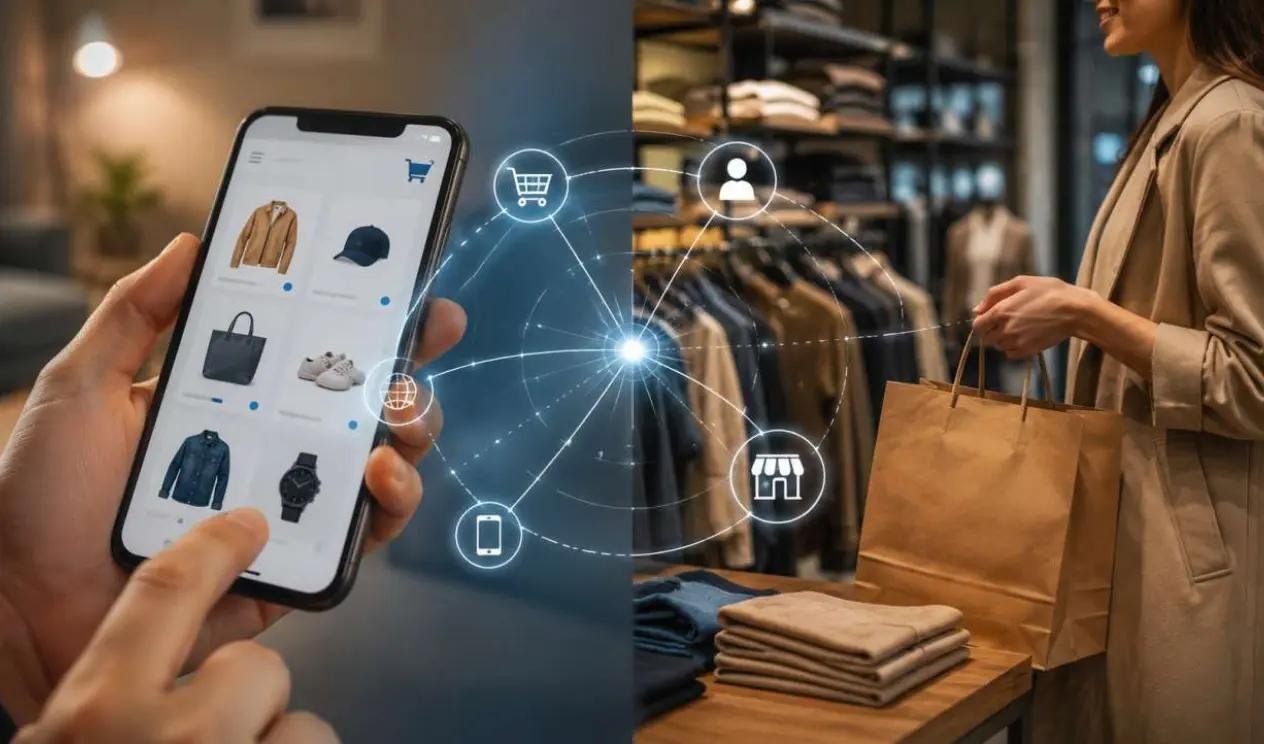
Businesses often struggle when disruptive business models challenge established ways of operating. This article explores how companies can combine traditional strengths with emerging business models to adapt, remain competitive and unlock new growth opportunities.
A hybrid business model can help companies respond to disruption by combining the strengths of their existing business with emerging business models. In a rapidly changing marketplace, organisations that adapt quickly and embrace new ways of operating are more likely to survive and grow.
Book-music-movie offline retailing in India is practically dead with almost all the major chains shutting down. The online ‘menace’ of the f availability of movies and music; increasing popularity of digital books/ e-readers and discounting by online retailers has resulted in such a situation.
Take the case of Music World (MW) – part of the RPG Group. MW led the distribution of music and movies through CDs, etc. The online phenomenon killed the concept. Music became freely available online, which closed the largest revenue stream. Movies are available for download through torrents or through OTTs, and that closed another huge revenue-making opportunity.
Landmark, Odyssey, and other chains that built their businesses on retailing books tried to expand into music, movies, and entertainment devices, but the onslaught of online business put a damper on their plans. Flipkart, for example, offers home delivery with a wider variety and a double whammy of better discounts. If that’s not enough, e-readers and tablets have taken the last breath away from these chains.
The seemingly obvious shift in the business landscape has caught these chains off guard. They have tried to adapt by restricting themselves to brick-and-mortar. Lethargy and fear, compounded by apprehension, have led these organisations to restrict and prune their operations.
The question is why, in the face of impending danger, companies continue to drag themselves with existing models which are non-viable.
However, not all organisations across the globe have been slow to react. Walmart initially did not understand the online space, and its business was slowly eroded by Amazon and others. When it responded it was uniquely. It responded with a hybrid approach. Merchandise ordered online could be drop-shipped for same-day pickup at local stores. This and other creative solutions have totalled over $9 billion of online sales to Walmart. Interestingly, facing the might of Walmart, Amazon, which had no physical storefronts, moved in the opposite direction and installed lockers in neighbourhood stores to allow for direct pickup. (Amazon has launched stores, bought Whole Foods, while Walmart purchased Jet.com)
While DVD rental chains like Seventymm have folded, albeit after making some changes, Netflix produced a lot of its content. This programming has proven popular, attracting customers to order more from the rest of the catalogue.
The point is that with an appreciation of business challenges, a willingness to respond quickly, and being open to all models, chances are that companies that will survive will be those who blend their existing business with a business model which is threatening its existence.
In India, perhaps the best examples of the hybrid model have been in the education sector. Traditional brick-and-mortar institutes like IIMs have expanded their scope by offering distance education through satellite and online mediums. Traditional brick-and-mortar schools face fixed costs due to infrastructure and an inherent limitation that restricts them to delivering education in a fixed space at a fixed time. On the other hand, online education can be imparted anywhere & anytime. However, the credibility of online courses is far below that of traditional schools. The prestige of being associated with a premier school is aspirational. Hence, both worlds merged. IIM Kolkata offers courses in various management disciplines through online partners, spreading itself across the country and leveraging its repository of knowledge and excellent faculty. What’s left unsaid is that the online partner seems to have stronger marketing muscle and can attract more students.
Recently, Yebhi, an online marketplace, tried to kill two birds with one stone by placing virtual store walls across Café Coffee Day outlets. Not only did it create an excellent marketing story, but it also let customers browse and then scan a QR code to access the product on their smartphones. India has a very young online customer base, and Yebhi capitalised on a key catchment area by taking the whole exercise to the next level.
There are basic tenets which these hybrid models are based on:
a) Each model/company needs to leverage each other’s strengths to solve a business problem.
b) The dynamic business shifts can be addressed faster without losing the core competency. For example, one of Walmart’s strengths is its sourcing capabilities.
c) Hybrid models can be either insourced or outsourced, while education has been outsourced, shopping has been insourced. It ultimately depends on the organisation’s strengths & weaknesses.
The fundamental objectives of hybrids are:
a) Allows organisations to address changing market paradigms without losing the key success factors in their existing avatar.
b) Turns disruption to the present business model into an opportunity
c) Leads to a strategic shift that can redefine the way the business is run.
This is certainly not a panacea for all organisations that are facing tough times due to disruption and changing times. For moving to a hybrid model, some questions need to be asked:
a) Are the existing services or products good enough to dovetail into a hybrid model?
b) Is the proposed hybrid offering showing a direction that hitherto was not possible?
c) Can the proposed model be handled comfortably by the organisation?
d) Is the solution too far away from the existing competencies?
e) Is the new model going to slow the whole business down?
A last piece of advice: do remember it is best to compete with yourself rather than let your competition eat you up!