Try Galaxy Fold Experience: When Two iPhones Became One Samsung Galaxy.
What happens when Samsung uses Apple’s own devices to demonstrate its foldable technology? Discover the ingenious Try Galaxy Fold Experience campaign.
What if a brand could persuade its biggest competitor’s customers to experience its product without buying it, visiting a store, or even owning it? In 2023, Samsung and its creative partners turned this intriguing question into one of the most innovative technology-led marketing campaigns. The Try Galaxy Fold Experience was an ingenious Samsung campaign that demonstrated how technology and creativity could come together to overcome consumer hesitation. Created by Cheil Worldwide and its creative partners, the campaign allowed iPhone users to experience the possibilities of Samsung’s Galaxy Z Fold using two iPhones they already owned. It was an unusual proposition: Samsung invited Apple customers to discover its technology through Apple’s own devices.
Imagine being an iPhone user. You have been using Apple’s products for years. Your photographs, applications, messages and everyday routines are all part of a familiar ecosystem. You have probably heard about Samsung’s foldable smartphones. You may even have watched advertisements demonstrating how a phone can open into a tablet-sized screen.
It looks interesting. But would you switch?
That was the challenge Samsung faced. It wasn’t necessarily a lack of awareness about its Galaxy Z Fold smartphones. People knew the product existed. What they did not fully understand was how owning one would change their smartphone experience.
For an iPhone user, switching brands was an even bigger decision. Samsung could talk about its technology, demonstrate its features and compare specifications, but none of that necessarily addressed the consumer’s hesitation.
The company needed people to experience the difference, not just hear about it.
In August 2023, Samsung and its creative agency, Cheil Worldwide, came up with an unusual solution. They invited iPhone users to experience a Galaxy Fold using two iPhones they already owned.
The idea was simple, technically ambitious and wonderfully provocative: turn two Apple smartphones into one simulated Samsung foldable experience.
The insight: Don’t tell them. Let them experience it.
Samsung understood the limits of conventional advertising.
A television commercial could show the Galaxy Z Fold opening and closing. A digital advertisement could demonstrate its multitasking capabilities. A retail salesperson could explain the advantages of its larger display.
But these were all one-way communications.
The consumer remained an observer.
The real opportunity was to make the consumer an active participant. If iPhone users could experience a foldable smartphone’s functionality using the devices they already owned, they might begin to appreciate what Samsung was offering.
The creative team recognised that the biggest barrier wasn’t product awareness, but product experience.
This became the foundation of the Try Galaxy Fold Experience campaign.
The idea: Two iPhones, one virtual Galaxy Fold
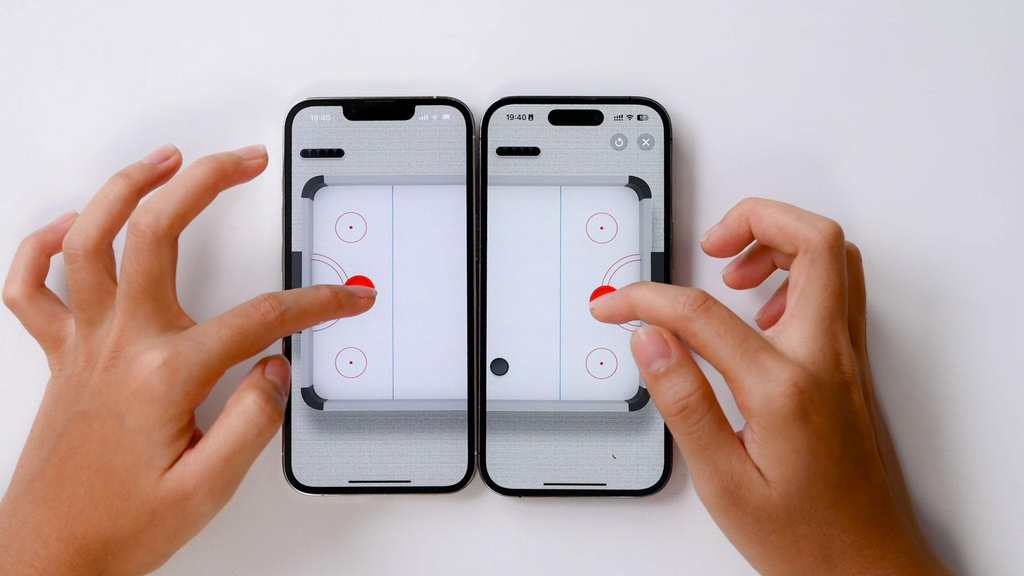
The campaign centred on Samsung’s Try Galaxy platform, which let users explore Galaxy smartphone experiences through a web browser.
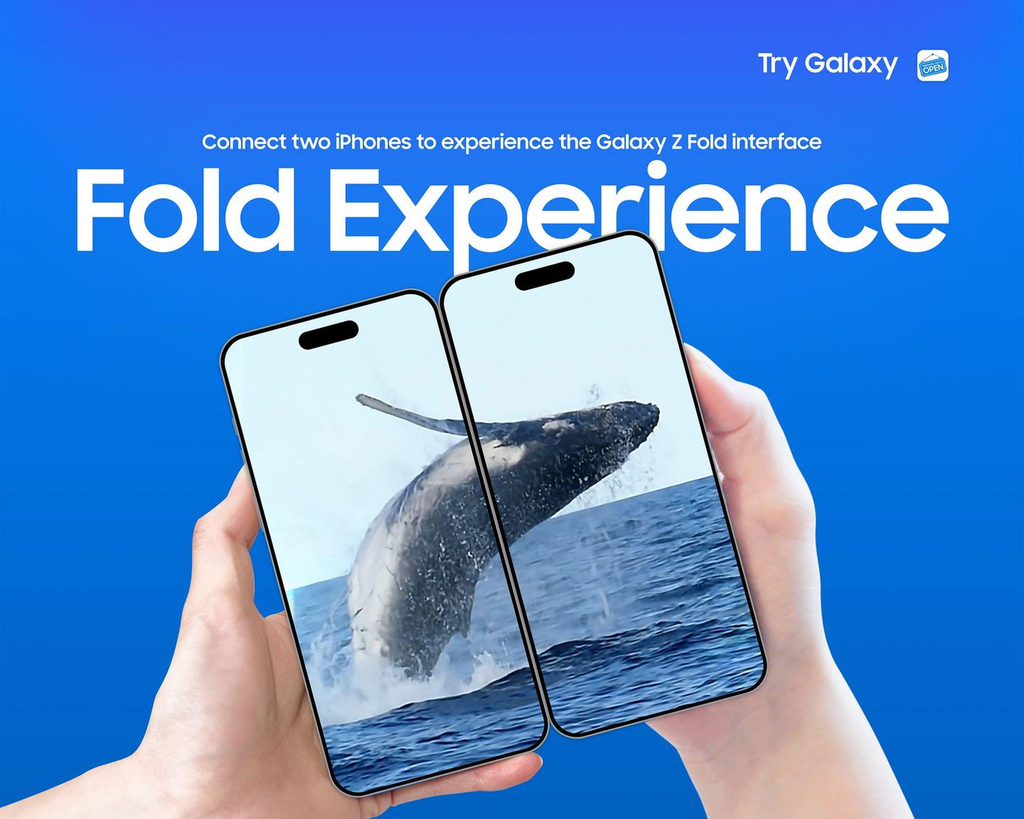
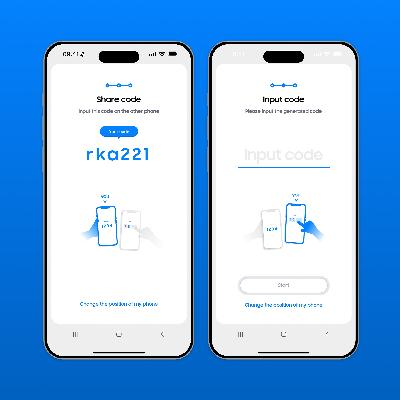
The team developed a browser-based demonstration that synchronised two iPhones using a six-digit code.
Once connected, users could place the two devices side by side to create a larger virtual display that simulated aspects of the Galaxy Z Fold experience.
Users could explore different features, including:
- Immersive viewing: Experience content across a larger combined screen.
- Multi-window multitasking: Understand the possibilities of working with multiple applications.
- Interactive gaming: Play two-player games, including an air hockey experience, across the connected devices.
The technology behind the experience was WebRTC, which enabled real-time communication between the two smartphones.
What made the idea particularly interesting was that consumers did not need to own a Samsung device to participate. They could use two ordinary iPhones to explore an experience inspired by Samsung’s foldable technology.
It was a clever reversal of conventional competitive marketing. Samsung effectively used Apple’s own hardware to show why consumers might consider switching to Samsung.
Who created the campaign?
Cheil Worldwide in Seoul created the campaign for Samsung Electronics, in collaboration with Cheil UAE in Dubai.
It was a collaborative creative and technology project involving several individuals and specialist agencies.
The creative leadership team included:
- Ramzi Ibrahim – Executive Creative Director: Provided overall creative leadership for the campaign.
- Jesse Wong and James Tan – Creative Directors: Led the creative development.
- Jagal Gopinath – Associate Creative Director: Contributed to the creative development.
- Eldad Heilweil – Strategic Planning Director: Led strategic planning.
- Minah Kim – UX Director: Oversaw the user experience dimension.
- Juyong Lee – Film Director: Directed the campaign film.
Digital development involved TOV Inc. (Seoul) and Tribal Aotearoa (Auckland). Albert Park Production and Goodcompany were among the film production partners.
Cheil Worldwide led the creative, while Cheil UAE contributed to the campaign’s development and execution.
An interesting aspect of the creative process was Cheil UAE’s contribution. The team identified a consumer behaviour in the UAE: many residents used two mobile phones. This observation inspired the idea of using two devices together to recreate the experience of a foldable smartphone.
The idea required considerable technical experimentation. According to Cheil, the project involved approximately six months of research and development.
The campaign was a collective achievement. Although the published credits identify the creative leadership team, they do not credit a single individual with the original idea.
Taking the experience to consumers
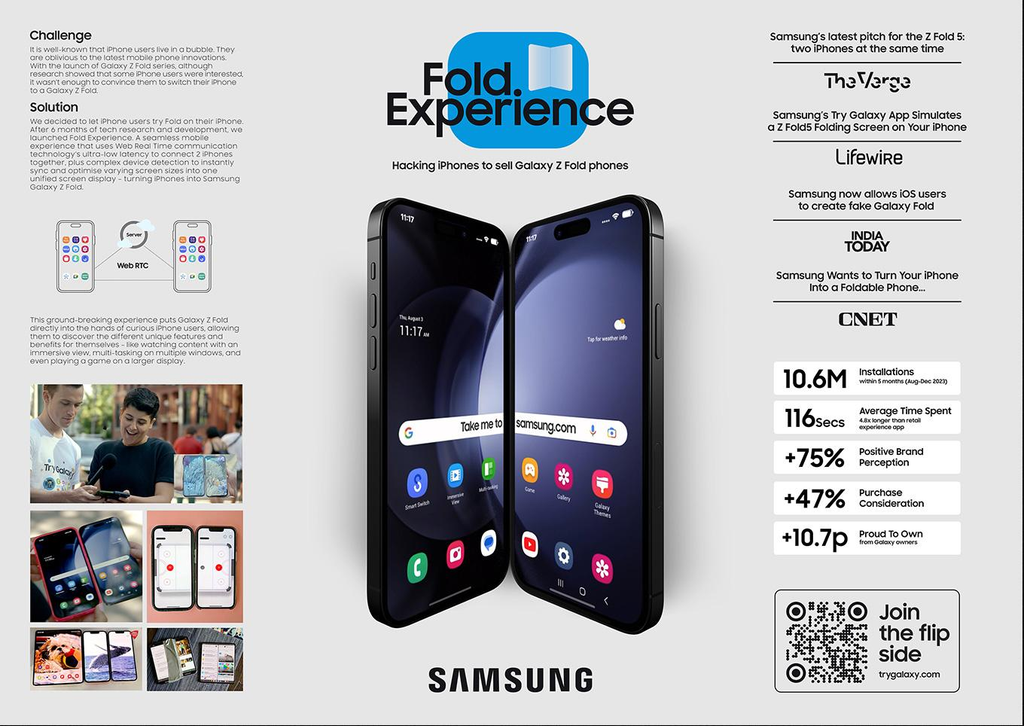
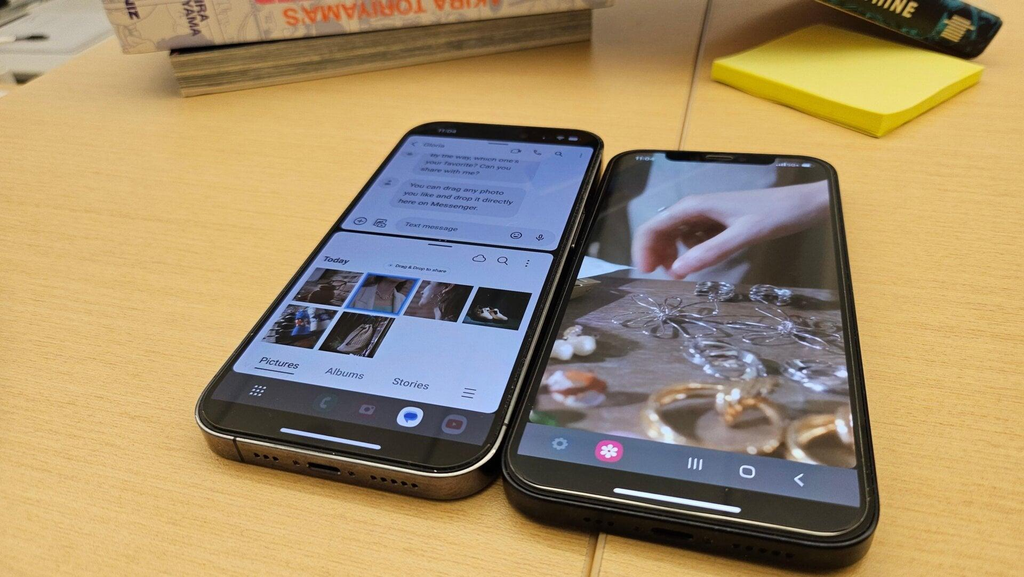
An interesting idea needs visibility to become an effective campaign.
Samsung and Cheil promoted the experience through films, influencer collaborations and QR-code installations. These installations appeared in locations including New York and Jakarta, encouraging people to scan a code and try the experience.
The approach reduced the distance between advertising and participation.
Instead of simply seeing an advertisement and moving on, consumers could immediately interact with the product demonstration.
The QR code became an invitation to try it out.
The campaign also benefited from its inherent shareability. The idea of using two iPhones to experience a Samsung product was unusual enough to spark curiosity and conversation.
It also gave technology enthusiasts something interesting to discuss: Samsung was not merely challenging Apple through advertising; it was inviting Apple’s customers to experience an alternative.
The results: When curiosity translated into engagement
The campaign reportedly achieved impressive results.
According to the campaign’s published results:
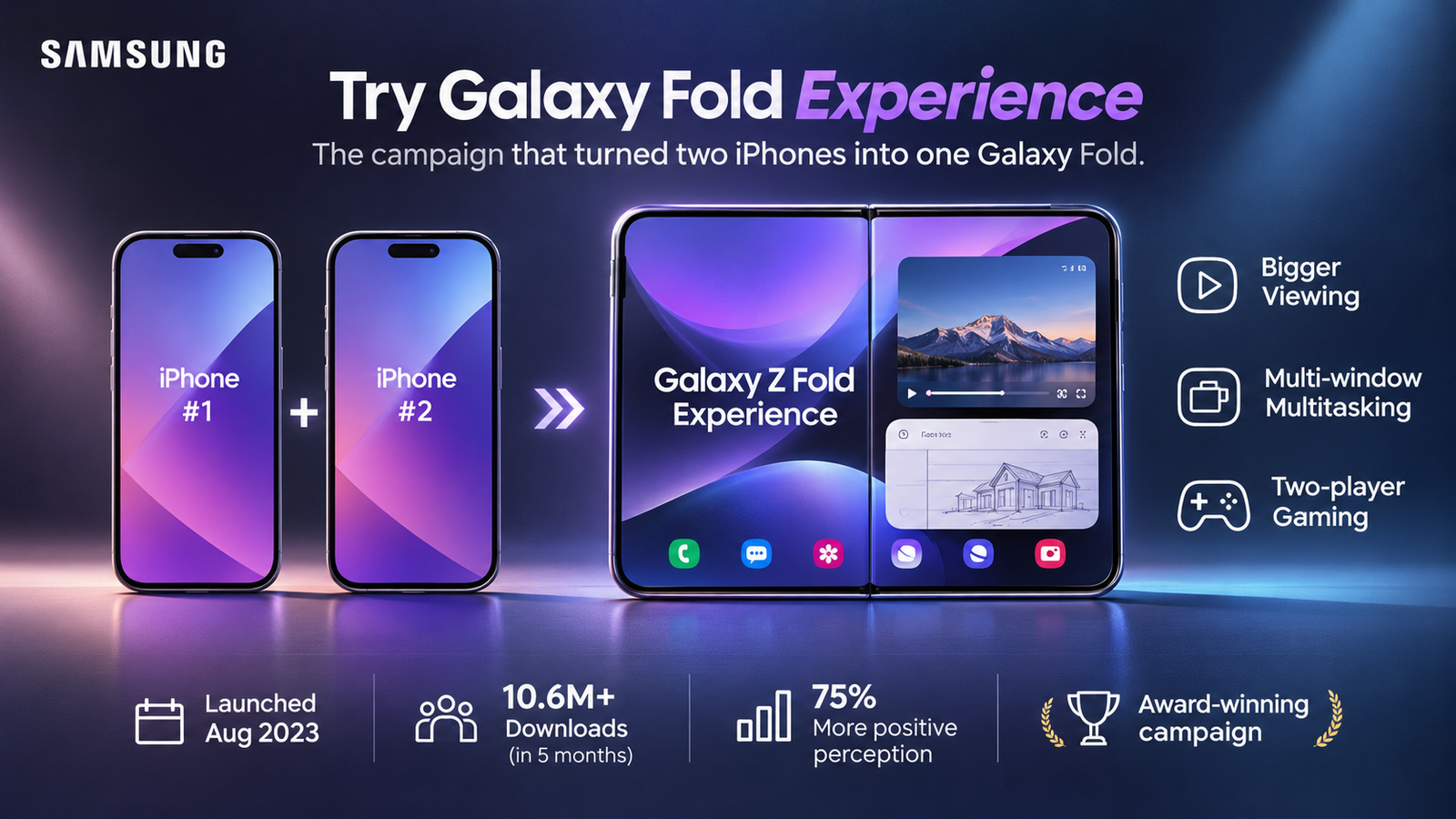
- More than 10.6 million downloads were recorded within five months.
- More than 75% of users reportedly developed a more positive perception of Galaxy after experiencing the campaign.
- The experience demonstrated how interactive technology could help overcome resistance among consumers loyal to competing brands.
Samsung and Cheil reported these figures as part of the campaign’s results.
The campaign also received international recognition, including a Gold Pencil at The One Show 2024, a Bronze Lion at Cannes Lions 2024 and a Gold at the New York Festivals for UX/UI.
The marketing lesson: Let the product do the talking
The Try Galaxy Fold Experience campaign offers an important lesson in competitive marketing.
Brands often spend considerable resources explaining why their products are superior to competitors’. They highlight specifications, compare features and create advertisements designed to persuade consumers to reconsider their existing choices.
But changing consumer preference is not always about providing more information. Sometimes it is about removing the barriers that prevent people from experiencing something new.
Samsung and Cheil approached the problem differently. Instead of asking iPhone users to abandon their existing devices and visit a Samsung store, they used those very devices as the entry point to a new experience.
The campaign also had an important psychological dimension. Trying something new involved practically no financial commitment. Consumers could experiment, explore and form their own opinions.
The campaign demonstrated three important marketing principles:
- Experience can be more persuasive than explanation. Interactive demonstrations let consumers discover product benefits for themselves.
- Competitive marketing need not attack competitors. Samsung used Apple’s devices as a platform for demonstrating its own innovation.
- Technology can become the medium of communication. The campaign itself became a demonstration of the product’s central proposition.
Perhaps the most memorable aspect of this campaign was its delightful contradiction. Samsung wanted iPhone users to experience a Galaxy Fold, and the best way to do it was to ask them to use two iPhones.
It was not simply an advertisement for a foldable smartphone. It was an advertisement that behaved like the product it was promoting: interactive, experiential and different.
Samsung made the Galaxy Fold. Cheil Worldwide and its creative and technology partners found a way to make people experience it without owning one. That’s what made the campaign memorable.
References
- Cheil Worldwide – Try Galaxy Fold Experience: Official campaign case study
- The One Club – Try Galaxy Fold Experience: Campaign credits and award recognition
- ADFEST – Campaign credits and results
- LBB – Cheil Worldwide’s New York Festivals recognition