Beyond Probiotics: Is Anabiomics the Next Big Idea in Animal Gut Health?
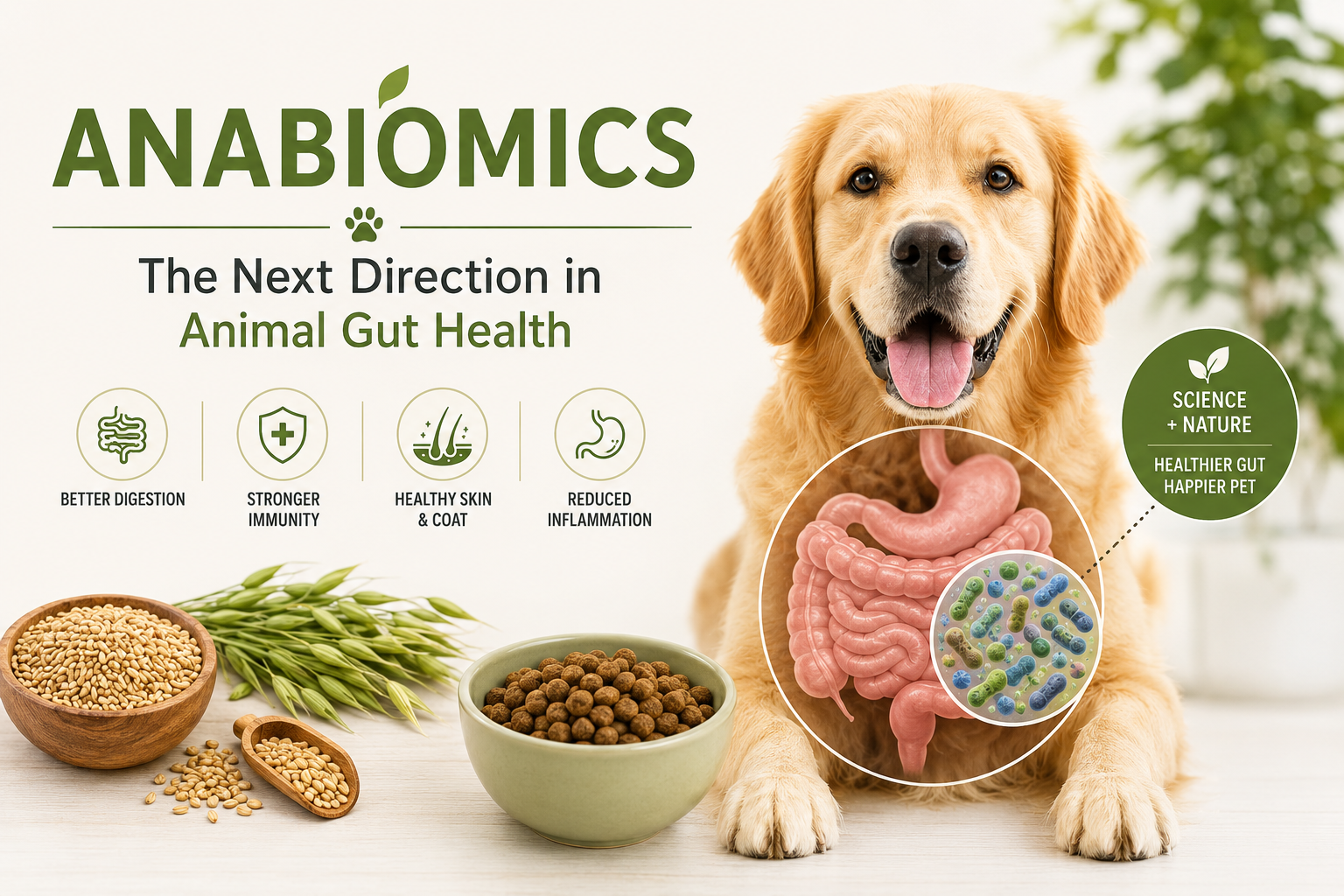
Animal gut health is moving beyond probiotics. Anabiomics and microbiome science could open a new chapter for functional pet nutrition and India’s growing pet-care industry.


The next frontier in pet nutrition may not be about adding more probiotics to a formula. It may be about understanding the gut as a living ecosystem and finding better ways to influence it.
A recent report in Petfood Industry highlights anabiomics, a new approach to animal gut health being explored by UK-based animal health company Tharos. The company focuses on the animal microbiome and has introduced CaniNectar, a patented barley-derived natural enzyme supplement for dogs, following three years of research in horses.
For India’s rapidly evolving pet care industry, this development is particularly interesting. Indian pet parents are becoming more aware of digestive health, immunity, skin and coat health, and the role nutrition plays in overall wellbeing. The opportunity now is to move the conversation from simply adding “good bacteria” to understanding what actually happens inside the gut.
The gut is more than digestion


The gastrointestinal tract is an extraordinarily complex biological system. It contains a huge community of microorganisms that interact with food, the intestinal lining and the animal’s immune system.
This microbiome can influence digestion, nutrient utilisation, immune function, inflammation and overall metabolic health. Research across companion and production animals increasingly supports the importance of maintaining a healthy microbial ecosystem.
That changes the way we should think about digestive supplements.
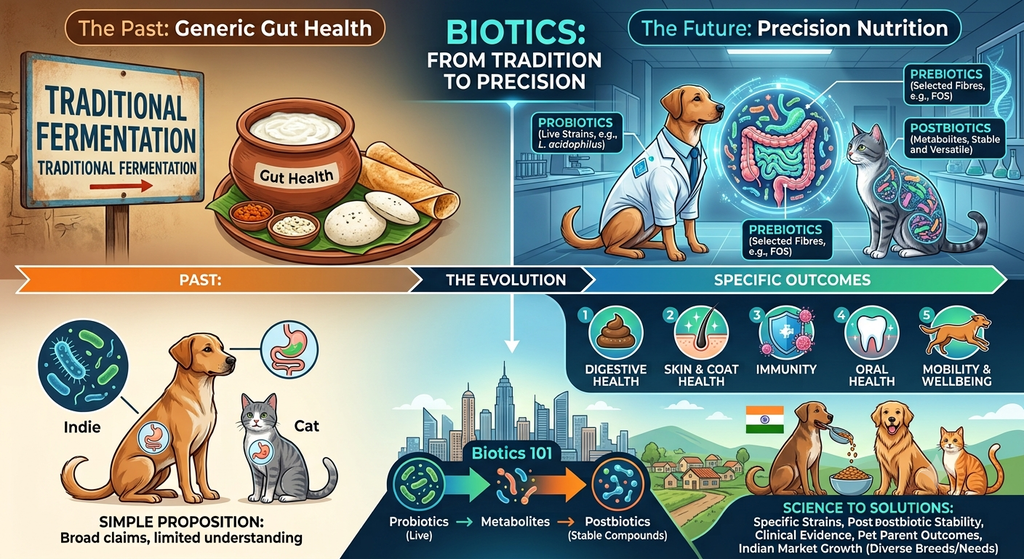
The traditional approach has been relatively straightforward:
- Probiotics: introduce beneficial live microorganisms.
- Prebiotics: provide substrates that encourage beneficial microorganisms.
- Synbiotics: combine probiotics and prebiotics.
- Postbiotics: use preparations of inactivated microorganisms or their components that can provide demonstrated health benefits.
Anabiomics points towards an even broader way of thinking about the system.
From adding bacteria to influencing the ecosystem


The important shift is conceptual.
Instead of asking, “Which probiotic should we add?”, the industry can increasingly ask:
“How can we influence the biological environment of the gut to produce a desirable outcome?”
That could involve enzymes, microbial metabolites, dietary substrates, fermentation products, plant-derived compounds and combinations of different functional ingredients.
Postbiotics are already demonstrating why this approach is attractive. Because they do not depend on maintaining live microorganisms, they can offer greater formulation stability while potentially delivering antimicrobial, antioxidant, anti-inflammatory and immune-modulating effects.
The broader movement is therefore from ingredient-centric nutrition to ecosystem-centric nutrition.
Why this matters for India


India’s animal intestinal health opportunity is not limited to dogs and cats.
The country has one of the world’s largest livestock and poultry populations, alongside a rapidly expanding companion-animal segment. The Indian animal intestinal health market is being driven by concerns around gastrointestinal disorders, animal health, antibiotic resistance, natural additives and improved nutrition.
Scientific interest is also growing within India. Researchers from institutions including the ICAR-Central Avian Research Institute and the ICAR-Indian Veterinary Research Institute have been examining postbiotics in poultry nutrition and health.
This creates an important opportunity for the Indian pet industry.
The Indian pet parent is moving beyond “digestion”
A few years ago, digestive supplements were often sold around relatively simple claims such as:
“Helps digestion.”
The conversation is becoming much broader.
Pet parents increasingly connect gut health with:
- stool quality
- appetite
- nutrient absorption
- immunity
- skin and coat condition
- food sensitivities
- inflammation
- overall vitality
This mirrors what has already happened in human nutrition.
The Indian consumer has become familiar with terms such as probiotics, prebiotics, fermented foods and gut microbiome. That familiarity creates a foundation for more sophisticated pet-health products.
But it also creates a responsibility.
The danger of “microbiome washing”
The microbiome is becoming a powerful marketing word.
That makes scientific substantiation critical.
Simply putting a probiotic strain into a product does not automatically make it an effective gut-health product. The definition of a probiotic itself requires that the microorganism, when administered in adequate amounts, provides a demonstrated health benefit.
The same principle should apply to the next generation of gut-health products.
Indian brands should therefore move away from vague claims such as:
“Supports gut health.”
and towards clearly defined benefits supported by appropriate evidence.
For example:
Which ingredient?
Which mechanism?
Which animal?
At what dosage?
For what outcome?
What evidence supports the claim?
That is where the category can build credibility.
India has an unusual advantage


India’s traditional food culture offers an enormous knowledge base around fermentation, plant ingredients, spices and naturally derived bioactive compounds.
But traditional use and scientific validation are not the same thing.
The opportunity is to combine Indian ingredient knowledge with modern microbiome science.
Imagine future pet nutrition products built around:
- locally available prebiotic fibres
- carefully selected plant bioactives
- fermented ingredients
- microbial metabolites
- enzymes
- targeted probiotics
- postbiotics
- functional combinations designed for specific physiological outcomes
The opportunity is not simply to make an “Indian probiotic”.
It is to develop evidence-backed Indian solutions for animal gut health.
From generic supplements to precision gut health


This could ultimately lead to a much more interesting pet supplement category.
Instead of one digestive supplement for every dog, brands could potentially develop solutions based on different needs:
Sensitive digestion
Designed around gut barrier support and digestive function.
Post-antibiotic support
Focused on restoring and maintaining a healthy microbial environment.
Senior dogs
Designed around digestive efficiency, immune support and age-related metabolic changes.
Skin and gut
Addressing the increasingly recognised connection between gastrointestinal health and other systems.
Stress-sensitive dogs
Exploring the gut-brain axis and its relationship with behaviour and wellbeing.
The science is still evolving, and these applications require appropriate animal-specific evidence. But the direction is clear: personalisation is likely to become increasingly important in animal nutrition.
The bigger opportunity for Indian pet brands


For Indian pet-food and supplement companies, the lesson from anabiomics is not necessarily to copy CaniNectar or focus specifically on barley-derived enzymes.
The bigger lesson is to look beyond the conventional probiotic category.
The next generation of pet wellness may come from understanding the interaction between:
Food + Microbiome + Metabolites + Enzymes + Immune System + Host
That represents a much larger innovation canvas.
India’s pet-care market is already moving rapidly from basic nutrition towards functional nutrition and preventive wellness. Gut health could become one of the most important bridges between these two worlds.
The future may be “biotics plus”


Probiotics are unlikely to disappear.
But they may increasingly become just one component of a broader gut-health toolkit.
Prebiotics, probiotics, synbiotics, postbiotics, enzymes, microbial metabolites and other functional compounds could increasingly be combined to create products designed around specific physiological outcomes.
The scientific literature already describes biotics as having applications across both companion and agricultural animals, including gastrointestinal health, immune response and metabolic health.
For India, that presents a compelling opportunity.
The country does not have to wait for global pet-health trends to arrive.
It can help define the next one.
The future of animal gut health may not be about putting more bacteria into the bowl. It may be about understanding the ecosystem already inside the animal and learning how to work with it.