The New Pet Wellness Economy: Why Nutrition Is Becoming Personal, Preventive and Science-Led
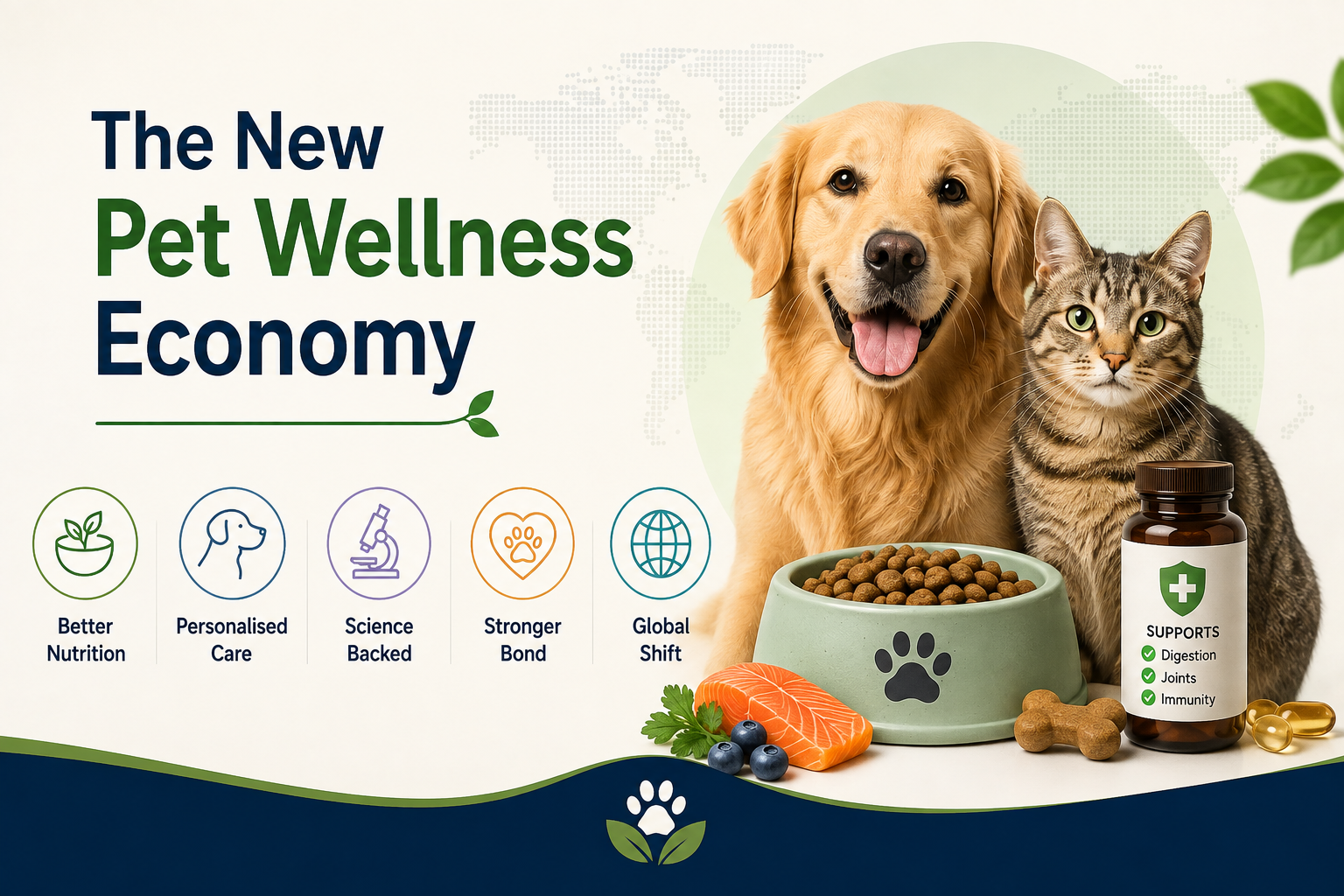
Pet wellness is moving beyond basic nutrition as pet parents worldwide seek personalised, preventive and science-backed solutions. India is developing its own version of this global shift.


For years, pet care was largely about feeding an animal, keeping it clean and taking it to the veterinarian when something went wrong.
That mindset is changing.
Across markets, pet parents are increasingly thinking about health more broadly. They are asking whether a food can support digestion, whether a supplement can help joints, whether an ingredient can improve skin and coat, and what they can do today to keep their dog or cat healthier for longer.
In other words, pet wellness is moving from a reactive model to a preventive one.
A 2025 global pet nutrition study from ADM captures this shift particularly well. It found that 85% of pet owners surveyed consider nutrition and supplements for pets as important as they are for humans, while 78% are looking for products that could potentially help their pets live longer. The numbers point to something bigger than a food trend: pet parents are increasingly treating nutrition as part of a long-term health strategy.


The pet food bowl is becoming a wellness platform
The biggest change is perhaps the simplest one.
Pet food is no longer being judged only by whether a pet likes eating it.
Increasingly, owners want to know what the food is doing.
Is it supporting gut health? Is it helping maintain a healthy weight? Does it contain nutrients for joints? Can it support immunity? Is it appropriate for a particular life stage? Does it use ingredients that the owner understands?
This is pushing pet food closer to functional nutrition.
The same transformation that happened in human nutrition — where food moved from being primarily about hunger to being associated with energy, immunity, gut health, heart health and healthy ageing — is now appearing in pet care.
That does not mean every pet needs a cupboard full of supplements. It means the definition of good pet nutrition is becoming more sophisticated.
From generic products to specific problems
One of the strongest signals from the ADM research is the growing importance of specificity.
The report says that the particular health benefit claimed by a product is the most influential factor in 95% of functional animal-health supplement purchases.
That has major implications for brands.
“Good for your pet” is becoming a weak proposition.
“Supports digestive health” is more meaningful.
“Helps maintain joint mobility in ageing dogs” is more specific.
“Supports skin and coat health” immediately tells the pet parent why the product exists.
The opportunity, therefore, is not simply to launch more products. It is to solve more clearly defined problems.
This could lead to greater segmentation around:
- Digestive and gut health
- Skin and coat health
- Joint and mobility support
- Healthy ageing
- Weight management
- Dental health
- Immunity
- Stress and behavioural wellness
- Cognitive health
- Reproductive health
- Recovery and vitality
The result could be a pet wellness market that increasingly resembles human health and nutrition — not because pets are humans, but because pet parents are becoming much more deliberate about how they care for them.


Personalisation is the next frontier
The old model was straightforward: choose a product for your dog or cat.
The emerging model is more complicated: choose a product for this particular dog or cat.
Breed, age, size, activity level, lifestyle, environment and individual health concerns can all influence nutritional requirements.
A growing number of brands are therefore exploring personalised recommendations, targeted formulations and condition-specific products.
Technology will accelerate this development.
Digital questionnaires, online consultations, veterinary data, purchase histories and even connected devices can potentially contribute to a more individualised understanding of a pet.
Imagine a future in which a pet parent does not simply buy “adult dog food”, but receives a recommendation based on the animal’s age, weight, activity, breed characteristics and dietary history.
That is a very different proposition from selling a bag of food.
It is selling an ongoing wellness solution.
Science is becoming part of the brand story
Personalisation alone, however, will not be enough.
As the category becomes more sophisticated, pet parents will also become more sceptical.
A product cannot simply use words such as “advanced”, “natural”, “premium” or “wellness” and expect consumers to accept the claim.
They increasingly want to know what is actually inside the product and why it works.
This makes science an important part of brand building.
Ingredients such as probiotics, prebiotics, postbiotics, omega fatty acids, antioxidants, vitamins, minerals and functional proteins are becoming more familiar to consumers. But familiarity also raises expectations.
Brands will need to explain the science in language that ordinary pet parents can understand.
The winning communication may not be a complicated scientific paper on the front of a pack. It may simply be:
What is it?
What does it do?
Why does it work?
Who is it for?
What evidence supports the claim?
That combination of scientific credibility and consumer simplicity could become one of the strongest competitive advantages in pet wellness.


“Natural” still matters — but natural is no longer enough
Pet parents continue to show interest in recognisable, wholesome and minimally processed ingredients. The ADM research also points to the continuing appeal of natural and minimally processed positioning.
But an interesting tension is emerging.
Consumers want natural products, but they also want products that work.
These requirements aren’t necessarily contradictory, but brands need to navigate them carefully.
A botanical ingredient may sound attractive, but consumers increasingly want to understand its purpose. A probiotic may sound scientific, but they may also want to know why their pet needs it.
The future is therefore unlikely to belong exclusively to either “natural” or “scientific” brands.
It may belong to brands that can make science feel natural, understandable and trustworthy.
The premiumisation paradox
Another important shift is taking place.
Pet parents may be willing to spend more on health, but that does not mean they have unlimited budgets.
The global pet wellness opportunity therefore has an interesting contradiction: people increasingly want better nutrition, but they are also becoming more conscious of value.
This creates space for brands that deliver a clearly understood benefit at a sensible price.
Premiumisation does not necessarily mean making everything expensive.
It can mean making the product feel worth paying for.
A ₹1,500 supplement with a vague promise may struggle against a ₹900 product that clearly explains its ingredients, purpose and evidence.
The same principle applies to food.
Consumers can increasingly compare products, read reviews, and investigate ingredients before making a purchase. Brands can no longer assume that a premium-looking pack automatically justifies a premium price.
India: the wellness shift is only beginning
India offers a particularly interesting version of this global trend.
Pet ownership in urban India has moved considerably beyond the traditional idea of keeping a dog for security or a cat for companionship. For a growing number of households, pets are family members.
That emotional shift is changing purchasing behaviour.
Indian pet parents are increasingly focusing on digestive health, skin and coat, immunity, mobility, and overall wellness. The country’s pet nutraceutical market is also expanding, with vitamins and minerals currently representing a significant segment and probiotics among the faster-growing areas.
The broader Indian supplement market is also moving towards personalised nutrition. One recent market estimate puts India’s personalised nutrition and supplements market at about US$601 million in 2025, with strong projected growth through 2033. While this is not a pet-specific number, it illustrates the wider consumer environment in which pet parents are becoming increasingly comfortable with personalised health solutions.
And India has another advantage: necessity is forcing localisation.
Indian pets live in very different conditions from pets in many Western markets. Heat, humidity, monsoons, dust, different activity levels and local feeding habits all influence the practical realities of pet care.
A product designed around the needs of an Indian pet can therefore be more relevant than a product simply imported from another market.
This is where Indian brands can compete.
Not merely by being cheaper, but by understanding the Indian pet better.


The opportunity for Indian brands
India’s pet wellness market is still young enough for brands to shape consumer behaviour rather than simply follow it.
That creates several opportunities.
1. Build around problems, not ingredients
Consumers do not wake up wanting probiotics.
They wake up because their dog has digestive problems.
The product should lead with the problem and outcome, then explain the ingredient behind it.
2. Make science understandable
Scientific credibility should not mean scientific jargon.
Brands that can translate complex nutrition into simple, credible explanations will have an advantage.
3. Develop India-relevant solutions
Heat, humidity, local diets, breed mix, urban lifestyles and affordability can all influence product development.
“Made for India” should mean more than manufacturing in India.
4. Create accessible premium products
There is significant room between mass-market pet products and extremely expensive imported solutions.
That middle ground could become one of the most attractive spaces in the Indian market.
5. Earn trust before asking for repeat purchases
Pet wellness is an unusually trust-sensitive category.
A pet parent is not buying a product for themselves. They are giving it to an animal that cannot explain what it is experiencing.
That makes transparency, evidence, veterinary credibility, ingredient quality and responsible claims especially important.
Wellness will become an ecosystem, not a product
The most interesting development may be that pet wellness will increasingly extend beyond food.
Nutrition, supplements, veterinary care, diagnostics, grooming, exercise, behaviour, dental care and digital monitoring can all become connected parts of a pet’s health journey.
A pet brand that sells food today could eventually become a wellness platform.
A supplement company could build educational content and veterinary partnerships.
A veterinary practice could recommend personalised nutrition.
A digital pet-care platform could connect health records, nutrition recommendations and preventive care.
The boundaries between pet food, pet health and pet technology are likely to become increasingly blurred.


The real shift is emotional
Behind all these market trends is a very human idea.
People want more time with their pets.
They want the dog that greeted them every evening to remain active for as many years as possible. They want the cat that has been part of the family for a decade to age comfortably. They want to prevent problems rather than discover them too late.
That is why longevity is becoming such a powerful theme in pet wellness.
The consumer is not really buying a probiotic, an omega supplement or a functional diet.
They are buying the possibility of a healthier tomorrow.
And that changes the way the entire category needs to communicate.
Wellness will become an ecosystem, not a product
The global pet wellness market is entering a more mature phase.
The pandemic-era surge may have normalised pet ownership and accelerated spending, but the next phase is likely to be much more deliberate. Growth will increasingly come from better products, clearer benefits, greater personalisation and stronger evidence rather than simply from more pet owners buying more things.
For brands, the lesson is straightforward.
Pet parents are moving from “What should I feed my pet?” to “What does my pet need?”
That is a much bigger question.
It creates an opportunity for nutrition brands, supplement companies, veterinarians, retailers and technology businesses to rethink pet care around prevention, personalisation and lifelong wellness.
The pet bowl is becoming more than a feeding point.
It is becoming part of the pet’s health strategy.
And perhaps the biggest opportunity in the years ahead will belong to brands that understand one simple truth: pet parents are not just trying to feed their pets well. They are trying to help them live well – and live longer.