Ambush: Kodak vs Fuji at the 1984 Los Angeles Olympics -When Television Outshone Official Sponsorship
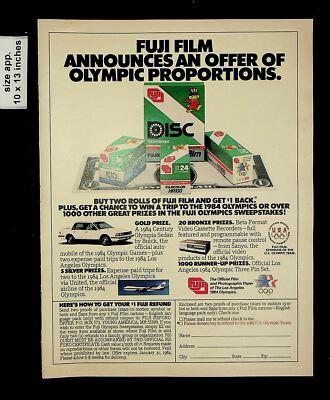
The 1984 Los Angeles Olympics showcased one of the earliest and most influential examples of ambush marketing. Although Fuji held the official Olympic sponsorship for photographic film, Kodak dominated television advertising during the Games, creating a powerful association with the event without owning the sponsorship rights.


The Olympics Had an Official Film Brand. Viewers Thought Otherwise.
The 1984 Los Angeles Olympics marked a turning point in the commercialization of global sporting events. It was the first Olympics to aggressively embrace private sponsorship, laying the foundation for the modern Olympic marketing model. For brands, official sponsorship was becoming one of the most coveted assets in sports marketing.
Fuji Photo Film invested heavily to become the official photographic film sponsor of the Games. The expectation was straightforward: exclusive rights would translate into consumer awareness, stronger brand preference, and increased sales.
Its biggest rival, Kodak, had other ideas.
Unable to secure the official sponsorship, Kodak launched a carefully orchestrated advertising campaign that surrounded the Olympics without claiming any official association. By purchasing extensive television advertising during Olympic broadcasts and leveraging its long-standing reputation in sports photography, Kodak created an impression that many viewers associated with the Games almost as strongly as the official sponsor.
The result became one of the earliest and most influential examples of ambush marketing.
The Stakes Were High
Photography in the early 1980s was fiercely competitive. Film sales were booming, and global sporting events were among the most powerful marketing platforms available.
For Fuji, the Los Angeles Olympics represented an opportunity to strengthen its international image, particularly in the United States, where Kodak had dominated the market for decades.
As the official sponsor, Fuji secured valuable rights, including:
- Exclusive use of Olympic sponsorship marks within its category.
- On-site branding and promotional opportunities.
- Hospitality and corporate engagement rights.
- Association with one of the world’s largest sporting events.
These rights were expected to create a clear competitive advantage.
Kodak, however, recognised that consumers rarely distinguish between official sponsorship and dominant advertising exposure.
Kodak’s Ambush Strategy
Rather than challenge Fuji’s legal rights, Kodak challenged consumer perception.
The company invested heavily in television advertising during Olympic broadcasts, ensuring its commercials appeared repeatedly before, during, and after event coverage. While the advertisements celebrated athletic excellence and photography, they carefully avoided making any false claim of official sponsorship.
The strategy relied on a simple insight.
Viewers tend to associate brands they repeatedly see during an event with the event itself.
Kodak also sponsored television coverage and individual sports-related programming, further reinforcing its presence during the Olympic period. Although Fuji owned the official designation, Kodak often enjoyed greater visibility among television audiences.
It was an ambush achieved through media dominance rather than sponsorship infringement.
Winning the Battle for Mindshare
Kodak understood that marketing success depends less on contractual rights than on consumer memory.
Most television viewers were not analysing sponsorship agreements. They were watching world-class athletes and absorbing the advertising that accompanied the broadcasts.
By maintaining a constant media presence, Kodak positioned itself alongside the Olympics in the minds of millions of consumers.
The distinction between “official sponsor” and “brand most associated with the event” began to blur.
That was precisely Kodak’s objective.
Why the Campaign Worked
Several factors explain why Kodak’s strategy became such an influential case study.
Television Was the Primary Medium
The 1984 Olympics attracted massive television audiences worldwide.
By dominating commercial breaks, Kodak ensured that consumers encountered its brand throughout the viewing experience, regardless of who held the official sponsorship rights.
Consumers Focus on Visibility, Not Contracts
Most viewers do not memorise sponsorship agreements.
Instead, they remember the brands that consistently appear alongside the events they enjoy.
Kodak recognised this behavioural reality and invested accordingly.
Relevance Trumped Exclusivity
Kodak had spent decades building credibility around photography and memorable moments.
The Olympics naturally reinforced that positioning.
The company’s advertising therefore felt authentic rather than opportunistic.
The Strategy Stayed Within Legal Boundaries
Unlike deceptive marketing that falsely claims sponsorship, Kodak carefully avoided violating Fuji’s contractual rights.
Its campaign never misrepresented its relationship with the Olympics.
Instead, it maximised legal advertising opportunities surrounding the event.
This distinction is one of the defining characteristics of ambush marketing.
Fuji’s Challenge
Fuji had purchased official sponsorship expecting exclusivity to deliver consumer advantage.
Instead, it discovered that exclusive rights do not guarantee exclusive attention.
Kodak’s extensive television presence reduced the practical value of Fuji’s official designation by creating competing associations in viewers’ minds.
Although Fuji owned the sponsorship rights, Kodak competed effectively for audience recall.
The episode highlighted a fundamental limitation of sponsorship: exclusivity on paper does not necessarily translate into exclusivity in consumers’ minds.
Marketing Lessons from Los Angeles 1984
The Kodak-Fuji rivalry remains a landmark case because it illustrates principles that continue to influence sponsorship strategy today.
1. Visibility Can Rival Sponsorship
Brands do not always need official rights to become part of an event’s narrative.
A well-executed media strategy can generate similar levels of consumer association.
2. Mindshare Is More Valuable Than Logo Rights
Consumers remember what they repeatedly see.
If a non-sponsor dominates the advertising environment, official status alone may not deliver the expected competitive advantage.
3. Media Planning Is a Strategic Weapon
Kodak demonstrated that where and when a brand appears can be as important as the rights it owns.
Strategic media buying became a powerful competitive tool.
4. Ambush Marketing Does Not Require Rule-Breaking
The most effective ambush campaigns often operate entirely within legal boundaries.
They exploit consumer psychology rather than contractual loopholes.
Kodak’s campaign showed that creativity and media strategy could challenge even the strongest sponsorship agreements.
The Legacy of the Kodak-Fuji Rivalry
The 1984 Los Angeles Olympics fundamentally changed how marketers viewed sponsorship. Until then, many believed that purchasing official rights automatically guaranteed consumer association.
Kodak proved otherwise.
Without claiming to be an official sponsor, it achieved a level of Olympic visibility that rivalled Fuji’s carefully purchased exclusivity. The campaign demonstrated that consumers associate brands with experiences, not contracts, and that intelligent media planning can sometimes neutralise even the most valuable sponsorship assets.
For marketers, the Kodak-Fuji battle remains a timeless reminder that owning the rights is only the beginning. Owning consumer attention is what ultimately determines who wins.