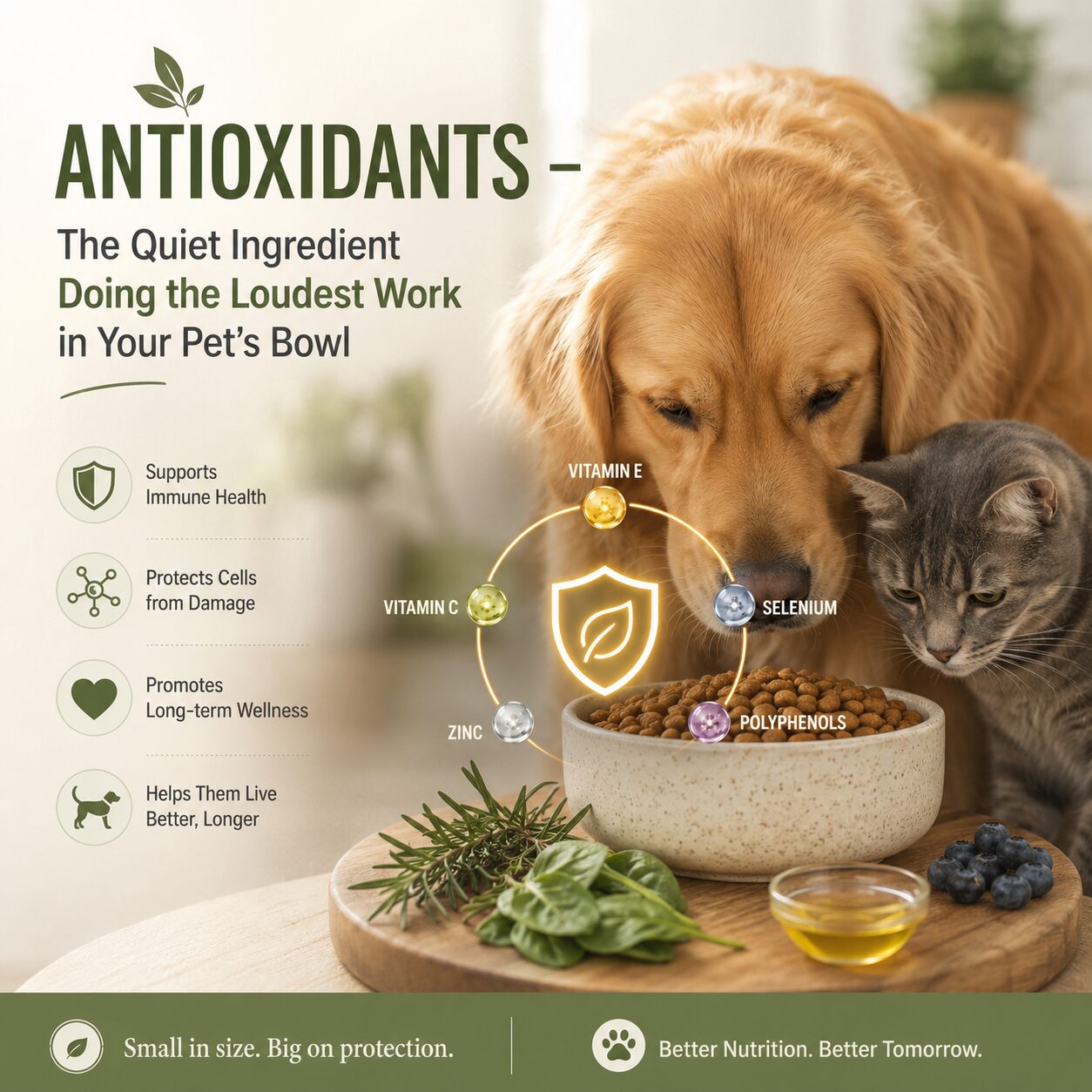
Antioxidants – The Quiet Ingredient Doing the Loudest Work in Your Pet’s Bowl
Pet food antioxidants are a $508.7M market by 2033. Here’s why a shelf-life ingredient became a brand trust signal, in India and globally.
Open any premium pet food bag today, and the front panel screams “protein”. Real chicken. Grass-fed lamb. Wild-caught salmon. Nobody puts the antioxidant blend on the front of the pack. Yet this is the ingredient deciding whether that protein stays fresh, safe and nutritious by the time it reaches the bowl.
New research from Growth Market Reports estimates the global pet food antioxidants market at $295.8 million in 2024 and projects it to reach $508.7 million by 2033. That is a 6.2% compound annual growth rate, driven largely by rising pet ownership and the demand for natural ingredients over synthetic ones.
The number itself is modest in the context of an $80 billion-plus global pet food industry. But the strategic story underneath it is not modest at all.
Why a Preservative Became a Positioning Tool
Antioxidants in pet food do one unglamorous job. They stop fats and oils from oxidising, which keeps the product from turning rancid before it is eaten. That is chemistry, not marketing.
But somewhere in the last decade, this technical function got pulled into the centre of brand positioning. A few reasons explain why:
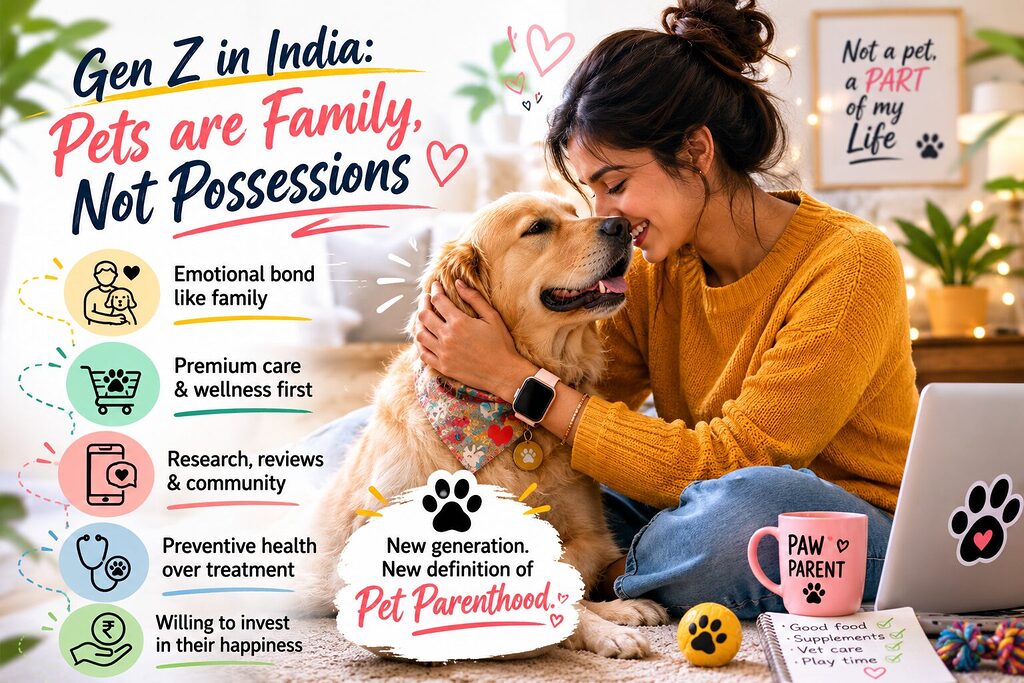
- Pet humanisation changed the questions owners ask. It is no longer just “Is this tasty?” but “Is this safe, and is it doing something for my pet’s long-term health?”
- Clean-label logic migrated from human food to pet food. Owners who scrutinise their own ingredient labels now do the same for the dog’s kibble bag.
- Formulations got more complex. Higher fat content, functional add-ons, and specialised diets all need stronger protection against spoilage, which raises the stakes on getting the antioxidant system right.
The result is that an invisible preservation layer has become a visible trust signal. “No synthetic preservatives” is now a claim brands compete to make, not bury in fine print.
Natural versus Synthetic: A Tension, Not a Resolution
The market is not moving cleanly from synthetic to natural. It is bifurcating.
Synthetic antioxidants such as BHA and BHT remain cheaper, more stable and easier to source at scale. Several independent market estimates still place synthetic options at well over half the volume used globally, particularly in mass-market and value-tier products.
Natural alternatives, mainly mixed tocopherols (a vitamin E derivative) and rosemary extract, are gaining share fastest in the premium and super-premium tiers, where the clean-label claim justifies the price.
This creates a genuinely interesting strategic problem for any pet nutrition brand:
- Natural antioxidants cost more and can be less stable, especially in high-fat or fresh-meat formulations.
- Sourcing natural inputs is less consistent because plant-derived extracts depend on agricultural cycles.
- Manufacturers increasingly use blended systems that combine natural tocopherols with citric or ascorbic acid to achieve efficacy and a clean label simultaneously.
Reports suggest blended systems already capture a meaningful share of the market by value, and that share is growing. The honest reading is that “fully natural” and “fully effective” are still in tension, and most serious manufacturers are choosing a managed blend over an ideological purity claim.
Where India Fits Into This Story
India’s pet food market does not move at the same pace or for the same reasons as the US or European markets, but the conversation about antioxidants is arriving here too, just through a different door.
A few things are true simultaneously in India right now:
- The overall pet food and pet care market is growing fast, with multiple estimates placing India’s pet food market between roughly $2.5 billion and $4.6 billion by the early 2030s, depending on methodology.
- Premiumisation is real, but still a minority behaviour. Daily commercial feeding remains low compared to developed markets, and home-cooked meals still dominate in smaller towns.
- E-commerce and quick commerce are compressing the trust-building cycle. A first-time buyer in a tier-two city can now discover, compare and buy a premium brand within days, which means label claims have to do more convincing, faster.
For a market still building baseline trust in commercial pet food, “clean label” works differently than it does in a mature Western market. In the US or the UK, a clean label is often a refinement of an already trusted commercial diet. In India, it frequently has to do double duty: convince the owner that packaged food is safe at all and then convince them it is better than what they would otherwise cook at home.
This is a subtler positioning challenge than simply copying the natural-antioxidant claim used by an international competitor. The claim must first answer a more fundamental question.
The Regulatory and Cost Reality Nobody Markets
A few structural constraints sit underneath all of this, and they rarely make it into a brand’s Instagram copy:
- Regulatory restrictions on synthetic antioxidants vary by region, creating compliance complexity for any brand selling across borders.
- Natural antioxidant inputs, such as rosemary extract and tocopherol concentrates, are import-dependent in several major markets, exposing supply chains to agricultural cycles and currency swings.
- Encapsulation and controlled-release technology, increasingly used to extend shelf life with natural inputs, adds real cost per tonne of finished product.
None of this is a reason to avoid the natural route. It is a reason to be precise about what a brand can credibly promise and at what price point before making the claim publicly.
What This Means for Brand Builders, Not Just Formulators
A few observations worth sitting with, regardless of which market you operate in:
- An ingredient story is only as strong as its operational truth. If the antioxidant system is genuinely natural and well-sourced, say so plainly. If it is a blend, say that too. Owners researching pet food today read labels with the same scepticism they bring to their own groceries.
- The fastest-growing claim is rarely the cheapest one to deliver. Natural and clean-label positioning carries real cost and sourcing risk. Brands that promise it without the supply chain to back it up are building a claim they cannot sustain at scale.
- Geography changes the job the claim has to do. The same words, “no synthetic preservatives”, are doing different psychological work in a mature pet food market than in one still building basic trust in packaged food.
The antioxidant sitting quietly in the ingredient list was never just about shelf life. It has become a small, precise test of whether a pet nutrition brand’s marketing matches its manufacturing. That test is getting harder to fail unnoticed in Bengaluru as much as in Boston.=
References
- Pet Food Antioxidants Market report, Growth Market Reports via Petfood Industry
- Pet Food Nutraceutical Market report, Petfood Industry
- Global Pet Food Market projections, Petfood Industry
- US Pet Food Antioxidants Market, IndexBox
- India Pet Food Market Size, IMARC Group
- India Pet Food Market transformation, IMARC Group
- India Pet Food Market, IndexBox
- Indian pet food startup funding, Petfood Industry
- Pet Food Ingredients Market Forecast, Future Market Insights via Yahoo Finance
- Animal Nutrition Trends 2026, CSG Talent