The Indian Pet Parent Is Shopping Like a Human Consumer
Nutrition labels for dogs. Cold-pressed treats for cats. Probiotic chews that sound like they belong in a wellness clinic, not a pet store. India’s pet food shelf has quietly begun to resemble the supplement aisle at a premium supermarket.
This is not an accident of packaging design: it is a consequence of who is buying.
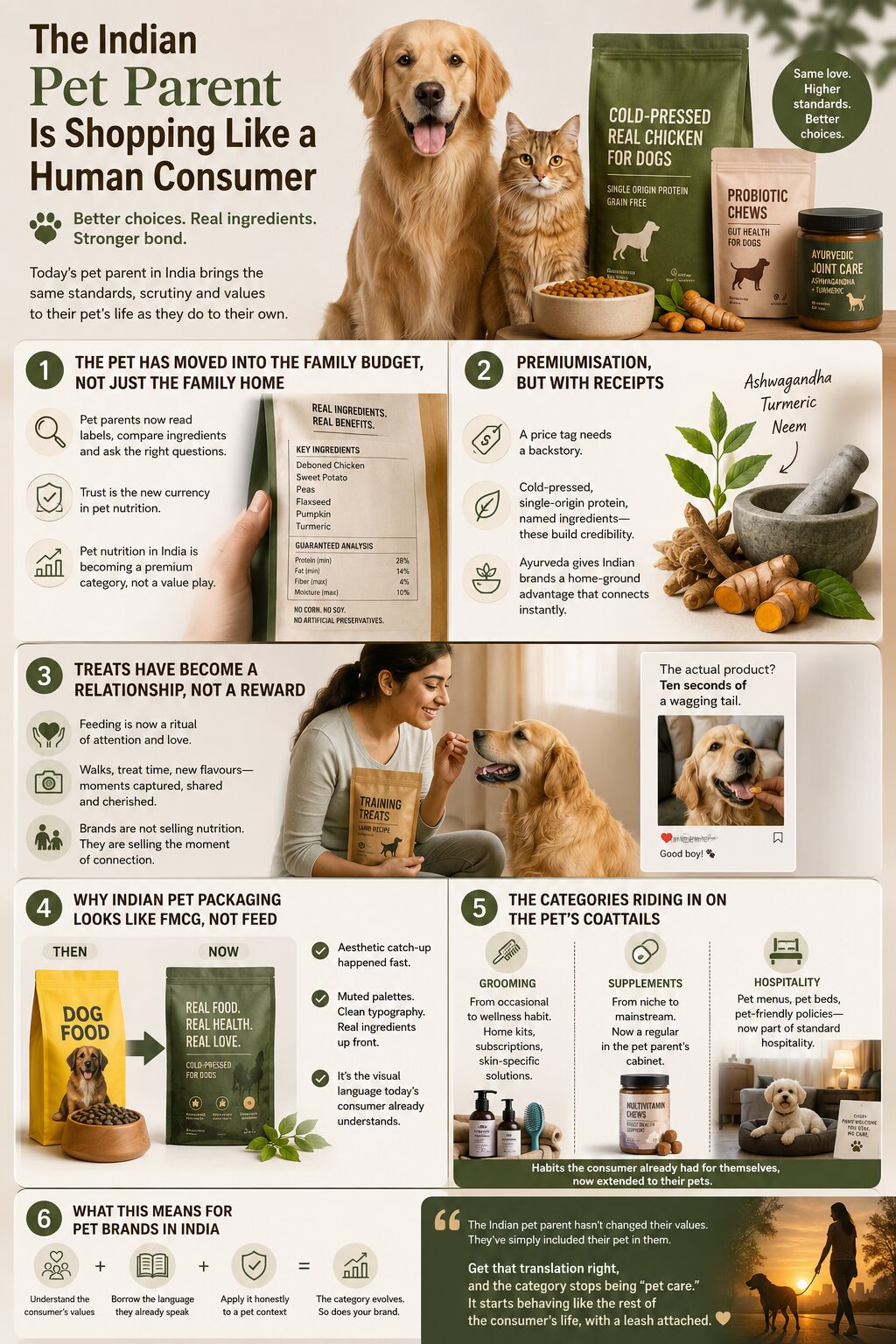
The pet has moved into the family budget, not just the family home
For a long time, the Indian pet category ran on simple logic: dogs ate dog food, the cheaper the better, and anything beyond that was indulgence. That logic has broken down in urban India over the last five years.
Pet parents, particularly first-time dog and cat owners in metros, now extend the same scrutiny to pet purchases that they apply to their own diets and skincare. They read ingredient panels and ask whether a kibble has “real chicken” or “chicken meal”. They want to know if a supplement has been tested, not just marketed.
The label-reading habit transfers, almost intact
This is the same consumer who started reading nutrition labels on their own protein bars and decided their dog deserved the same standard. The result: pet nutrition in India is no longer a value category propped up by volume. It is becoming a premium category propped up by trust.
Premiumisation, but with receipts
Indian household spending has tightened in several discretionary categories over the past two years. Eating out less. Holding off on upgrades. Cutting back on subscriptions.
Pet spending has not followed the same curve. Pet parents are still paying for joint supplements, gut-health chews, and grain-free formulations, even while trimming elsewhere. What has changed is not the willingness to spend, but the demand for justification.
The price tag now needs a backstory
A premium price tag without a reason attached does not survive in this market anymore. Brands that lead with cold-pressed processing, single-origin protein, or a named Ayurvedic ingredient are doing better than brands that simply claim “premium” on the pack. Indian pet parents, much like Indian consumers buying ghee or honey, want a story behind the price: where it came from, how it was made, why it costs what it costs.
Ayurveda’s home-ground advantage
This is where India’s own wellness heritage becomes a genuine advantage. Ashwagandha, turmeric, and neem: ingredients that Indian households already trust for themselves are now appearing on pet supplement labels, and they land with an instant credibility that an imported “superfood” claim cannot match.
Treats have become a relationship, not a reward
Feeding a pet in urban India has stopped being a chore handled by the house help and has become something the pet parent wants to do themselves, at a specific time, often documented.
The ritual is the product
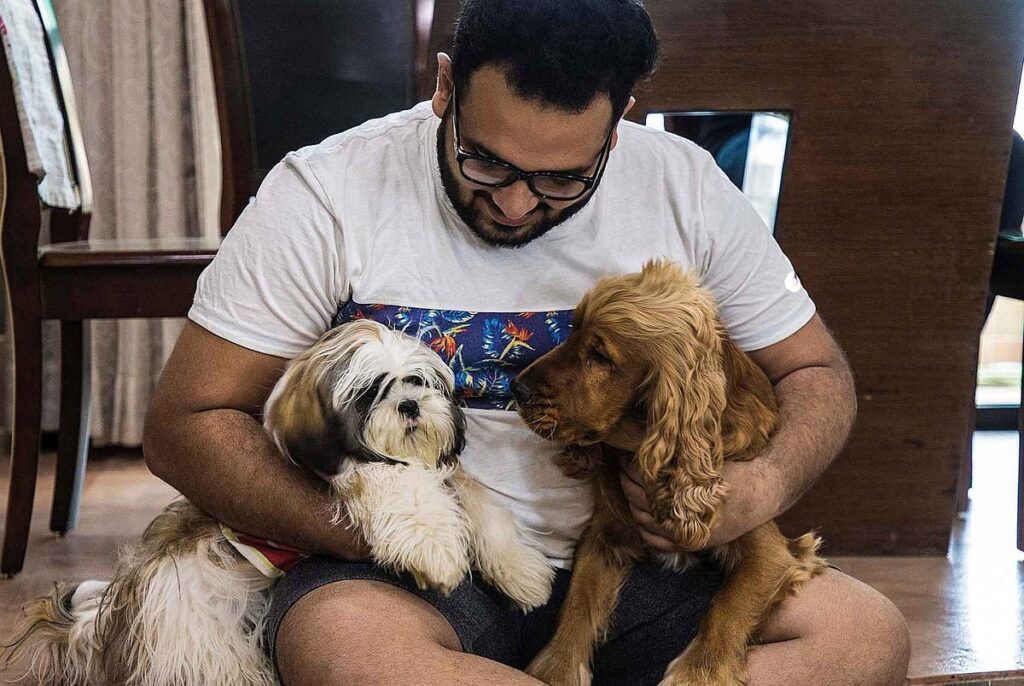
This is visible in the smallest behavioural shifts: the evening walk that ends with a treat ritual, the weekend “cheat meal” bought specifically for the dog, and the video filmed each time a new flavour is introduced. Feeding has become a daily proof of attention, and in a country where joint families are shrinking and many young professionals live with a pet as their primary companion at home, that proof matters more than it used to.
Brands that understand this are not selling nutrition alone. They are selling the ten seconds of a wagging tail before the treat is handed over. That moment is the actual product, and the kibble is simply how it gets delivered.
Why Indian pet packaging suddenly looks like FMCG, not feed
For years, Indian pet food packaging lagged one full generation behind that of human food and personal care. Bright colours, busy artwork, price stickers covering half the pack.
The aesthetic catch-up happened fast
That gap has closed fast. Newer Indian pet brands now use the same visual vocabulary as premium human FMCG: muted, earthy palettes; minimal typography; and an ingredient photographed as it belongs on a restaurant menu rather than a feed sack. A bag of dog food on a shelf today can sit next to a bag of artisanal muesli without looking out of place.
The consumer already speaks this visual language
This is not cosmetic. Pet parents have already been trained by their own grocery aisle to read these visual signals: a matte finish suggests care, an ingredient list on the front suggests honesty, and a muted palette suggests the brand is not trying too hard. Pet brands that adopt this language are not copying for the sake of looking nice. They are speaking in a dialect the consumer already understands.
The categories riding in on the pet’s coattails
Where pet nutrition has gone, several adjacent categories are following at a fast pace.
Grooming, supplements and hospitality, in that order
Pet grooming is shifting from an occasional, slightly utilitarian visit to a structured wellness habit, with home grooming kits, subscription-style grooming visits and skin-specific shampoos entering metro markets. Pet supplements are moving from a niche purchased only by breeders and serious enthusiasts to a mainstream cabinet item, sitting next to the pet parent’s own vitamin strip. Pet-friendly hospitality is no longer a novelty in a hotel’s marketing deck: more Indian hotels and homestays now build dedicated pet menus and bedding into their standard offerings because pet parents are actively filtering their travel choices based on this.
None of these categories existed at scale in India a decade ago. All of them now look less like pet-specific innovation and more like a direct transplant of habits the same consumer already had for themselves.
What this means for anyone building a pet brand in India
The mistake would be to read this as “humanise the pet harder.” That is the wrong takeaway, and it is also the easy one.
Borrow the language; do not invent a new one
The sharper read is this: the Indian pet parent has not changed their values for their pet. They have simply extended their existing values, the ones they already hold about their own food, their own skin, and their own well-being, to include the animal in the house. A brand does not need to invent a new emotional language for pets. It needs to borrow the emotional language the consumer already speaks fluently and apply it honestly to a pet context.
Get that translation right, and the category stops behaving like “pet care”. It starts behaving like the rest of the consumer’s life, with a leash attached.