Unforgotten Brands: G R Thanga Maligai – The Palace of Gold
From a 500 sq ft store in T Nagar to a global jewellery and hospitality group, discover how GRT built its empire through purity, trust, and customer credibility.
Before we get to the man, pause at the name.
“Thangamaligai” in Tamil translates to “palace of gold”. Not a shop. Not a showroom. A palace. That is the aspiration baked into the very naming of the brand, chosen in 1964 when the reality was a 500-square-foot rented room in Chennai. The name was either wildly optimistic or quietly prophetic. It turned out to be the latter.
The Man Before the Brand
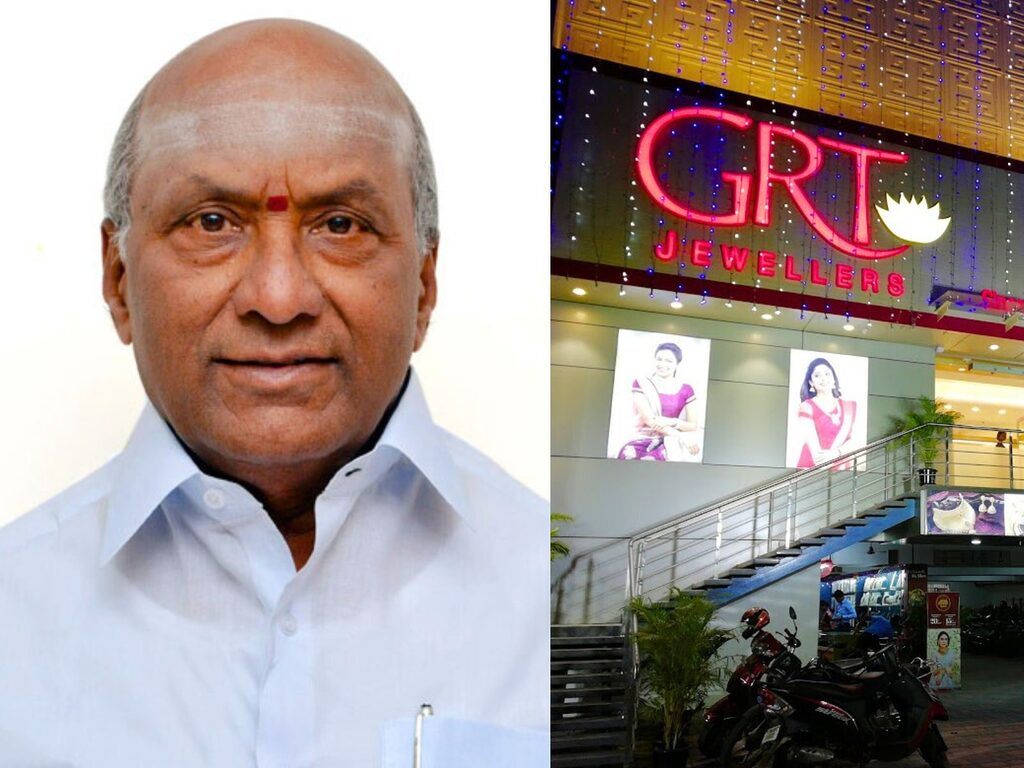
G Rajendran began his career advising on gold loans for the Chennai Central Cooperative Bank, formerly known as the Madras District Cooperative Central Bank. This is the detail that sets the whole story. He was not born into jewellery, nor was he handed a family business. He was a man who spent his working days assessing the worth of other people’s gold, writing valuations, and sitting across the counter from families pledging their most personal assets in exchange for liquidity.
That job taught him something no business school can: what gold means to people emotionally, and what quality means to them financially. He learnt to read gold before he learnt to sell it.
After years as a humble gold loan advisor, Rajendran transitioned from the bank to an entrepreneurial path. With modest savings, he took a leap of faith and established a small gold retail shop under the banner of GR Thangamaligai in 1964.
The founding details are worth sitting with.
He started the company with a 500-square-foot store at a rent of Rs 100 in 1964. That is the entire balance sheet of the origin story. No investors or brand consultants. No multi-city launch strategy. A room, a rent, and a reputation built one customer at a time.
Why T Nagar


The location was not accidental. GRT began their operations in 1964, opening a small shopfront in the shopping hub of T. Nagar in Chennai. T Nagar was, and remains, the commercial heartbeat of Chennai’s retail culture. Usman Road in particular is one of the most densely trafficked shopping streets in all of India. Starting here puts Rajendran in direct competition with established names from day one. It also put him exactly where the customer was.
The First Big Leap: 1979
The next milestone came in 1979, when GRT opened a larger store. Fifteen years of building goodwill, reputation, and a customer base that returned because they trusted the purity of what they were buying. This second store was the signal that the brand had arrived.
The purity point is not incidental. In a category where trust is the entire product, GRT would go on to be rated number one in South India for 916-purity gold by the Bureau of Indian Standards. In jewellery retail, that is as close to an unassailable credential as it gets.


Building the Flagship
As the business matured, GRT opened two flagship showrooms in Chennai on North and South Usman Road, with separate floors for gold, diamond, platinum, and silver jewellery, as well as gemstone exhibits.
The showroom consists of four floors dedicated to gold, an exclusive diamond showroom that was a first in India, and one entire floor for silverware. A dedicated diamond showroom on this scale, structured as an experience rather than a counter, was genuinely new at the time. It signalled that GRT was not thinking like a traditional jeweller. It was thinking like a retailer.
The awards followed the positioning. GRT won the Best Diamond Showroom award for four consecutive years from De Beers Group Marketing and was rated the number one platinum retail outlet in India by Platinum Guild International. These are not local recognitions. These are global industry bodies confirming that a jeweller from T Nagar had built something capable of competing at the highest level.
The Second Generation Takes Over
Under the leadership of Managing Directors G R Ananthapadmanabhan and G R Radhakrishnan, sons of the founder, GRT continued to uphold its original commitment.
The sons did not just inherit the business. They engineered its expansion into a genuinely multi-state operation.
GRT expanded its operations by opening showrooms across Tamil Nadu, Andhra Pradesh, Telangana, Bengaluru, and Puducherry and by venturing into international markets with showrooms in Dubai and Singapore.
The Singapore Moment
Celebrating its 50th anniversary, GR Thanga Maaligai launched its first jewellery showroom in Singapore, which was the brand’s second international showroom after Dubai. The choice of Singapore is strategic. The city-state has one of the highest concentrations of the South Indian diaspora in Southeast Asia. For a Tamil family brand built on trust and purity, this was the natural first port of call beyond India.
GRT was not going abroad to find anonymous customers. It was walking into a community that already spoke its language.
The Sub-Brands: Oriana, Silversmith, Samarpan
One of GRT’s quiet strategic moves has been the creation of differentiated sub-brands that address entirely distinct customer segments without diluting the core.
Oriana was created specifically for the woman of today, with everyday jewellery crafted to suit every budget and blend into every wardrobe for college, the office, or a party look. This is the lightweight, accessible, contemporary arm of a brand that was historically associated with bridal and ceremonial gold.
GRT launched Silversmith to highlight its line of silver collections, including silver-based ornaments, silver with semi-precious stones, beads, miniature glass sculptures, pearl collections, and gift options.
Then there is Samarpan, which is perhaps the most quietly remarkable of the three. GRT also specialises in temple work in both gold and silver for various temples and deities under the name Samarpan, with custom-made orders available at temples such as Lord Malayappaswami Kreedam and Shree Padmavathi Thayar. A jeweller making sacred regalia for temples is not a line of business. It is a statement of cultural identity.
The Pivot to Hospitality
Most jewellery brands stay in jewellery. GRT did not.
In 1998, branching out from GRT Jewellers, GRT Hotels and Resorts was launched, featuring upscale hotels and luxury resorts across South India.
GRT Hotels and Resorts is today South India’s premier hospitality chain, with 19 upscale hotels and luxury resorts in business, cultural, and leisure destinations across Tamil Nadu, Pondicherry, Kerala, Telangana, Andhra Pradesh, and Karnataka and a franchise agreement with the Radisson Hotel Group in select locations.
Beyond Hospitality: Education, Renewables, Finance
Over the decades, the GRT Group has grown into a conglomerate with diverse business interests spanning jewellery, hotels, education, renewable energy, and real estate.
What the Story Actually Teaches
The GRT story is not really about gold. Gold was the vehicle. The actual product was trust, and trust was built through purity, which, in the jewellery business, is a measurable, verifiable quality. Rajendran spent years inside a bank learning what happens when trust breaks down, watching families arrive with heirlooms to pledge. He built a business that made sure customers never had to question what they were getting.