Luxury Has an Authenticity Problem. Passion May Be the Answer
Luxury brands have traditionally sold status, exclusivity and aspiration. New research suggests that expressing genuine passion can make luxury consumers appear more authentic, warm and trustworthy.
Luxury has always carried a fascinating contradiction. People buy luxury products because they offer something beyond basic functionality: craftsmanship, design, heritage, exclusivity, identity, status and emotional satisfaction. Yet the very characteristics that make luxury desirable can also make the consumer vulnerable to judgement. A person carrying an expensive handbag, wearing a prestigious watch or driving a high-end automobile may be admired for taste and achievement, but may equally be perceived as trying to impress others. The object communicates value, but it does not necessarily communicate the reason behind the purchase.
That distinction is becoming increasingly important in a marketplace where consumers pay closer attention to authenticity. The question is no longer simply whether a product is genuinely luxurious. It is also whether the relationship between the consumer and the product appears genuine. Is the person buying the watch because they understand and appreciate mechanical watchmaking, or because the brand name communicates wealth? Is someone wearing a particular fashion label because they admire its design and creative history, or because the logo provides social recognition? The outside observer cannot automatically know the answer. They have to interpret the behaviour from whatever signals are available.
Research by SungJin Jung, Charlene Chen and Andy J. Yap offers an intriguing answer to this dilemma. Their research, published in the Journal of Consumer Psychology, examined what happens when luxury consumers openly express their passion for luxury products or brands. Across six experiments, the researchers found that expressing such passion increased perceptions of authenticity, warmth and trustworthiness. Observers were also more interested in getting to know the luxury consumer. The underlying mechanism was particularly interesting: expressing passion encouraged observers to interpret the consumption as being driven more by intrinsic motivations such as enjoyment and appreciation, rather than extrinsic motivations such as status or impression management.


The Problem With Being Seen as Someone Who Wants to Be Seen
Luxury consumption has always had a signalling dimension. A luxury product can tell others something about the person who owns it: their financial position, aspirations, taste, social identity, or knowledge of a particular category. This is part of what makes luxury different from ordinary consumption. A consumer does not need to explain why a basic pair of shoes costs ₹2,000, but a pair costing ₹80,000 invites questions about what exactly is being purchased beyond the physical product.
That visibility creates a social tension. The same product that can generate admiration can also generate suspicion. Observers may wonder whether the consumer is genuinely interested in the product or is using it as a device for status enhancement. Jung, Chen, and Yap start from this problem: luxury consumers can be perceived as managing impressions and pursuing external rewards, which can make them seem less authentic. Their research also examined whether some consumers deliberately conceal their passion for luxury because they worry that expressing it could make them appear materialistic, pretentious, or overly concerned with status.
This helps explain the appeal of understated luxury. The growth of what is commonly described as “quiet luxury” is not simply about aesthetics. Muted colours, discreet branding and minimal visible logos can reduce the possibility that observers interpret a purchase primarily as a status display. Instead of loudly communicating the price or brand, the product can communicate knowledge and taste to people who understand the category.
But another possibility is even more interesting: what if the consumer doesn’t hide the luxury, but explains the passion behind it?
The Object Does Not Tell the Whole Story
Imagine two consumers wearing the same high-end mechanical watch. To an outside observer, they may look identical. Both have purchased the same expensive product and both are benefiting from the associations attached to the brand.
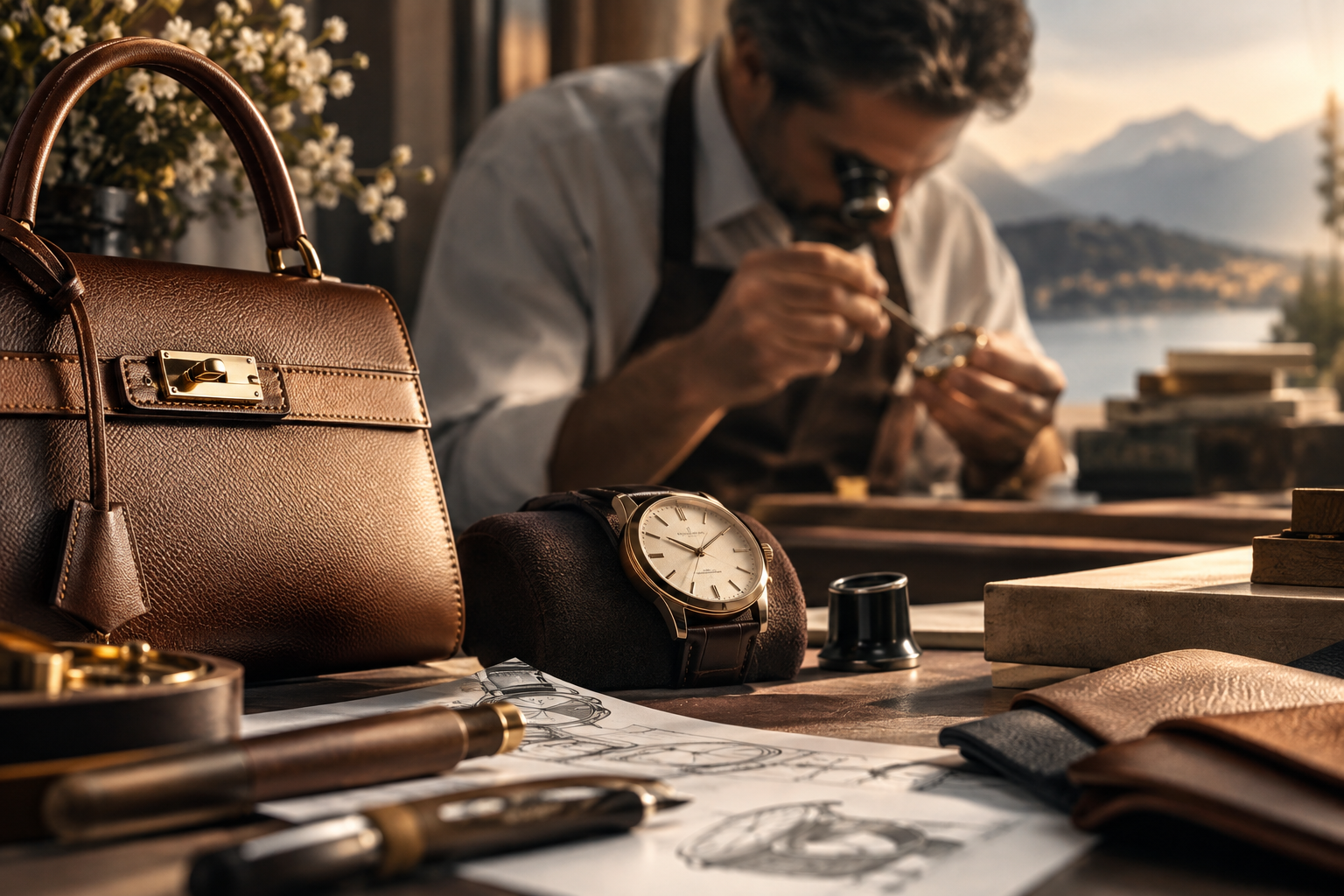
Now imagine that one of them talks about why the watch interests them. They explain the movement, the engineering, the manufacturer’s history, and the extraordinary amount of human skill involved in producing a mechanical timepiece. Suddenly, the purchase has another layer of meaning. The watch is no longer simply evidence of spending power. It becomes evidence of interest.
This is where passion becomes strategically important. The product is visible, but motivation is invisible. Passion provides a clue about motivation. The consumer who simply displays an expensive product leaves observers to construct their own explanation. The consumer who expresses genuine enthusiasm provides an alternative explanation: “I own this because I care about it.”
The research suggests that this distinction matters. When passion is explicitly expressed rather than merely inferred from ownership, observers are more likely to attribute luxury consumption to intrinsic motivations such as enjoyment, appreciation and pleasure. That shift in attribution helps increase perceptions of authenticity.
What passion can communicate
When a luxury consumer expresses genuine enthusiasm, observers may infer:
- The purchase is motivated by personal enjoyment.
- The consumer has a genuine interest in the category.
- The product means more than its price.
- The consumer appreciates craftsmanship or design.
- The relationship with the brand is deeper than simple status signalling.
The key point is that the same physical product can take on a different social meaning depending on the story around it.
Passion Changes the Meaning of Consumption
This insight has implications far beyond luxury watches and handbags. Consider a collector who spends years learning about vintage automobiles. Their garage may contain cars worth considerably more than someone who simply buys an expensive vehicle for status. Yet people are likely to interpret the collector’s behaviour differently when their knowledge and enthusiasm are visible.
The same applies to fashion. A customer who understands fabric, construction, designers, archival collections and the history of a fashion house is doing something different from someone who merely wants a recognisable logo. The purchase may look identical from the outside, but the meaning attached to it is different.
Jewellery provides another example. A consumer fascinated by gemstones may care about cut, clarity, provenance, setting and craftsmanship. Their passion gives observers a framework for understanding the purchase. The jewellery is still expensive, but expense is no longer the only explanation for why the consumer values it.
Consumers rarely buy luxury products for one reason. Several motivations can exist simultaneously:
- Status: communicating achievement or social position.
- Identity: expressing who the consumer believes they are.
- Aesthetics: appreciating design and beauty.
- Craftsmanship: valuing expertise and technical excellence.
- Heritage: connecting with a brand’s history and traditions.
- Self-reward: marking a personal achievement or milestone.
- Passion: enjoying the category or product for its own sake.
The problem arises when observers assume that status is the dominant motivation. Passion can introduce another interpretation.
From “Look What I Own” to “Here Is Why I Love It”
This creates an interesting opportunity for luxury brands. For decades, luxury advertising has been exceptionally good at making consumers desire products. It has communicated exclusivity, aspiration, celebrity, scarcity, sophistication and social distinction. But brands can also give consumers something more substantial: a reason to talk about what they love.
That might mean telling the story of an artisan who has spent decades mastering a particular technique. It could mean explaining why a particular watch movement is technically significant, why a particular leather develops its character, or why a particular fashion silhouette has become important in design history. The consumer is then not simply buying an object; they are entering a story.
This is where content marketing can become particularly powerful for luxury brands. Instead of continually communicating how expensive a product is, brands can communicate why it’s worth caring about. Instead of focusing relentlessly on celebrity ownership, they can focus on the designers, artisans, materials, techniques, traditions and ideas behind the product.
The difference is subtle but significant. Price creates distance. Knowledge creates participation.
The Consumer as Enthusiast
The strongest luxury communities are rarely built simply around ownership. They are built around shared interest. Watch collectors discuss movements, references and complications. Automobile enthusiasts debate engineering and design. Fashion communities discuss collections, designers and cultural influences. Jewellery enthusiasts examine stones and craftsmanship.
These communities show an important shift in luxury marketing: the consumer can become a participant in the brand’s culture rather than simply a purchaser of its products.
That changes the role of marketing. The brand no longer needs to do all the talking. It can equip customers with stories, knowledge, and experiences they can carry into conversations with others. A passionate customer becomes a form of cultural distribution.
This is especially true on social media, where consumers increasingly create meaning around brands themselves. A photograph of a luxury handbag communicates ownership. A detailed post explaining why the construction, material or history of that handbag is fascinating communicates something more. It demonstrates involvement.
The difference can be summarised simply:
| Traditional luxury signalling | Passion-led luxury signalling |
|---|---|
| “I own this.” | “I care about this.” |
| Price | Knowledge |
| Status | Interest |
| Visibility | Participation |
| Possession | Appreciation |
| Recognition | Credibility |
| Brand display | Brand understanding |
The first approach can create awareness. The second can create community.


What Luxury Brands Can Do Differently
The research points towards a broader change in luxury marketing: brands can encourage consumers to express their passion rather than simply display their purchasing power. This does not necessarily mean asking customers to become brand ambassadors in the traditional sense. It can be much more organic.
Luxury brands can create experiences that give consumers something worth talking about. They can invite customers to workshops, provide access to artisans, explain the provenance of materials, build collector communities, publish detailed product stories, and encourage customers to share what they find fascinating about the brand.
Some of the most useful opportunities include:
- Craftsmanship storytelling: Show the people, skills and processes behind the product.
- Educational content: Explain technical details that consumers might otherwise overlook.
- Heritage: Connect contemporary products with the brand’s history without turning heritage into empty nostalgia.
- Behind-the-scenes access: Let customers see how products are designed, developed and produced.
- Collector communities: Give passionate consumers a space to exchange knowledge and experiences.
- Masterclasses: Teach customers about materials, design, watchmaking, fashion or other areas relevant to the category.
- Customer stories: Allow genuine enthusiasts to explain what the product means to them.
- Experiential retail: Turn stores into places of discovery rather than simply transactions.
The objective is not simply to make the consumer feel special. It is to give the consumer something genuine to be passionate about.
Knowledge Can Become a Form of Luxury
There is another fascinating implication here. In an increasingly transparent marketplace, knowledge itself can become part of luxury consumption.
The consumer who knows why a product is special gains something beyond the product. They acquire cultural capital. They can recognise details that others cannot see. They can understand the difference between two seemingly similar products. They can appreciate craftsmanship that may not be immediately obvious.
This is one reason heritage storytelling works particularly well in luxury. Heritage is not merely a claim that a brand has existed for a long time. When communicated effectively, it gives consumers a vocabulary for understanding why the brand deserves attention.
The best luxury storytelling therefore does not simply tell consumers what to buy. It teaches them what to notice.
That can transform the relationship between the brand and the customer. The customer moves from passive recipient to informed participant.
But Passion Cannot Be Manufactured
There is an important caution here. Luxury brands cannot simply manufacture the appearance of passion and expect authenticity to follow.
If every customer is encouraged to post the same scripted message, repeat the same talking points and demonstrate the same manufactured enthusiasm, the strategy can quickly become another form of impression management. That would undermine the very authenticity the brand is attempting to create.
The research is valuable precisely because it doesn’t simply say that enthusiastic behaviour is always persuasive. The underlying mechanism is that explicit passion provides information about motivation. It helps observers interpret the consumer’s behaviour as being driven by genuine enjoyment rather than solely by external rewards.
That means brands need to start further upstream. They need to create products, craftsmanship, experiences and stories that people can genuinely care about. Only then does passion become believable.
Authenticity therefore requires three things:
- Something worth caring about – a genuinely differentiated product, craft or experience.
- Something worth knowing – stories, expertise and meaning that consumers can discover.
- Something worth sharing – experiences and communities that allow consumers to express their interest naturally.
Without those foundations, “passion marketing” can quickly become just another advertising technique.
The New Luxury Influencer May Be the Enthusiast
This also raises an interesting question about influencer marketing. Luxury brands have traditionally relied heavily on celebrities because celebrity endorsement provides immediate visibility and status transfer. But the rise of specialist creators and enthusiast communities suggests another model.
A celebrity can make millions of people aware of a product. An expert enthusiast may be able to make a smaller audience care about it.
That distinction matters. A watch collector who can explain the significance of a movement may have greater credibility within the watch community than a celebrity who simply wears the watch. A fashion historian may generate deeper engagement around a designer’s archive than an influencer who merely photographs the latest collection. An automobile enthusiast may create stronger conversations around engineering than a celebrity posing beside a new model.
The two types of influence perform different functions:
- Celebrities can create awareness and aspiration.
- Influencers can create discovery and consideration.
- Experts can create credibility.
- Enthusiasts can create cultural conversation.
- Communities can create belonging.
For luxury brands, the opportunity is therefore not necessarily to replace celebrities with enthusiasts. It is to recognise that different forms of influence perform different jobs.
Luxury’s Future May Be About Meaning, Not Just Visibility
The most interesting lesson from this research is that luxury’s authenticity problem may not require luxury itself to become less visible. Instead, consumers may benefit socially when the motivation behind their consumption becomes clearer.
Quiet luxury attempts to reduce the visibility of status. Passion offers another route: it can make the purchase’s intrinsic meaning more visible.
That distinction is powerful for marketers. The objective is not necessarily to make consumers stop signalling. It is to give them richer things to signal than wealth alone. They can signal knowledge, appreciation, craftsmanship, cultural interest, curiosity and genuine enthusiasm.
And these signals can make a luxury purchase easier for other people to understand.
The broader lesson extends beyond luxury. Consumers are constantly judged not only by what they buy but by why they appear to buy it. When the motivation behind a behaviour is ambiguous, observers fill the gap with assumptions. When people can communicate genuine intrinsic motivation, those interpretations can change.
For luxury brands, this creates a compelling strategic opportunity. Instead of continually asking consumers to prove they can afford the brand, brands can help them show why they care about it.
That takes luxury marketing beyond conspicuous consumption and into something more enduring: shared appreciation.
Perhaps the future of luxury is not about making people say, “Look at what I own.” It is about giving them a compelling reason to say, “Let me tell you why this matters to me.”
And that may be one of the most interesting ways for luxury to become more authentic without becoming any less luxurious.
The Bigger Marketing Lesson
The research offers a useful reminder that brands often focus too heavily on consumers’ visible behaviour and not enough on the motivation behind it.
Luxury has traditionally been exceptionally good at creating visible symbols of value. The next opportunity may be to create deeper systems of meaning around those symbols.
The winning formula does not have to be about reducing visibility. It can be about increasing understanding.
Status attracts attention. Passion provides context. Knowledge creates credibility. Community creates belonging.
For luxury marketers, that means the question is changing from:
“How do we make people want our product?”
to:
“How do we give people a reason to genuinely care about our product?”
That is a much harder marketing challenge.
It is also potentially a much more enduring competitive advantage.
References
INSEAD Knowledge – “Expressing Passion Can Make Luxury Consumers Seem More Authentic”
Read the INSEAD article
Jung, S., Chen, C. & Yap, A. J. – “Expressing Passion for Luxury Enhances Perceived Authenticity,” Journal of Consumer Psychology
Read the research paper
INSEAD Faculty & Research – Publication information
View the INSEAD research publication