Veterinary Diets in India: From Prescription Food to Everyday Health Management
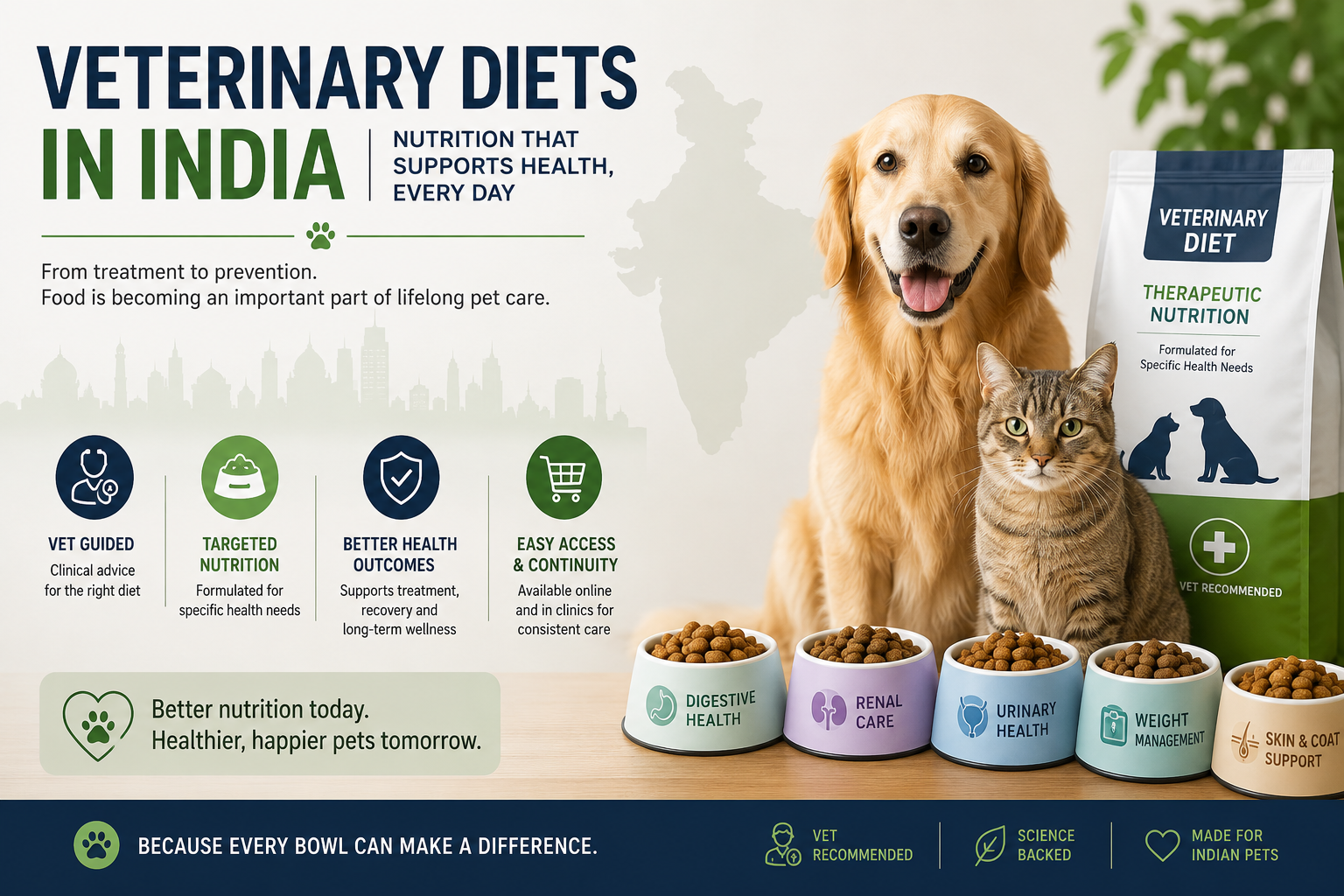
Veterinary diets in India are evolving from specialised prescription food into an important part of preventive care, disease management and lifelong pet wellness.
For years, pet food in India was largely viewed as a source of calories, convenience and basic nutrition. That is changing.
As dogs and cats live longer, veterinary diagnostics become more accessible, and pet parents become more willing to invest in healthcare, food is increasingly being viewed as part of the treatment and prevention equation.
Veterinary diets are moving from a niche category recommended for a limited number of seriously ill pets to a more sophisticated segment covering:
- Digestive health
- Renal care
- Urinary health
- Weight management
- Dermatological conditions
- Diabetes
- Oral health
- Senior-pet nutrition
The shift is not simply about selling more specialised pet food. It reflects a broader change in how Indian pet parents understand nutrition: food can influence health outcomes.
The rise of the therapeutic bowl
Veterinary diets are specifically formulated to support the management of particular medical conditions. Unlike a conventional maintenance diet, their nutritional profile is designed around a clinical objective.
For example:
- A dog with chronic kidney disease may require carefully controlled levels of certain nutrients.
- A pet with digestive sensitivity may benefit from a highly digestible formulation.
- A cat prone to urinary problems may require a diet designed to support urinary health.
- An overweight pet may need controlled calories and appropriate nutrient density.
Globally, veterinary pet food is expanding as owners seek science-backed nutrition and greater involvement from veterinarians.
India is beginning to see the same transition.
One market estimate puts the Indian veterinary diets market at about US$112 million in 2026, with a projected 12% CAGR through 2031. Digestive sensitivity was estimated to be the largest sub-category in 2025, while cats are expected to be among the fastest-growing segments.
Digestive health is becoming a major opportunity
Digestive problems are particularly relevant to the Indian market.
Many Indian pet households combine commercial pet food with:
- Home-cooked food
- Treats
- Table scraps
- Different brands of food
- Occasional diet changes
While variety may appear attractive to owners, inconsistent feeding can make it difficult to maintain nutritional consistency.
Digestive sensitivity diets therefore have an important role when a veterinarian identifies a genuine nutritional requirement.
Indian veterinary-diet market data points to digestive sensitivity accounting for around 29% of the category in 2025.
This is significant because veterinary nutrition is moving beyond the perception that prescription diets are only for severely ill pets.
The opportunity is increasingly about managing health conditions over time.
Kidney and urinary health: long-term nutrition matters
Renal and urinary diets are another important part of the category.
Kidney disease, urinary disorders and other chronic conditions can require nutritional management over extended periods. For these pets, food is not simply something consumed between veterinary appointments. It becomes part of the ongoing care plan.
This creates a different relationship between:
- The veterinarian
- The pet parent
- The pet food brand
The recommendation needs to be clinically appropriate. The pet needs to accept the food. The owner needs to understand why the diet matters. And the product needs to remain accessible enough for long-term compliance.
That last point is particularly important in India, where the cost of maintaining a therapeutic diet can become a barrier.
Obesity is also a nutrition problem
India’s pet obesity conversation is still developing, but it is likely to become increasingly important.
Urban lifestyles have changed the way pets live. Many companion animals get less exercise, while treats, calorie-dense foods and unrestricted feeding can contribute to excess weight.
Weight-management diets can therefore become an important bridge between veterinary advice and everyday pet care.
The bigger opportunity, however, may be prevention.
Veterinarians and pet food companies can help owners understand:
- Calorie requirements
- Portion control
- Body-condition scoring
- Appropriate treat quantities
- Exercise requirements
- Healthy weight targets
The objective should be to address weight before it develops into a serious health problem.
Skin, allergies and specialised nutrition
Dermatological problems are another area where nutrition can become part of a broader management strategy.
Pet parents increasingly encounter terms such as:
- Food sensitivity
- Elimination diets
- Hydrolysed proteins
- Novel proteins
- Limited-ingredient diets
But misinformation can also spread rapidly online.
Not every itchy dog has a food allergy.
Not every grain-free diet is medically necessary.
Not every ingredient marketed as “natural” has a demonstrated therapeutic benefit.
This makes veterinary guidance especially valuable.
The opportunity for the category is not simply to introduce more products. It is to build greater nutritional literacy among pet parents.
Cats are changing the opportunity
Dogs continue to dominate India’s pet population and veterinary nutrition market, but cats deserve particular attention.
India’s cat population has been growing, while urban apartment living is making cats increasingly attractive to younger households.
Cats also have distinctive nutritional and clinical requirements.
Important areas include:
- Urinary health
- Kidney health
- Weight management
- Digestive health
- Palatability
- Age-specific nutrition
Market estimates suggest that cats could grow faster than dogs within India’s veterinary-diet category over the coming years.
This means the industry cannot simply adapt dog-focused nutrition strategies for cats. Feline nutrition needs its own product development, communication and veterinary education.
The veterinarian becomes more important
One of the most interesting aspects of this evolution is the veterinarian’s changing role.
Pet parents now have access to enormous amounts of nutrition information through:
- YouTube
- Pet communities
- E-commerce platforms
- Online reviews
They can compare ingredients, read reviews and discover diets within minutes.
But information is not the same as clinical interpretation.
A veterinarian can connect:
- The pet’s medical history
- Symptoms
- Diagnosis
- Body condition
- Laboratory findings
- Nutritional requirements
This makes veterinary nutrition counselling increasingly valuable.
Research has also highlighted a gap between the nutritional guidance pet owners expect and the nutrition education traditionally available within veterinary training.
For India, strengthening veterinary nutrition education could therefore be one of the most important steps in developing the category responsibly.
E-commerce will change access
Veterinary diets have an important advantage: they are well suited to repeat purchasing.
Once a pet has been diagnosed and a diet has been recommended, the owner may need to buy the same product repeatedly for months or even years.
That makes online ordering particularly attractive.
In India’s veterinary-diet market, online channels were estimated to account for 34% of distribution in 2025 and are projected to be the fastest-growing channel.
But convenience should not replace clinical oversight.
The ideal model is:
- Veterinary recommendation
- Appropriate product selection
- Clear feeding instructions
- Convenient availability
- Easy repeat purchasing
- Periodic veterinary review
The goal should be a connected ecosystem in which digital convenience supports, rather than replaces, professional guidance.
From metros to Tier-2 India
The next phase of growth will not be restricted to Mumbai, Delhi, Bengaluru or Hyderabad.
India’s pet-care ecosystem is spreading into Tier-2 cities as pet ownership rises and veterinary infrastructure improves.
Online commerce can accelerate this process by giving pet parents access to products that may not be stocked locally.
This creates an important opportunity for veterinary nutrition brands.
The winning proposition may not be premium formulation alone. It could be a combination of:
- Clinical credibility
- Availability
- Affordability
- Convenience
- Continuity of care
A therapeutic diet only works as part of a treatment plan if the pet receives it consistently.
The future: nutrition as preventive care
The biggest change may be conceptual.
Veterinary diets were once associated primarily with illness. The next generation of pet nutrition is likely to connect food more closely with health management across the pet’s entire life.
This could include:
- Puppy and kitten nutrition for healthy development
- Weight management before obesity becomes a disease
- Digestive support for pets with recurring sensitivities
- Nutritional management of renal and urinary conditions
- Dermatological nutrition where clinically appropriate
- Oral-health-focused diets
- Senior-pet nutrition
- More personalised feeding recommendations
Globally, pet food innovation is moving toward targeted health outcomes, functional nutrition and personalised feeding occasions.
India is likely to follow, but with one distinctly Indian consideration: value matters.
Pet parents want better nutrition, but better nutrition must remain financially sustainable.
The category will therefore need to balance science and affordability rather than simply pushing premiumisation.
The opportunity is bigger than prescription food
India’s veterinary nutrition market is entering an interesting phase.
The future is unlikely to be defined simply by more therapeutic SKUs on retail shelves. It will be defined by how effectively veterinarians, nutritionists, manufacturers, retailers and digital platforms help pet parents understand the connection between diet and health.
The most successful brands will therefore not merely sell a bag of food.
They will sell confidence in the feeding decision.
For veterinarians, this presents an opportunity to make nutrition a more visible and integral part of:
- Preventive healthcare
- Disease management
- Weight management
- Recovery
- Senior-pet care
- Lifelong wellness
The veterinary diet may have started as a specialised intervention.
In India’s evolving pet-care ecosystem, it could become an essential part of the larger conversation around how we help pets live healthier, longer lives.