Brand Loyalty Is More Than Trial: Why the First Purchase Is Only the Beginning
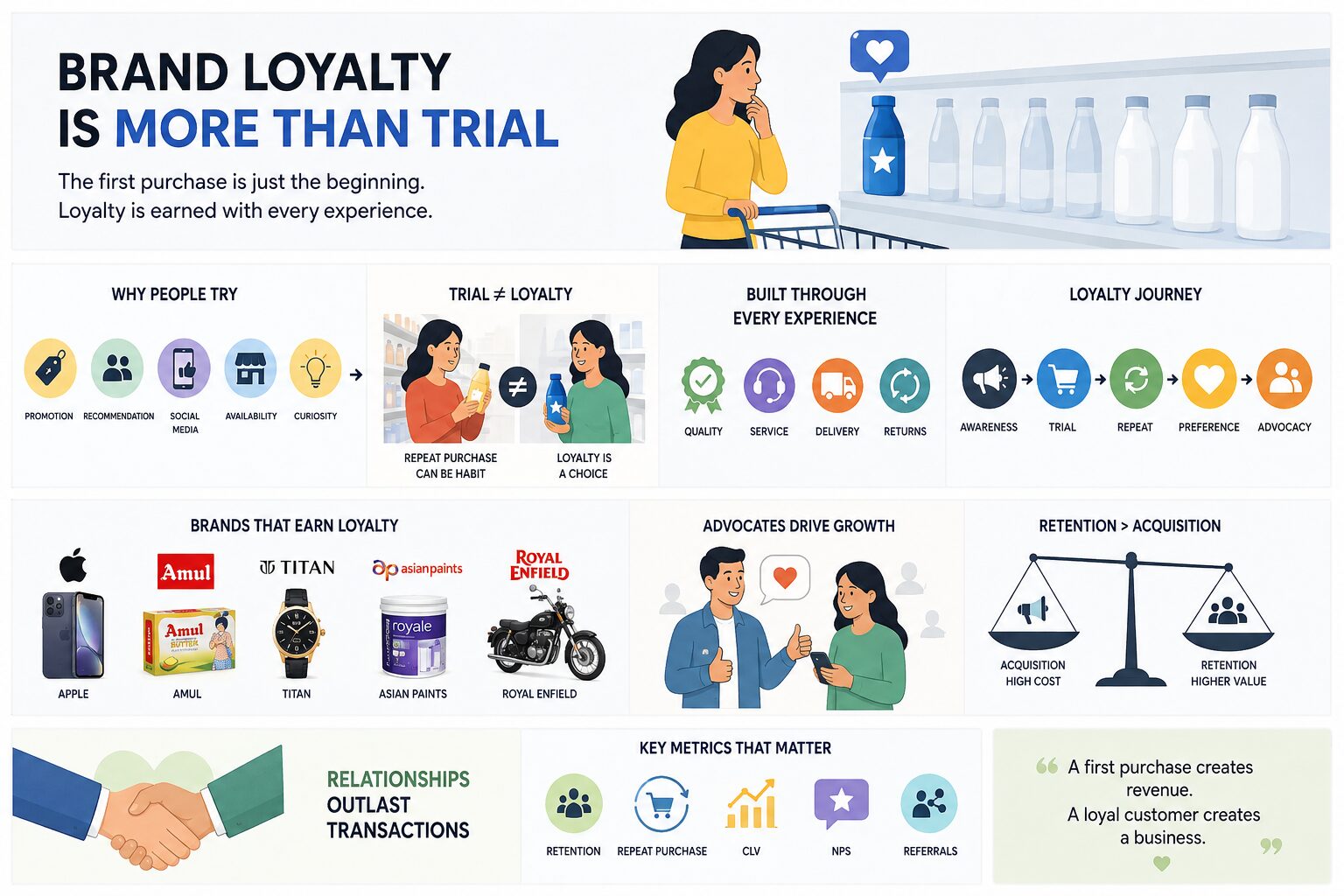
The first purchase is only the beginning. True brand loyalty is built through trust, consistency and customer experience.
Winning a new customer feels like a victory. Marketing campaigns have worked, sales targets have been met, and another conversion appears on the dashboard. But the reality is that the first purchase is not proof of brand loyalty. It is simply proof that someone was willing to give your brand a chance.
The real challenge begins after the sale. Every interaction, every product experience, and every customer touchpoint determines whether that first purchase becomes a second, a tenth, or the start of a lifelong relationship.
The brands that dominate their categories are not necessarily the ones that attract the most first-time buyers. They are the ones that consistently earn repeat business.
Why Customers Try a Brand
People experiment with brands for countless reasons. Most of these have very little to do with loyalty.
Customers may buy because:
- A promotional offer caught their attention.
- A friend recommended the product.
- An influencer showcased it online.
- Their usual brand was unavailable.
- They were curious.
Consider someone buying a new pet supplement on a quick commerce platform because it is available at a discounted price. That purchase tells us the brand succeeded in generating interest. It does not tell us whether the customer will ever return.
Similarly, millions of consumers downloaded Threads when it launched. Curiosity drove adoption, but long-term engagement depended on whether users found enough value to stay.
Trial creates opportunity. Experience creates loyalty.
Repeat Purchases Are Not Always Loyalty
Businesses often celebrate repeat purchases as evidence of customer loyalty. However, buying again does not necessarily mean customers prefer the brand.
Sometimes they choose what is easiest.
For example:
- A commuter refuels at the same petrol station because it is on the daily route to work.
- A family buys the same brand of atta because it is always available at the neighbourhood supermarket.
- An office orders lunch from the same restaurant because it delivers quickly.
These customers are repeat buyers, but they may switch immediately if a better option becomes available.
True loyalty exists when customers actively choose your brand even when attractive alternatives exist.
Brands That Have Built Genuine Loyalty
Some brands have built relationships that extend far beyond the product itself.
Apple: Building an Ecosystem
Apple customers routinely upgrade to newer iPhones despite premium pricing and numerous Android alternatives.
Why they remain loyal:
- Seamless ecosystem across devices
- Familiar user experience
- Strong trust in quality
- Emotional attachment to the brand
For many users, switching would mean giving up an ecosystem they have grown comfortable with.
Amul: Trust Across Generations
Few Indian brands have built loyalty like Amul.
Whether it is milk, butter, cheese or ice cream, consumers continue buying Amul because the brand has consistently delivered quality for decades.
Its loyalty is built on:
- Consistent product quality
- Affordable pricing
- Wide availability
- Generational trust
Many Indian households buy Amul without even considering another option.
Titan: More Than Watches
Titan has successfully evolved from a watch company into one of India’s most trusted lifestyle brands.
Customers repeatedly return because of:
- Elegant product design
- Reliable quality
- Strong after-sales service
- Trust built over decades
Whether purchasing a first watch for graduation or gifting one during retirement, Titan remains a preferred choice for millions.
Amazon: Convenience Creates Confidence
Many consumers willingly pay slightly more on Amazon even when another website offers a lower price.
The reason is trust.
Customers appreciate:
- Fast delivery
- Easy returns
- Reliable customer support
- Consistent shopping experience
Years of dependable service have made Amazon a default shopping destination.
Asian Paints: Loyalty Beyond the Product
Paint is not something consumers purchase every month. Yet Asian Paints enjoys exceptional customer loyalty.
The company has built trust through:
- Consistent product performance
- Strong dealer relationships
- Colour consultation services
- Reliable availability across India
Customers often ask for Asian Paints by name because they trust the outcome, not just the paint.
Every Customer Interaction Matters
Brand loyalty is built through consistency.
Customers notice every interaction, whether positive or negative.
Positive experiences include:
- Products that consistently deliver on their promises.
- Friendly and responsive customer support.
- Hassle-free returns and exchanges.
- Reliable product quality.
- On-time delivery.
Negative experiences are equally memorable.
One poor customer service interaction or one defective product can erase months of goodwill and encourage customers to explore competitors.
Trust grows slowly but disappears quickly.
The Journey From Trial to Advocacy
Loyal customers are not created overnight.
They move through several stages before becoming advocates.
The journey typically looks like this:
- Awareness – The customer discovers the brand.
- Trial – They make their first purchase.
- Repeat Purchase – The experience encourages another purchase.
- Preference – They begin choosing the brand over competitors.
- Loyalty – The brand becomes their preferred option.
- Advocacy – They actively recommend the brand to others.
Many companies celebrate success at the trial stage while forgetting that real value lies in reaching advocacy.
Advocates Become Your Best Marketing Team
The strongest brands create customers who willingly recommend them.
Examples include:
- Tesla owners encouraging friends to switch to electric vehicles.
- Nike customers proudly wearing the brand as part of their identity.
- Royal Enfield riders building communities and organising rides.
- Tanishq customers recommending the brand for weddings and family celebrations.
These recommendations are powerful because consumers trust other consumers far more than advertisements.
Why Acquisition Alone Is Not Enough
Many organisations spend enormous budgets attracting first-time buyers.
Typical acquisition investments include:
- Digital advertising
- Influencer campaigns
- Introductory discounts
- Cashback offers
- Seasonal promotions
But once the customer purchases, many brands reduce engagement.
This creates an expensive cycle where companies constantly replace customers instead of retaining them.
Retention is often more profitable than acquisition because loyal customers:
- Purchase more frequently.
- Spend more over time.
- Recommend the brand to others.
- Are less sensitive to price increases.
Measure Relationships, Not Just Transactions
Businesses that want sustainable growth should look beyond acquisition metrics.
Instead of celebrating only new customers, they should monitor indicators such as:
- Customer Retention Rate
- Repeat Purchase Rate
- Customer Lifetime Value (CLV)
- Net Promoter Score (NPS)
- Referral Rate
- Customer Satisfaction
- Brand Preference
These metrics reveal whether customers merely bought the product or genuinely believe in the brand.
Final Thoughts
The first purchase is not the destination. It is simply the beginning of the relationship.
Customers become loyal because every experience reinforces the belief that they made the right choice. They trust the product, appreciate the service, and feel confident recommending the brand to others.
Whether it is Apple creating a connected ecosystem, Amul earning trust across generations, Titan delivering dependable quality, Asian Paints becoming synonymous with reliability, or Royal Enfield building a passionate community, the principle remains the same.
Great brands do not chase transactions. They nurture relationships.
In the end, sustainable growth belongs to the brands that give customers a reason to return, not just a reason to buy once.