Loyalty Programs Are Not Just About Points: Why the Future of Customer Loyalty Is Built on Relationships
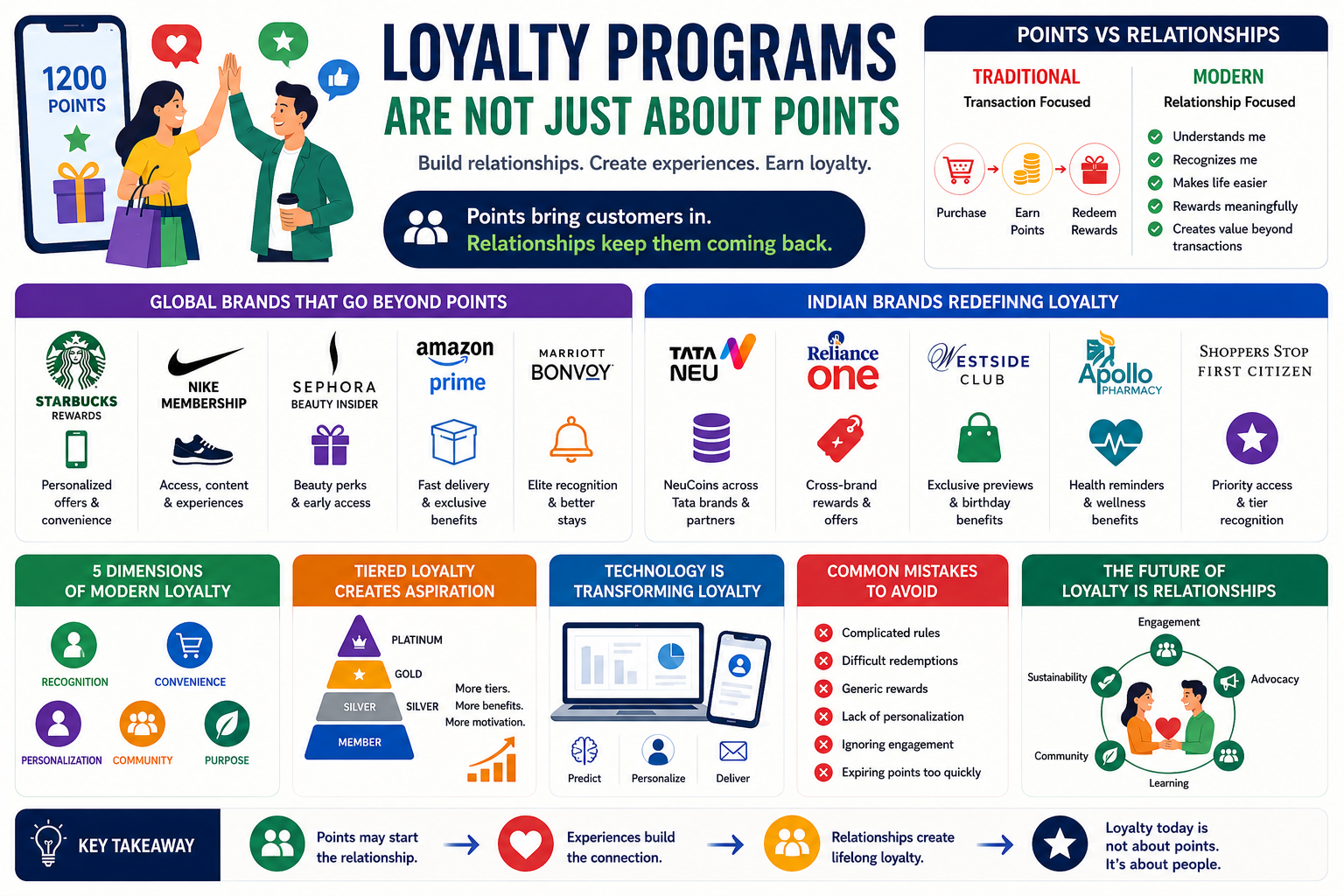
Modern loyalty programs go beyond points by creating personalized experiences, emotional connections, recognition, and lasting customer relationships.
Modern loyalty is built on meaningful relationships, memorable experiences, and emotional connections rather than simply rewarding transactions.
Customer loyalty has long been associated with points, rewards, and discounts. Walk into any retail store, sign up for an airline, or shop online, and chances are you will be invited to join a loyalty program that promises points on every purchase. While these programs can encourage repeat purchases, they do not necessarily build genuine customer loyalty.
True loyalty is emotional. It is built when customers consistently choose a brand even when competitors offer lower prices, bigger discounts, or more attractive reward schemes. A well-designed loyalty program can certainly support this relationship, but points alone rarely create it.
Today’s consumers expect brands to understand them, reward them meaningfully, and make every interaction feel worthwhile. The most successful loyalty programs are no longer transaction engines. They are relationship platforms that strengthen trust, create memorable experiences, and foster long-term engagement.
Why Points Alone Are No Longer Enough

Customers increasingly value experiences, convenience, and recognition over collecting points.
Traditional loyalty programs followed a straightforward model.
- Customers made purchases.
- They earned points.
- They redeemed points for rewards.
This approach worked well when loyalty programs were relatively uncommon. Today, almost every airline, retailer, coffee chain, fashion brand, grocery store, and e-commerce platform offers some version of a rewards program. As loyalty programs have become commonplace, points have become an expectation rather than a differentiator.
Customers now ask far more meaningful questions:
- Does this brand understand my needs?
- Do they recognize me as an individual?
- Do they make my life easier?
- Do they reward me in meaningful ways?
- Would I miss this brand if it disappeared tomorrow?
The answers to these questions determine genuine loyalty far more than the number of points accumulated in an account.
Loyalty Is Emotional Before It Is Financial
Behavioural loyalty measures repeat purchases.
Emotional loyalty explains why customers continue choosing a brand even when attractive alternatives are available.
People often remain loyal because they:
- Trust the product quality
- Enjoy consistently positive experiences
- Feel appreciated and recognised
- Identify with the brand’s values
- Receive personalized service
- Experience convenience at every interaction
When emotional loyalty is strong, customers become less price-sensitive, recommend the brand to others, and are more forgiving when occasional mistakes occur.
Modern Loyalty Programs Create Experiences
The world’s best loyalty programs reward customers in multiple ways rather than simply accumulating points.
They focus on creating memorable experiences such as:
- Early access to new product launches
- Exclusive member communities
- Personalized recommendations
- Invitations to special events
- Priority customer service
- Birthday surprises
- Recognition of loyalty milestones
- Insider content and expert advice
These experiences often create stronger emotional connections than discounts ever can.
International Brands That Go Beyond Points


Leading global brands build loyalty by combining rewards with convenience, personalisation, and exclusive experiences.
Starbucks Rewards
Starbucks has transformed its loyalty program into a digital experience that combines convenience with personalisation.
Members enjoy:
- Mobile ordering and payment
- Personalized offers
- Birthday rewards
- Early access to seasonal beverages
- Tailored recommendations based on previous purchases
The mobile app itself has become an integral part of the customer experience, making every visit faster, simpler, and more enjoyable.
Nike Membership
Rather than rewarding purchases alone, Nike Membership encourages customers to engage with the brand’s broader ecosystem.
Members receive:
- Early access to limited-edition products
- Exclusive member collections
- Training plans
- Running and fitness challenges
- Expert coaching content
- Invitations to member-exclusive experiences
The program rewards participation, helping customers build stronger connections with the brand beyond shopping.
Sephora Beauty Insider
Sephora combines rewards with education and exclusivity.
Members receive:
- Beauty classes
- Product samples
- Birthday gifts
- Early access to product launches
- Exclusive events
- Tier-based benefits
Customers feel like insiders rather than simply repeat shoppers.
Amazon Prime
Although technically a subscription rather than a traditional loyalty program, Amazon Prime demonstrates how convenience can become one of the strongest drivers of loyalty.
Members enjoy:
- Fast delivery
- Video streaming
- Music streaming
- Reading benefits
- Exclusive deals
- Access to Prime Day offers
Customers continue renewing because the membership simplifies everyday life, not because they collect points.
Marriott Bonvoy
The hospitality industry provides one of the best examples of experiential loyalty.
Members receive benefits such as:
- Complimentary room upgrades
- Late check-outs
- Lounge access
- Elite recognition
- Personalized travel experiences
Recognition often becomes more valuable than points, particularly for frequent travellers.
Indian Brands Redefining Loyalty


Indian brands are increasingly creating integrated loyalty ecosystems that reward customers through experiences and recognition.
Tata Neu
Tata Neu has created one of India’s most comprehensive loyalty ecosystems.
Customers earn and redeem NeuCoins across multiple Tata brands and partner businesses, creating a seamless experience that extends well beyond individual purchases.
Its strength lies in integrating shopping, travel, hospitality, electronics, groceries, fashion, and financial services into one connected loyalty experience.
Reliance One
Reliance One connects multiple retail businesses under a unified rewards program.
Members enjoy:
- Cross-brand rewards
- Personalized offers
- Omnichannel shopping experiences
- Exclusive member promotions
The program encourages customers to remain within the Reliance retail ecosystem.
Westside Club
Rather than relying heavily on discounts, Westside Club rewards loyal shoppers through recognition and exclusive experiences.
Members receive:
- Exclusive previews
- Personalized offers
- Birthday benefits
- Member-only shopping events
The program complements Westside’s premium positioning while strengthening customer relationships.
Apollo Pharmacy Loyalty Program
Healthcare loyalty extends beyond transactions.
Apollo’s program combines:
- Personalized health and medicine reminders based on purchase history
- Wellness offers
- Health check-up benefits
- Tailored recommendations
- Ongoing customer engagement
This allows Apollo to build relationships that continue long after a purchase has been completed.
Shoppers Stop First Citizen
One of India’s oldest retail loyalty programs, First Citizen has evolved well beyond points.
Members enjoy:
- Priority access to sales
- Exclusive shopping events
- Personalised fashion recommendations
- Birthday privileges
- Tier-based recognition
The focus is on making customers feel valued throughout their relationship with the brand.
The Five Dimensions of Modern Loyalty


The strongest loyalty programs combine emotional and functional benefits to create lasting customer relationships.
The most successful loyalty programs create value beyond discounts and rewards. They combine multiple dimensions that strengthen customer relationships over time.
1. Recognition
Customers want brands to remember them and acknowledge their relationship.
Examples include:
- Birthday wishes and rewards
- Membership anniversaries
- Personalized greetings
- VIP status and tier upgrades
- Surprise rewards for loyal customers
Recognition creates emotional satisfaction that points alone cannot deliver. When customers feel seen and appreciated, they are more likely to remain loyal.
2. Convenience
Sometimes the easiest experience wins.
Reducing effort often creates more loyalty than offering larger discounts.
Examples include:
- One-click checkout
- Saved preferences
- Faster delivery
- Priority customer support
- Hassle-free returns
- Seamless omnichannel shopping
Convenience removes friction and encourages customers to return because the brand consistently saves them time and effort.
3. Personalization
Modern customers expect brands to understand their preferences.
Using customer insights responsibly enables brands to deliver experiences that feel relevant rather than generic.
Examples include:
- Product recommendations
- Personalized promotions
- Relevant reminders
- Tailored content
- Individualized communications
Personalization increases customer satisfaction because every interaction feels more meaningful.
4. Community
Many leading brands create communities where customers connect not only with the company but also with other customers.
Examples include:
- Member groups
- Brand events
- Running clubs
- Fitness challenges
- Online forums
- User-generated content
Communities create belonging, something that discounts and reward points alone cannot achieve.
5. Purpose
Consumers increasingly support brands whose values align with their own.
Loyalty programs can strengthen emotional attachment by supporting initiatives such as:
- Sustainability
- Social causes
- Charitable giving
- Community development
- Environmental responsibility
Purpose transforms loyalty from a commercial relationship into a shared mission.
Tiered Loyalty Creates Aspirational Value


Tiered loyalty programs motivate customers by rewarding long-term engagement with increasing levels of recognition and exclusive benefits.
One of the biggest shifts in loyalty marketing is the rise of tiered loyalty programs. Instead of rewarding every customer equally, brands recognize their most engaged members with progressively better benefits.
As customers move through different membership levels, they unlock increasingly valuable privileges such as:
- Priority customer service
- Complimentary upgrades
- Early access to products
- Exclusive events
- Premium experiences
- Personalized concierge services
This creates a sense of achievement, exclusivity, and belonging that encourages customers to deepen their relationship with the brand.
Successful examples include:
- Marriott Bonvoy
- Emirates Skywards
- Sephora Beauty Insider
- Shoppers Stop First Citizen
Tiered programs transform loyalty from a transactional exercise into an aspirational journey where recognition becomes just as valuable as rewards.
Technology Is Transforming Loyalty


Artificial intelligence enables brands to predict customer needs, personalize experiences, and build stronger long-term relationships.
Artificial intelligence, predictive analytics, and customer data platforms are redefining customer loyalty.
Modern loyalty platforms can now:
- Predict customer churn
- Recommend relevant products
- Deliver personalised offers at the right time
- Automate customer communications
- Reward engagement beyond purchases
- Create personalised customer journeys
Rather than reacting to customer behaviour, brands can proactively build stronger relationships through timely and relevant interactions.
Common Mistakes Brands Make
Even well-funded loyalty programs fail when they focus only on transactions.
Common mistakes include:
- Complicated earning rules
- Difficult redemption processes
- Generic rewards
- Poor personalization
- Ignoring emotional engagement
- Weak mobile experiences
- Focusing only on acquiring new customers
- Expiring points too quickly
- Offering rewards that customers do not value
Customers quickly lose interest when loyalty programs become confusing, frustrating, or difficult to benefit from.
Designing Loyalty for the Next Decade
The future of loyalty lies in rewarding engagement, advocacy, and long-term relationships rather than simply purchases.
The future of loyalty is less about accumulating points and more about creating meaningful relationships.
Forward-thinking brands are increasingly rewarding:
- Engagement
- Advocacy
- Referrals
- Reviews
- Sharing valuable feedback
- Creating user-generated content
- Participating in brand communities
- Learning
- Sustainability actions
- Long-term relationships
The objective is shifting from increasing purchase frequency to strengthening customer lifetime value and emotional attachment.
Final Thoughts
Points remain an important component of loyalty programs. They encourage repeat purchases, provide measurable incentives, and offer tangible value. However, they represent only one element of a much broader loyalty strategy.
The brands that build enduring loyalty consistently recognise customers, personalise experiences, reduce friction, foster communities, and create memorable moments. Whether it is Nike encouraging healthier lifestyles, Starbucks simplifying the daily coffee ritual, Tata Neu connecting trusted brands, or Westside making members feel valued, the lesson is the same.
The best loyalty programs do not merely encourage customers to spend more. They inspire customers to stay longer, engage more deeply, and become enthusiastic advocates for the brand.
Ultimately, a successful loyalty program should not simply answer the question:
“How many points have you earned?”
Instead, it should answer a far more important question:
“Why would this customer choose us again, even if there were no points at all?”
Key Takeaways
- Points encourage repeat purchases but rarely create lasting loyalty on their own.
- Emotional connections are stronger than financial incentives.
- Recognition, convenience, personalization, community, and purpose are the pillars of modern loyalty.
- Tiered programs make customers feel valued and create aspirational engagement.
- Artificial intelligence is enabling highly personalized loyalty experiences.
- The future of loyalty lies in rewarding relationships, not just transactions.