How Ulta Beauty Built a 44-Million-Member Loyalty Machine – And What Indian D2C and Retail Brands Can Learn From It
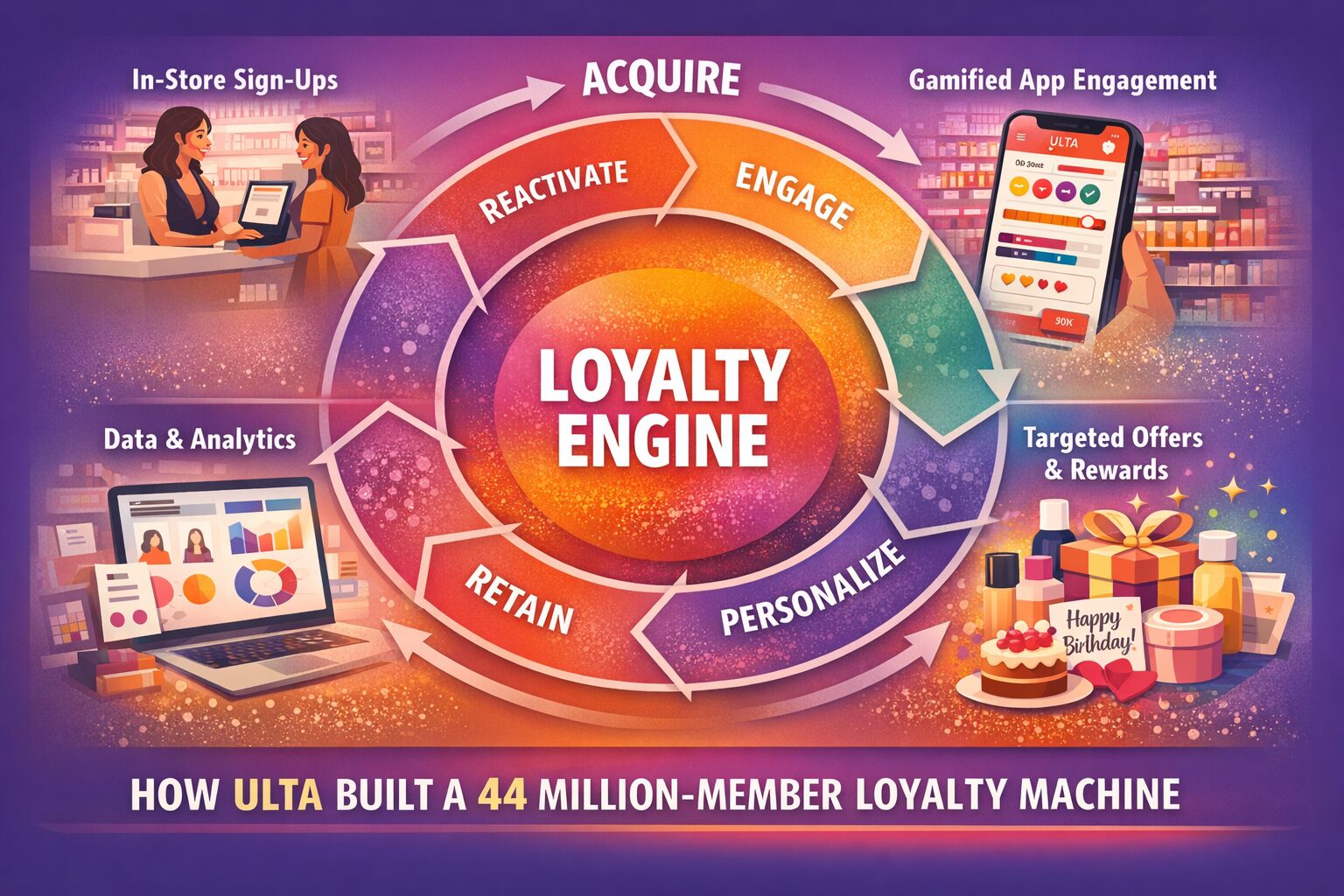
How Ulta Beauty built a 44M-member loyalty engine driving 95% revenue—and what Indian D2C brands can learn to build scalable, data-driven retention.
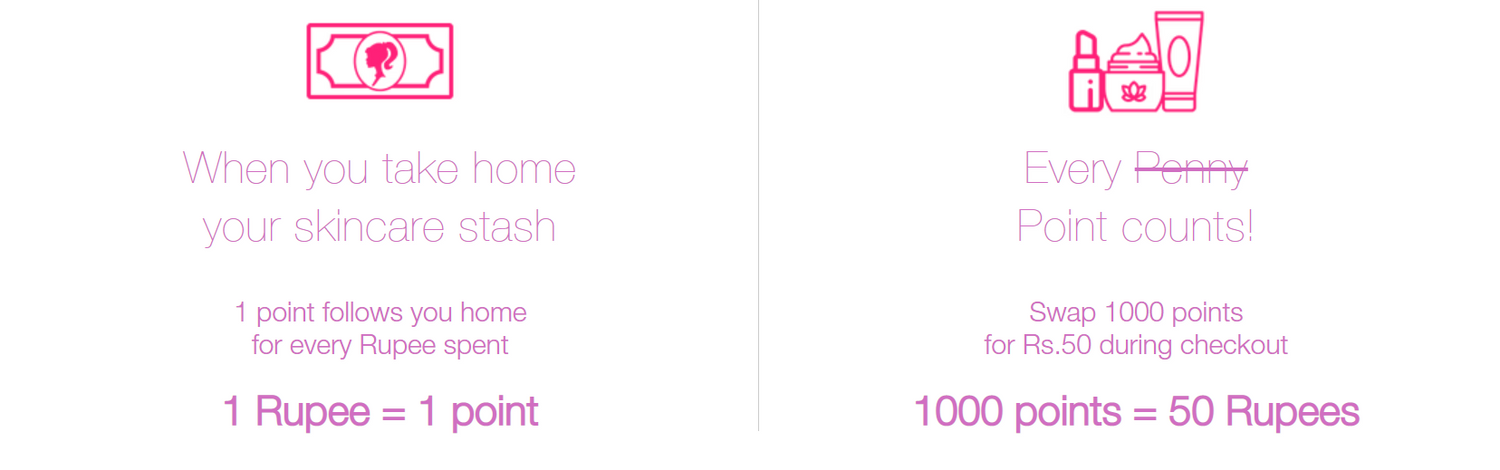
In an age where customer acquisition costs are spiralling, and brand switching is one tap away, Ulta Beauty has done something remarkable. It has turned a rewards programme into the backbone of a multi-billion-dollar retail business. With 44 million active members generating roughly 95 per cent of the company’s total revenue, the Ulta Beauty Rewards programme is not a marketing afterthought. It is the company’s single largest commercial engine. For Indian brands-especially those in D2C beauty, wellness, and fast-moving retail-Ulta’s playbook offers a masterclass in how loyalty, when designed with intent, becomes a moat that competitors cannot easily replicate.
1. The Architecture of Ulta Beauty Rewards
Ulta’s loyalty programme, originally launched in 2014 as “Ultamate Rewards” and rebranded to “Ulta Beauty Rewards” in January 2024, is a points-based system with a deliberately tiered structure that rewards frequency and depth of spending.
How the Programme Works
• Members earn points on every purchase, with the number of points per dollar fluctuating between one and five depending on the day, the product, and ongoing promotions. This dynamic point allocation is central to the programme’s addictive quality.
• Points accumulate and can be redeemed as direct discounts on future purchases, not as samples or merchandise, but as real money off the bill. This is a critical distinction from competitors like Sephora, whose Beauty Insider programme leans heavily on sample-based rewards.
• The programme follows the classic 80/20 distribution: the top 20 per cent of members drive approximately 80 per cent of total revenue. Ulta designs its tier benefits to keep these high-value customers deeply engaged while continuously nurturing the broader base.
• Beyond points, members receive access to early shopping events (including the popular 21 Days of Beauty sale), birthday rewards with a choice of five gifts, in-store salon coupons, double-point periods during their birth month, exclusive samples, and full-size free products at key spending milestones.
2. Gamification: The Engine Behind Daily Engagement

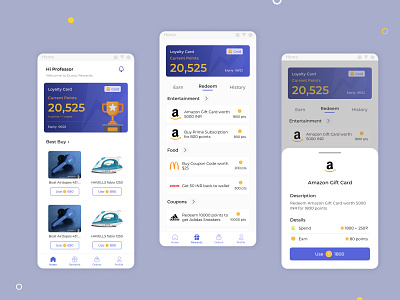
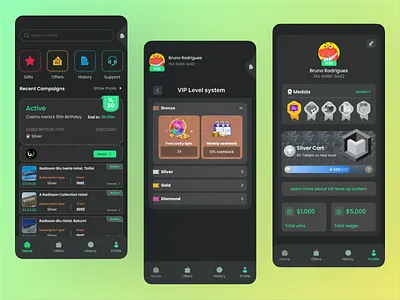
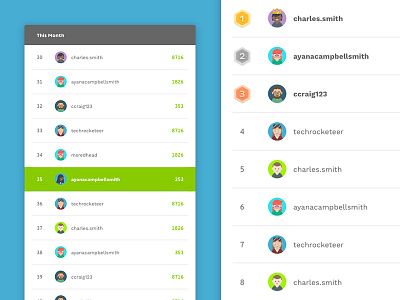
What separates Ulta’s programme from a typical earn-and-burn rewards scheme is its deliberate use of gamification. The near-daily fluctuation in point values turns shopping into a strategic game. Consumers begin to time their purchases, stack promotions, and calculate optimal redemption windows. This behaviour has become a genuine subculture on social media.
• On TikTok and Instagram, Ulta shoppers openly share strategies for acquiring high-ticket items, such as a ₹45,000 Dyson styling tool, for a fraction of the sticker price by stacking points, coupons, and bonus multipliers.
• The Ulta app uses colour-coded progress bars and game-like graphics to show members exactly where they stand in their points journey, which tier they are approaching, and what rewards are within reach. At the time of its most recent reporting, the app held a 4.9-star rating from 1.8 million reviews on the Apple App Store and ranked among the top 30 shopping apps.
• This gamification generates organic word-of-mouth marketing at zero incremental cost. Every TikTok video explaining “how I got ₹45,000 worth of products for ₹8,000” is essentially free advertising, driven by programme design rather than a media budget.
3. The In-Store to App Journey: Designing the Conversion Funnel
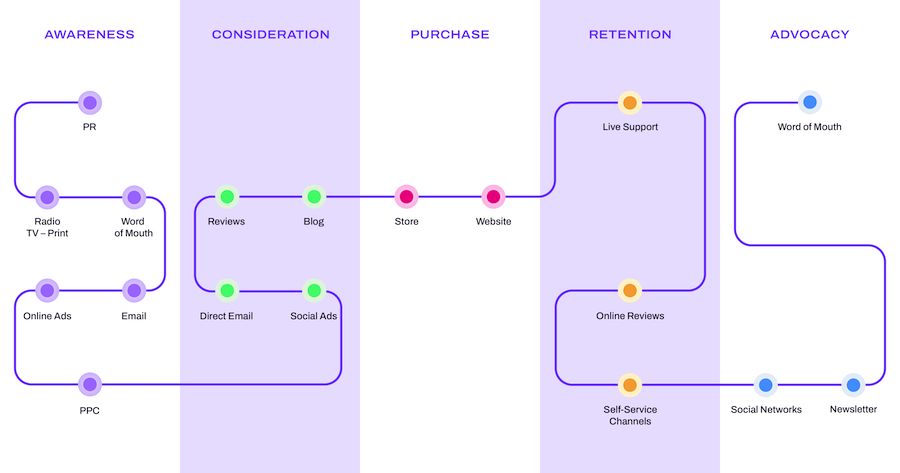
Ulta’s approach to member acquisition is deeply rooted in physical retail, and this is one of the most instructive elements for Indian brands operating in an omnichannel environment.
The Store as Acquisition Channel
• The vast majority of new sign-ups happen in-store, not online. Ulta treats its store associates as the frontline of loyalty programme growth. Associates enrol in the programme themselves and are trained to speak about it from personal experience, which makes the pitch feel authentic rather than scripted.
• A new member can sign up with as little as a phone number or email address. The low friction is intentional-Ulta wants zero barriers at the moment of purchase, floor enthusiasm.
• Ideally, the associate also captures the member’s birthday at sign-up, because birthday data becomes one of the most powerful retention levers later in the lifecycle.
The App as Retention Channel
• Once signed up, Ulta uses targeted email and SMS marketing to drive app downloads. The app is described internally as “the handshake to the programme”-it is the primary communication channel with members and the space where most ongoing engagement happens.
• Within the app, members track points, discover upcoming sales, receive personalised product recommendations powered by AI and machine learning, and interact with curated brand content.
• The critical insight here is that the store creates the emotional connection, and the app sustains it. Neither channel works in isolation.
4. Data as the Crown Jewel: Retention and Reactivation

Ulta’s leadership describes data as the programme’s “crown jewel,” and the company’s approach to lapsed-member reactivation is where this philosophy is most visible. With 44 million members representing a substantial slice of the American adult population, the retention game is as important as acquisition.
Lifecycle-Based Reactivation
• The first 45 days after sign-up are treated as the critical window. Ulta uses a carefully paced “waterfall” of communications-email, push notifications, SMS-to bring new members back for a second and third purchase before the relationship goes cold.
• One-time shoppers who never return are treated differently from lapsed regulars. The messaging, offers, and channel strategy are distinct for each cohort, all informed by machine learning models that predict the likelihood of reactivation.
• For lapsed online shoppers, Ulta uses browser history and on-site behaviour to surface personalised messages. If a member was primarily a skincare buyer, Ulta will lead with updates about new skincare assortments rather than generic promotions.
• If personalised content does not work, the retargeting escalates to paid social media advertising using identifiers such as phone numbers to locate the member on platforms like Instagram and Facebook.
• As a final lever, Ulta deploys direct discount codes, or gift offers with a “Come on back” message-a deliberate last resort, not a first move. The sequencing matters: content first, relevance second, incentive last.
The Birthday Lever
Birthday rewards are positioned as one of the most emotionally effective retention tools in the programme. Members receive double points throughout their birth month, an in-store salon coupon, and a choice of a birthday gift from five options. The shift from a single universal gift to a curated choice has driven measurable uplift in both redemption rates and post-redemption satisfaction scores. The underlying principle is simple: people want to feel recognised, not processed.
5. Why Ulta’s Model Matters in a Competitive Landscape
Loyalty programmes are no longer differentiators by themselves. Every major beauty retailer-Sephora, Credo Beauty, Blue Mercury, DermStore, and most department store cosmetics counters-operates one. According to data management firm Acxiom, 65 per cent of consumers expect to be rewarded for their loyalty, 72 per cent will stay loyal in exchange for discounts and rewards, and 56 per cent are more likely to repurchase when loyalty rewards are personalised.
What makes Ulta’s programme stand out is not its existence but its execution: the sheer scale (no other beauty retailer reports a comparable active member base), the gamified engagement loop, the data infrastructure powering personalisation, and the disciplined lifecycle management that treats every lapsed member as a recoverable relationship rather than a sunk cost.
6. Lessons for Indian Brands: Translating the Ulta Playbook

India’s beauty and personal care market is projected to cross $30 billion by 2027, fuelled by a young, digitally native consumer base, rising disposable incomes, and the rapid expansion of D2C brands across skincare, haircare, and wellness. Yet loyalty programme design in India remains largely unsophisticated-most brands default to flat cashback, generic discount codes, or point systems that carry no emotional weight. Here is what Indian brands can extract from Ulta’s approach.
A. Make the Programme the Business, Not a Feature
• Most Indian D2C brands treat loyalty as a plugin-a Shopify extension or a third-party widget bolted onto checkout. Ulta’s programme generates 95 per cent of revenue. That is not a feature; it is the commercial architecture itself.
• Indian brands like Nykaa, Mamaearth, Sugar Cosmetics, and mCaffeine should ask: what percentage of repeat revenue is programme-driven? If the answer is below 50 per cent, the programme is underperforming its potential.
• For emerging D2C brands with smaller customer bases, the principle still applies. A 10,000-member loyalty programme with high engagement will outperform a 100,000-member email list with 2 per cent open rates.
B. Gamify Beyond Points: Create a Participation Culture
• India’s smartphone-first consumer base is primed for gamification. The success of fantasy sports platforms like Dream11, cashback apps like CRED, and streak-based engagement on platforms like Zomato’s Intercity Legends demonstrates that Indian consumers respond strongly to game-like mechanics.
• Beauty and wellness brands should explore dynamic point multipliers (varying by day, product category, or festival season), streak rewards for consecutive monthly purchases, tier-based unlockables (exclusive shades, early access to new launches), and social sharing incentives where members earn bonus points for posting unboxing or review content.
• The goal is to make the loyalty programme a source of content and conversation, not just a discount mechanism.
C. Use the Offline Touchpoint as an Acquisition Engine
• India’s retail landscape is still heavily offline. Even digitally native brands are expanding into physical retail, pop-ups, and modern trade. Ulta’s finding that in-store sign-ups vastly outnumber online ones is directly relevant.
• Brands selling through general trade chemists, modern trade chains like Health & Glow or Shoppers Stop, or even at pop-up events during IPL matches or Diwali melas should train frontline staff to pitch the loyalty programme as naturally as Ulta’s associates do.
• WhatsApp can serve as India’s equivalent of the Ulta app-low friction, already installed, capable of rich media, and ideal for personalised post-purchase communication, point tracking, and reorder nudges.
D. Invest in Lifecycle Marketing, Not Just Acquisition Offers
• The Indian D2C ecosystem is heavily skewed toward acquisition. Brands pour money into Instagram and Google ads to acquire customers at a CAC of ₹300–800, then offer a flat 10 per cent welcome discount and hope for the best. Ulta’s waterfall reactivation model-content first, relevance second, incentive last-is a far more capital-efficient approach.
• Indian brands should map the first 45–60 day post-purchase journey with the same rigour Ulta applies: what message goes out on day 3, day 14, day 30? What triggers a re-engagement sequence? What data points determine whether a customer sees a product recommendation, a brand story, or a discount code?
• Tools like CleverTap, MoEngage, and WebEngage-all Indian-origin marketing automation platforms-already support this kind of lifecycle orchestration. The technology exists; what is often missing is the strategic intent behind the sequence design.
E. Celebrate the Customer, Not Just the Transaction
• Ulta’s shift from a single universal birthday gift to a curated choice of five options is a small operational change with outsized emotional impact. It signals that the brand sees the member as an individual rather than a segment.
• Indian brands can adapt this by leveraging cultural milestones that matter locally: Diwali gift boxes for top-tier members, personalised Holi-themed product bundles, anniversary rewards tied to the date of a customer’s first purchase, or handwritten thank-you notes at key spending thresholds.
• The emotional resonance of being surprised and delighted-what Ulta describes as “generating delight in the customer, something pleasantly unexpected”-is universal across cultures and income segments.
7. The Bigger Takeaway
Ulta Beauty’s loyalty programme did not reach 44 million members by offering the biggest discounts or the flashiest app. It grew by designing a system where every element-the points structure, the gamification, the associate training, the app experience, the data infrastructure, the reactivation sequences, the birthday rewards-works together as a single, coherent flywheel.
For Indian brands, the lesson is not to copy Ulta’s specific tactics but to absorb its underlying philosophy: loyalty is not a programme you bolt on. It is a business model you build around. The brands that understand this distinction-and invest accordingly in data, lifecycle design, and emotional connection-will be the ones that own their categories in the next decade.
Bibliography
[1] Glossy (2025). “Ulta Beauty Strategies: Inside Ulta’s 44-Million-Member Loyalty Program.” Glossy, 24 February 2025. https://www.glossy.co/beauty/ulta-beauty-strategies-inside-ultas-44-million-member-loyalty-program/
[2] CX Dive (2024). “Ulta Beauty’s Loyalty Program Hits 44.4M Members.” Customer Experience Dive, 6 December 2024. https://www.customerexperiencedive.com/news/ulta-beauty-loyalty-44-million-members-community-q3/734919/
[3] Retail TouchPoints (2023). “Ulta to Debut Revamped Loyalty Program in the New Year.” Retail TouchPoints, 21 December 2023. https://www.retailtouchpoints.com/topics/loyalty/ulta-to-debut-revamped-loyalty-program-in-the-new-year
[4] Chain Store Age (2024). “Ulta Rebrands, Upgrades Rewards Program.” Chain Store Age, 4 January 2024. https://chainstoreage.com/ulta-rebrands-upgrades-rewards-program
[5] Chain Store Age (2025). “Exclusive Q&A: Ulta Beauty Enhances Personalization of Loyalty Program.” Chain Store Age, 15 January 2025. https://chainstoreage.com/exclusive-qa-ulta-beauty-enhances-personalization-loyalty-program
[6] Glossy (2024). “How Ulta Beauty Is Serving Its 44 Million Loyalty Members.” Glossy, 18 November 2024. https://www.glossy.co/beauty/how-ulta-beauty-is-serving-its-44-million-loyalty-members/
[7] Chain Store Age (2024). “Ulta CEO Talks Beauty Growth, Revamped Loyalty Program at NRF 2024.” Chain Store Age, 13 December 2024. https://chainstoreage.com/ulta-ceo-talks-beauty-growth-revamped-loyalty-program-nrf-2024
[8] U.S. Securities and Exchange Commission (2025). Ulta Beauty, Inc. Annual Report (Form 10-K), Fiscal Year Ended 1 February 2025. https://www.sec.gov/Archives/edgar/data/1403568/000155837025003810/ulta-20250201x10k.htm
[9] Acxiom (2025). “Maximize Your Brand’s Loyalty Potential.” Acxiom Blog, 16 April 2025. https://www.acxiom.com/blog/cx-trends-2025-brand-loyalty/
[10] Antavo (2025). “The Top 221 Customer Loyalty Statistics for 2025 and Beyond.” Antavo Blog. https://antavo.com/blog/customer-loyalty-statistics/
[11] Business Standard (2023). “India’s Beauty and Personal Care Market to Touch $30 Billion by 2027.” Business Standard, 1 September 2023. https://www.business-standard.com/industry/news/pure-play-brands-will-drive-indian-beauty-and-personal-care-market-report-123090101071_1.html
[12] Professional Beauty India (2024). “India’s Beauty Market Set for Rapid Growth by 2027.” Professional Beauty India, 10 June 2024. https://professionalbeauty.in/indias-beauty-market-set-for-rapid-growth-by-2027
[13] Statista (2025). “Beauty & Personal Care – India: Market Forecast.” Statista Market Insights. https://www.statista.com/outlook/cmo/beauty-personal-care/india
[14] IMARC Group (2025). “India Beauty and Personal Care Market Size & Outlook, 2034.” IMARC Group. https://www.imarcgroup.com/india-beauty-personal-care-market