The Brand Whisperers: Some of The Greatest Products Are Built by Duos, Not Departments
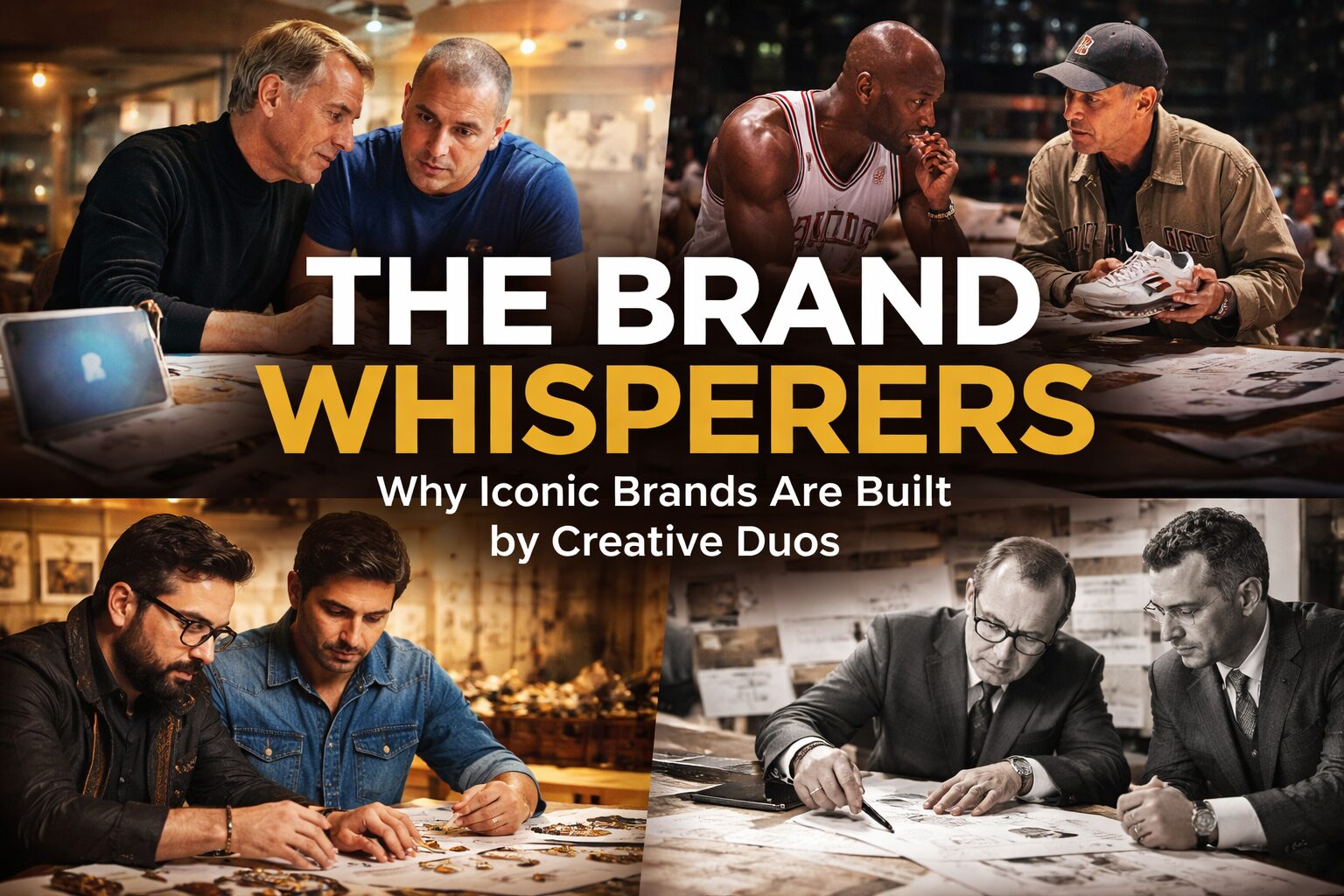
A deep dive into how iconic brands—from Nike and Apple to Royal Enfield—were shaped by powerful creative partnerships. Why great products emerge from duos, not departments.
Behind every iconic brand, there is usually a relationship that never appeared on the org chart.
Not a reporting line. Not a committee.
A conversation.
A sustained partnership between two people who see the world differently enough to challenge each other and similarly enough to trust each other.
Typically:
- One person carries the brand vision
- The other carries the craft
Between them, they create something neither could build alone.
Marketing textbooks teach frameworks, segmentation models, and positioning maps. Those are useful. But the mechanism by which great brands actually come alive is far more personal.
It starts not with a target audience but with a character and a creative partner capable of translating that character into something people can see, touch, and desire.
The brands that endure are rarely built by departments.
They are built by duos.
The Architect Who Read Athletes
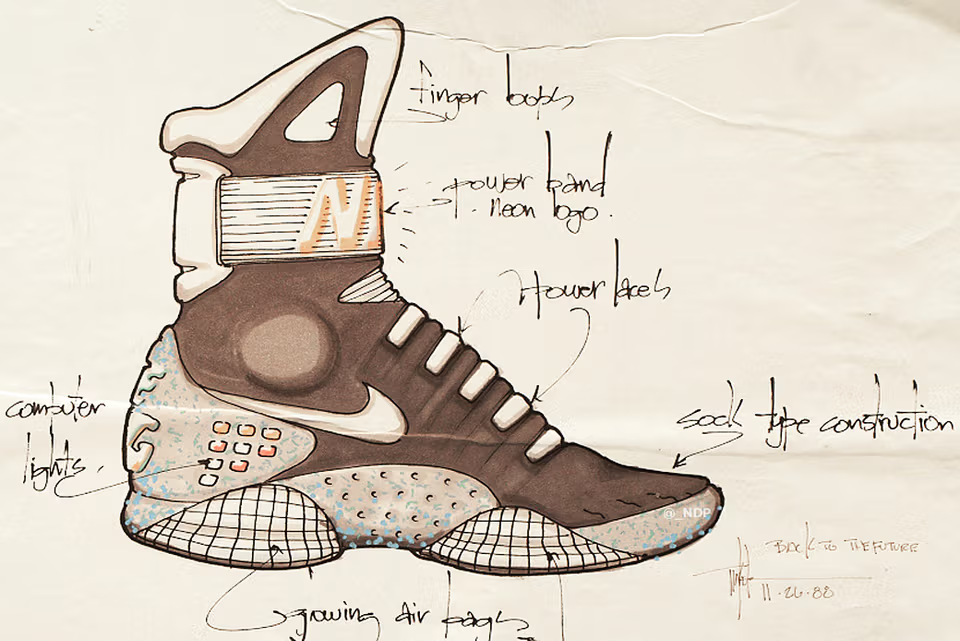

When Tinker Hatfield began designing sneakers for Nike in the mid-1980s, he was not a footwear designer.
He was an architect.
Hatfield had pole-vaulted at the University of Oregon under Bill Bowerman before a severe injury ended his athletic career. Architecture became his path forward and eventually his entry into Nike.
That architectural mindset changed sneaker design.
Architects study the context before designing the structure. Hatfield applied the same thinking to athletes.
Before sketching a line, he studied the person.
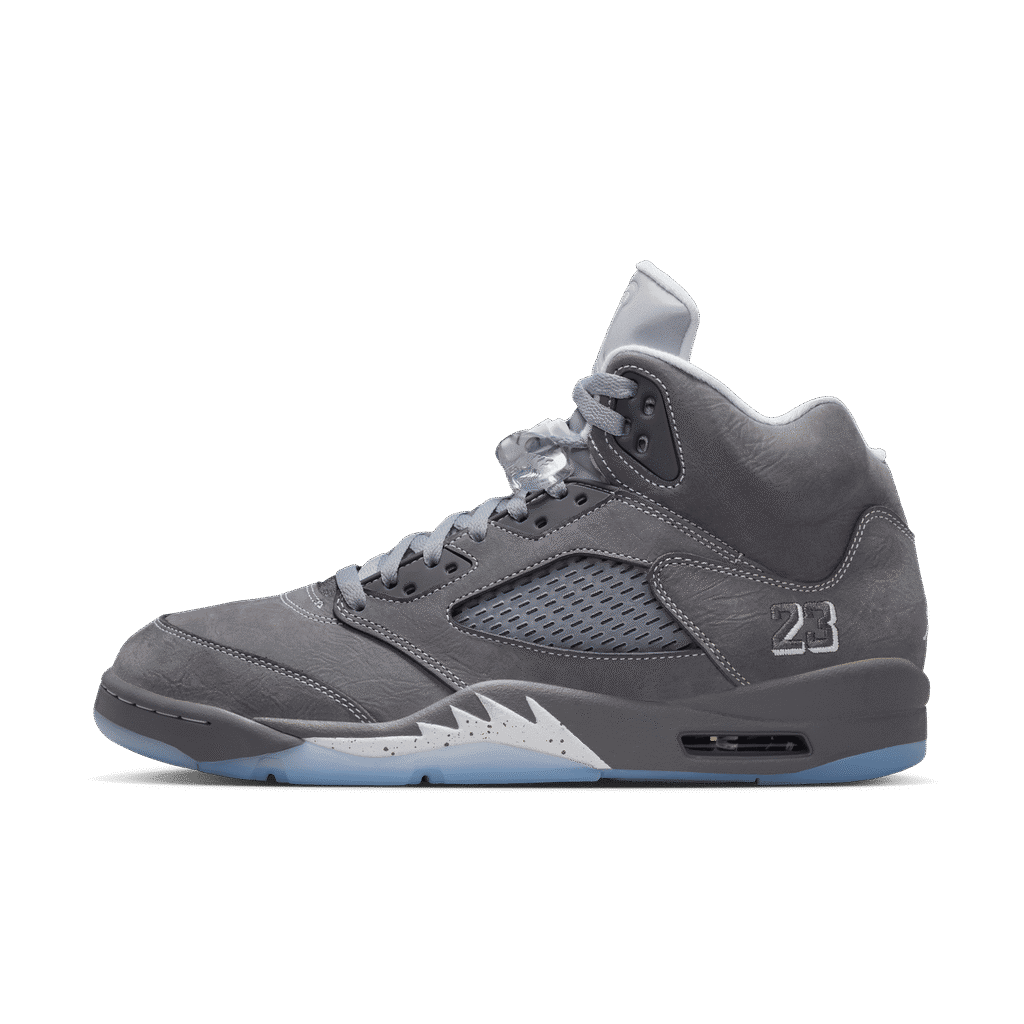
With Michael Jordan, this process became legendary.
Hatfield didn’t design shoes for a basketball player.
He designed shoes for a character.
Examples of how character became design language:
- Jordan’s agility → Panther imagery (his school nickname)
- Competitive aggression → fighter-plane inspired Air Jordan 5
- Personal elegance → Gatsby-style spats inspiration for Air Jordan 11
The result: shoes that were not just performance gear, but cultural artefacts.
Jordan carried the character.
Hatfield translated it into form.
The Partnership That Rebuilt Apple
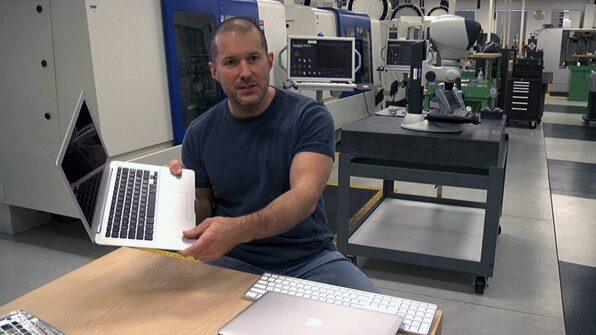
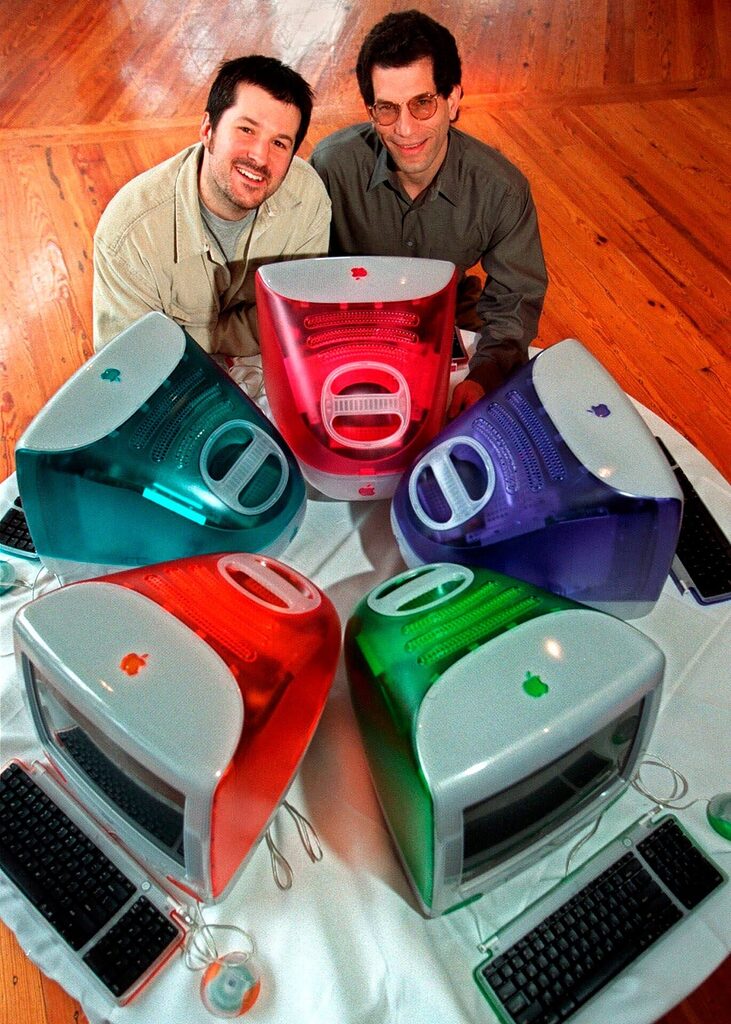
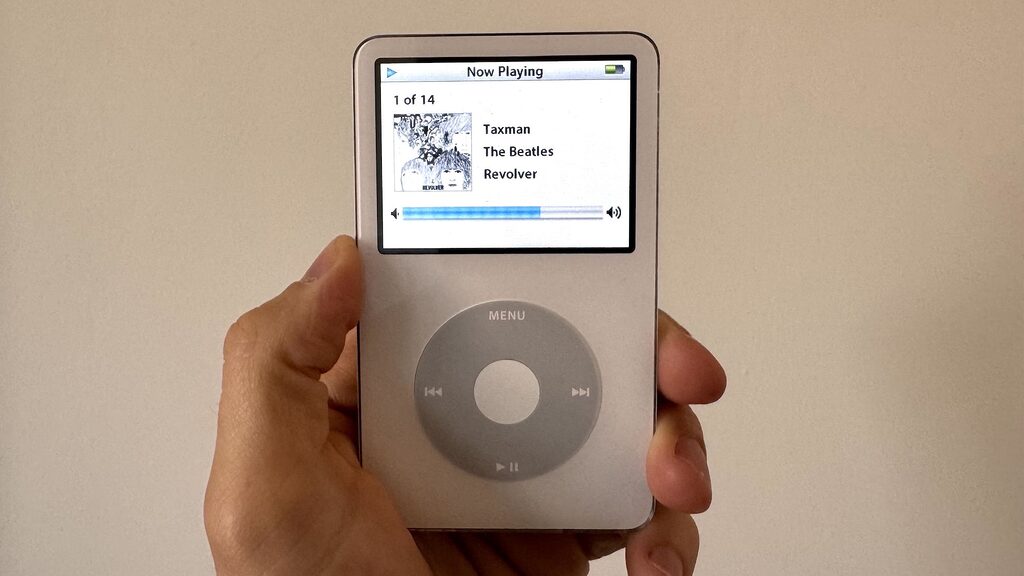
A decade later, another legendary partnership emerged in Cupertino.
When Steve Jobs returned to Apple in 1997, the company was weeks from collapse.
Inside Apple’s design studio, he discovered a young British industrial designer:
Jony Ive.
Jobs later called Ive his “spiritual partner at Apple”.
Their working method was deeply collaborative.
Hours were spent examining prototypes, debating details like:
- the radius of a corner
- the weight of a click
- the feel of materials
Their first statement was the 1998 iMac – a translucent computer that made every beige PC instantly look obsolete.
Then came:
- the iPod
- the iPhone
- the iPad
The identity of Apple – minimal, human, quietly confident – emerged not from a brand guideline document but from the chemistry between two people.
Jobs carried the brand’s character.
Ive gave it form.
The Pattern Repeats Across History


The pattern is older and more common than most realise.
Examples include:
IBM
- Thomas J. Watson Jr partnered with designer Eliot Noyes
- Noyes brought in Paul Rand and Charles Eames
- Together, they defined IBM’s modern visual identity.
Braun
- Dieter Rams shaped product philosophy: “Less, but better.”
- His thinking later influenced Apple’s design language.
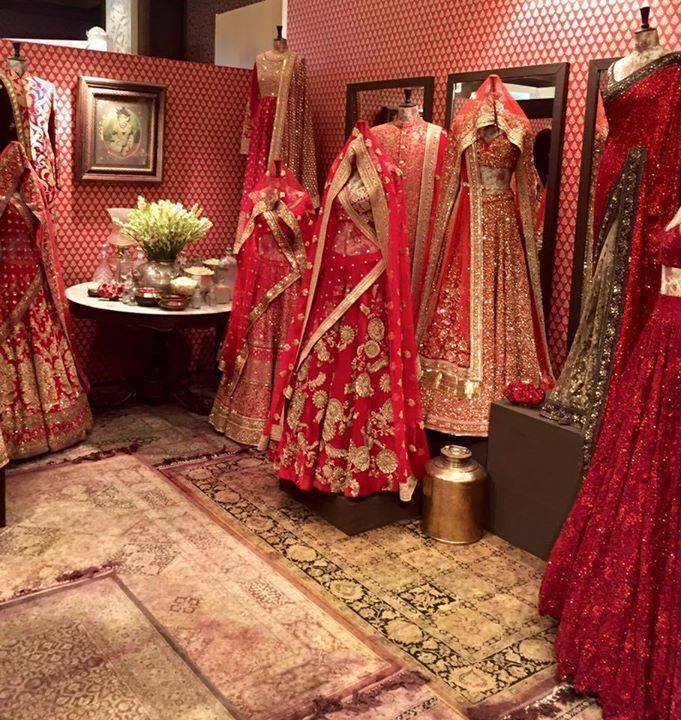
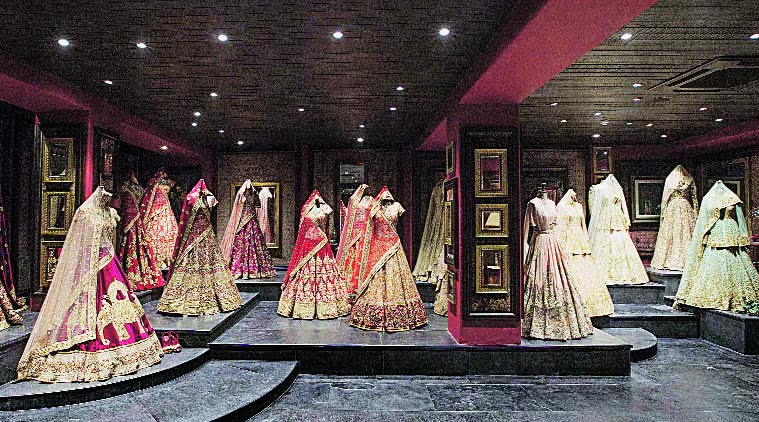
India: Sabyasachi
- Sabyasachi Mukherjee turned heritage craftsmanship into a brand universe spanning fashion, jewellery and collaborations.
Royal Enfield
- Under Siddhartha Lal, design teams reinterpreted the brand’s character: military heritage, slow travel, and mechanical soul.
In every case, a leader-creative interpreter partnership drove transformation.
Why Duos Outperform Committees
Committees seek consensus.
They smooth edges, avoid risk, and optimise for internal approval.
The result is often competent but characterless.
Creative duos work differently.
They thrive on productive tension.
- One pushes vision
- The other tests reality
- Both challenge each other
Hatfield challenged Jordan.
Ive argued with Jobs.
Noyes pushed Watson.
Great brands are rarely designed by consensus.
They are argued into existence.
Character First. Strategy Second.
Most brand strategies begin with:
- target segments
- competitor analysis
- market gaps
Important questions.
But not the first one.
The first question is simpler – and harder:
Who is this brand?
- What does it believe?
- How does it behave when no one is watching?
- What is its emotional signature?
Jordan’s competitiveness.
Apple’s obsession with simplicity.
Those were not positioning statements.
They were character traits.
Strategy came later.
The Hardest Part: Finding Chemistry
Why are these partnerships rare?
Because chemistry cannot be mandated.
It cannot be hired through procurement or created through an agency pitch.
It emerges unexpectedly.
- Jobs found Ive in a design studio late at night
- Hatfield almost skipped the design competition that changed his career
- Watson hired Noyes partly because they shared architectural sensibilities
For leaders, this creates an uncomfortable truth:
The most important creative relationship in your company cannot be planned.
But it can be recognised and protected.
The Enduring Truth
Branding, at its best, is not a communications exercise.
It is a character exercise.
And the brands that endure are almost always built through a sustained creative partnership.
Not a department.
Not a process.
A duo.
Two people who care enough about the work to challenge each other-and refine it long after everyone else has declared it finished.
Find that partnership.
Protect it.
Because the greatest products in the history of commerce were not built by organisations.
They were built by relationships.





1 Comment